 Save
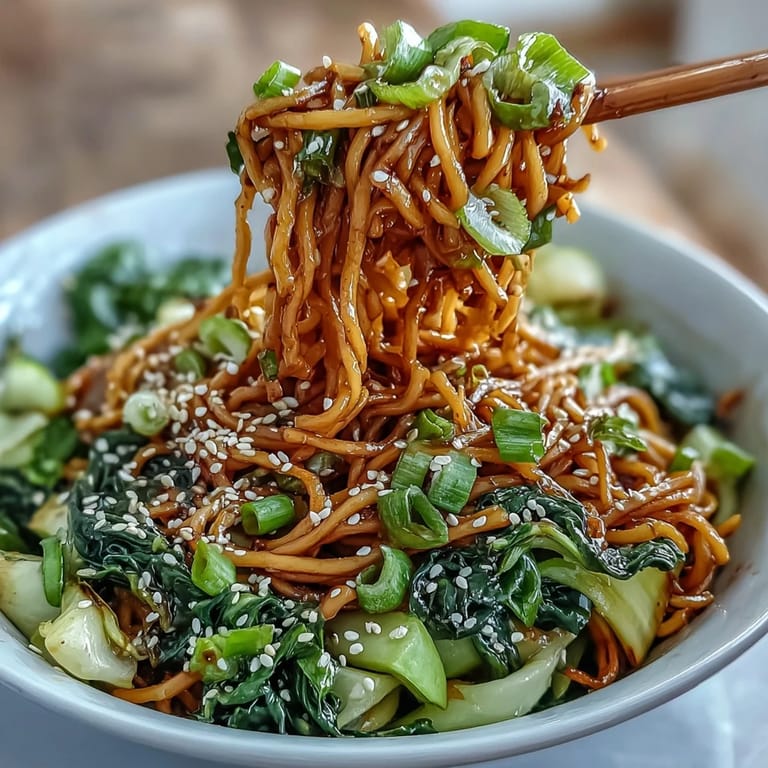
Save There's this moment when you're standing in front of a crowded noodle stall in a bustling market, steam rising from massive woks, and you realize the best dishes are often the simplest. That's what Asian ginger scallion noodles taught me—how a handful of aromatic ingredients, when treated with respect, can transform something as humble as cooked noodles into something that tastes like pure comfort. One quiet weeknight, I decided to recreate that feeling at home, and what emerged was this vibrant, aromatic bowl that now lives permanently in my weeknight rotation.
I made this for my sister after she'd had a rough week at work, and I watched her take that first bite—eyes closed, shoulders dropping—and I knew I'd nailed it. She asked for the recipe immediately, which felt like the highest compliment possible. Now whenever she texts that she's exhausted, I know exactly what she's really asking for, and these noodles are my answer.
Ingredients
- Wheat noodles (350 g): Lo mein, udon, or ramen all work beautifully here; the key is using fresh or quality dried noodles that won't turn mushy when tossed with the warm sauce.
- Scallions (4, finely sliced): Don't skip the careful slicing—the thinner you go, the more surface area there is to release those bright, oniony flavors into the sauce.
- Fresh ginger (2 tablespoons, minced): This is where the magic starts; the fibers should be fine enough to almost dissolve into the oil, creating that signature warmth.
- Garlic cloves (3, minced): Mince them as small as you can manage without turning them into paste; they'll perfume the entire dish.
- Neutral oil (1/4 cup): Use something with a high smoke point like vegetable or grapeseed oil; you're going to heat it until it shimmers, so quality matters.
- Soy sauce (2 tablespoons): This is your salt and umami anchor; taste as you go because soy sauces vary wildly in saltiness.
- Rice vinegar (1 tablespoon): The subtle tartness keeps everything from feeling one-dimensional and adds a whisper of brightness.
- Toasted sesame oil (1 teaspoon): Just a teaspoon is all you need; it's potent and deeply fragrant, and too much will overpower everything else.
- Sugar (1 teaspoon): This tiny bit rounds out the flavors and softens the sharp edges of the vinegar and garlic.
- Ground white pepper (1/2 teaspoon, optional): If you use it, you'll notice a peppery warmth that black pepper can't quite deliver in the same way.
- Baby bok choy (200 g): These tender greens wilt beautifully and keep their delicate sweetness; if they're not available, spinach or even tender kale work just fine.
- Snap peas or snow peas (100 g): They add a crucial textural contrast and stay crisp-tender if you don't overcook them by even a minute.
- Oil for sautéing greens (1 tablespoon): Keep this separate from the sauce oil; it lets you control the cooking temperature independently.
- Salt (1/2 teaspoon): Sprinkle it as you sauté the greens so it seasons them evenly rather than hitting them all at once.
- Toasted sesame seeds: Toast your own if you have five minutes; the difference between store-bought and fresh-toasted is genuinely noticeable.
- Fresh chili (1, sliced): Optional but recommended if you like your noodles with a gentle heat that builds as you eat.
- Extra scallions for garnish: Save some of the raw sliced scallions to scatter on top; they add a final brightness that cooked scallions can't match.
Tired of Takeout? 🥡
Get 10 meals you can make faster than delivery arrives. Seriously.
One email. No spam. Unsubscribe anytime.
Instructions
- Bring water to a rolling boil and cook your noodles:
- Follow your package instructions exactly—noodles vary wildly in cooking time, and overcooked noodles will turn mushy when tossed with the warm sauce. Drain them in a colander, then rinse with cold water to stop the cooking and separate the strands.
- Build the flavor base:
- Combine your sliced scallions, minced ginger, and minced garlic in a heatproof bowl—this is where all the aromatic magic lives. Don't be shy with the mincing; the finer these ingredients are, the more evenly they'll distribute through the oil.
- Create the blooming oil moment:
- Heat your neutral oil in a small saucepan over medium-high heat until it shimmers and you can feel the heat radiating from it. Carefully—and I mean carefully—pour this hot oil over the scallion mixture; it will sizzle dramatically and smell absolutely incredible.
- Season the sauce to perfection:
- Stir in your soy sauce, rice vinegar, sesame oil, sugar, and white pepper if using. The warmth from the oil will have already started releasing the aromatics, and now you're building a balanced sauce that's savory, slightly tart, with just enough sweetness to round everything out.
- Sauté the greens with precision:
- While the sauce rests, heat your separate tablespoon of oil in a large skillet or wok over medium-high heat. Add your bok choy and snap peas, sprinkle with salt, and sauté for 2 to 3 minutes—they should be vibrant green and tender-crisp, not soft.
- Bring everything together:
- Toss your drained noodles with the ginger-scallion sauce, making sure every strand gets coated with that aromatic oil and sauce mixture. The warmth from the oil will gently heat the noodles without cooking them further.
- Plate and garnish with intention:
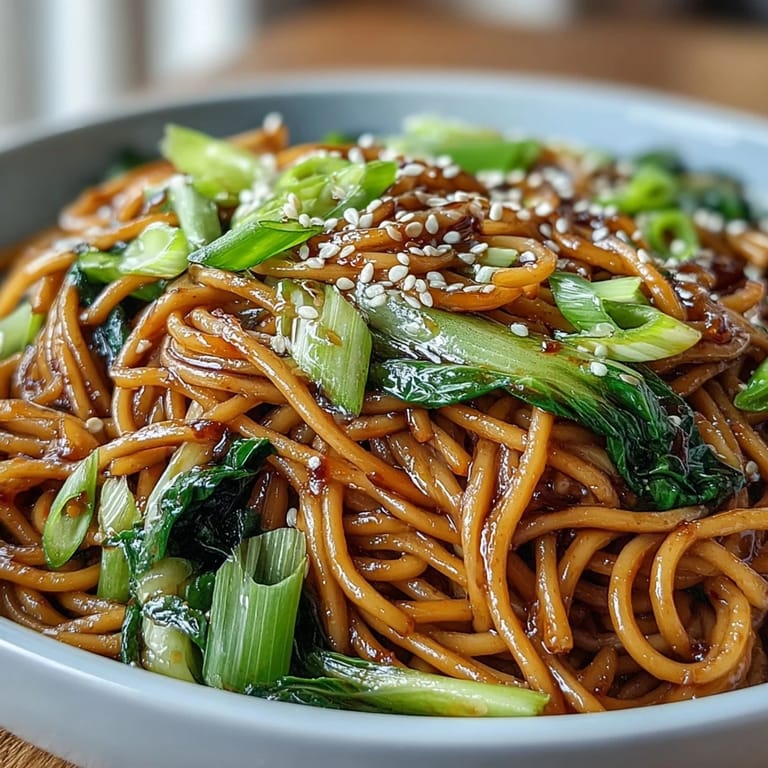
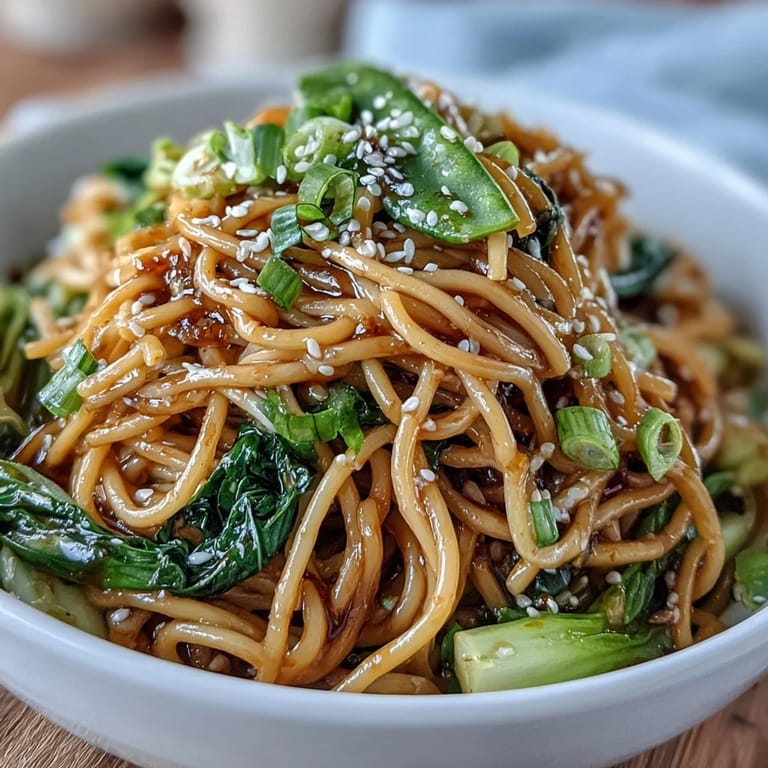
- Divide the dressed noodles among bowls, top each with the sautéed greens, then scatter sesame seeds, extra scallions, and chili slices if using across the top. Serve immediately while everything still has its individual texture and temperature.
 Save
Save There was this particular evening when a friend who claimed to hate ginger asked for seconds, then thirds, and finally asked if I could just tell her what was in the sauce because she couldn't identify what made her want to keep eating. When I told her it was mostly ginger, she laughed so hard she nearly spit out a mouthful of noodles. That's when I realized this dish has a quiet confidence that converts skeptics without any fuss.
The Science Behind the Sizzle
There's actual chemistry happening when you pour hot oil over the scallions, ginger, and garlic—it's called blooming, and it's one of the most important techniques in Asian cooking. The heat releases volatile compounds in those aromatics, making them taste more intense and complex than they would if you simply mixed them cold into the sauce. I learned this the hard way after making a batch without heating the oil, and the difference was night and day; the sauce tasted flat and separated by comparison.
Why This Works as a Complete Meal
What makes this dish feel complete rather than like a side is the combination of textures and temperatures—the warm, slippery noodles coated in fragrant sauce, the crisp-tender greens on top, the crunch of sesame seeds, and the optional heat from fresh chili. It's this interplay that keeps your palate engaged, so you're never bored by the time you reach the bottom of the bowl. I've noticed that people eat these noodles more slowly and deliberately than they do most other noodle dishes, which tells me something about how satisfying they are.
Customizing Without Losing the Soul
This is one of those recipes that's flexible enough to adapt to what you have on hand, but structured enough that you can't really go wrong. You could add shredded chicken, crispy tofu, or thin slices of beef without changing any of the other components. You could use kale instead of bok choy, or add a handful of mushrooms, or drizzle in a touch of chili oil if you want heat that builds throughout the meal. The constants—the bloomed ginger-scallion oil, the quality noodles, the just-cooked greens—those are what make the dish sing.
- If you're making this for someone with a gluten sensitivity, swap in rice noodles and tamari instead of regular soy sauce.
- Make extra ginger-scallion sauce and keep it in the refrigerator; it's incredible on steamed fish or roasted vegetables the next day.
- Toast your sesame seeds fresh if possible; they lose their fragrance quickly once ground, so buy them whole and toast them in a dry pan just before serving.
 Save
Save These noodles have become my answer to so many different questions—what's for dinner, what do I bring to a potluck, what can I make that feels special without feeling like work. They remind me that the best meals are often the ones that balance simplicity with genuine flavor, technique with approachability.
Questions & Answers
- → What type of noodles work best for this dish?
Wheat noodles such as lo mein, udon, or ramen provide ideal texture, but rice noodles can be used for a gluten-free option.
- → Can I substitute the greens in this dish?
Yes, baby bok choy, spinach, kale, or chard all work well when sautéed to preserve freshness and crunch.
- → How is the ginger scallion sauce prepared?
Fresh ginger, scallions, and garlic are combined and hot neutral oil is poured over to release flavors, then mixed with soy sauce, rice vinegar, sesame oil, sugar, and white pepper.
- → Can this dish be made vegan and gluten-free?
Using egg-free noodles and tamari instead of regular soy sauce makes this dish suitable for both vegan and gluten-free diets.
- → What garnishes enhance the flavor of this noodle dish?
Toasted sesame seeds, extra sliced scallions, and fresh chili add texture, aroma, and optional heat to the final presentation.