 Save
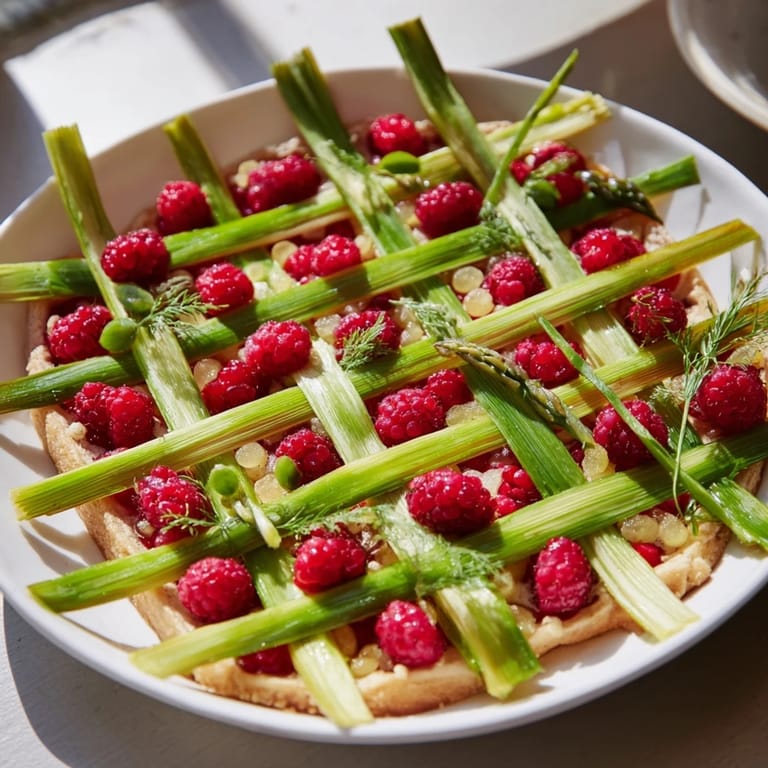
Save I discovered this dish during a spring market visit when a farmer handed me a bundle of impossibly long chives and I suddenly imagined weaving them like ribbons through bright green asparagus. The idea stuck with me for weeks until I finally had the courage to attempt it at home, and when those first berries tumbled into the lattice squares, something clicked—the whole thing felt less like cooking and more like building edible art. It's become my favorite way to start a meal when the seasons shift and everything tastes like possibility.
I made this for my sister's engagement brunch last May, and watching her face when she realized the whole thing was edible and not just decoration made me understand why some dishes become memorable—it's not just the flavors, it's the pause before the first bite, that moment of delight at something beautiful you didn't expect to taste.
Ingredients
- Asparagus stalks: Look for medium-thickness spears that are tender enough to bend slightly without snapping—too thin and they'll break, too thick and they become woody.
- Fresh chives: The long stems are your weaving thread, so choose the longest ones you can find and handle them gently as you work.
- Mixed berries: Use a variety of sizes and colors to create visual interest, and pick firm berries that won't weep juice immediately onto the platter.
- Extra virgin olive oil: A good one matters here since it's one of the few seasoning elements that touches every bite.
- Flaky sea salt: The texture and flavor are different from regular salt, and you'll notice the difference when it hits the fresh asparagus.
- Black pepper: Grind it fresh right before serving to keep the aromatics bright and peppery.
Tired of Takeout? 🥡
Get 10 meals you can make faster than delivery arrives. Seriously.
One email. No spam. Unsubscribe anytime.
Instructions
- Blanch the asparagus until it's vibrantly green:
- Drop your trimmed spears into already-boiling salted water and let them cook for just 1 to 2 minutes—you want them tender enough to bend without snapping, but still with some resistance when you taste one. Scoop them out with a slotted spoon and plunge them immediately into ice water to stop the cooking, then lay them flat on paper towels to dry completely.
- Soften the chives with a quick hot water dip:
- Dip each long chive stem into the hot water from your asparagus pot for about 5 seconds—just enough to make them pliable so they won't snap when you weave them. Cool them in the ice bath alongside the asparagus and pat them dry with gentle hands.
- Create the lattice grid:
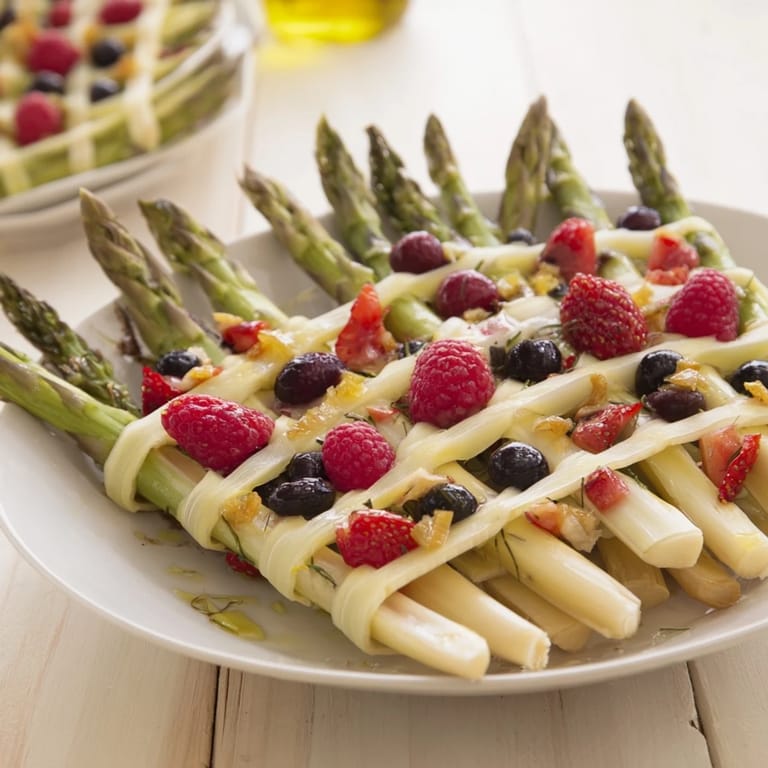
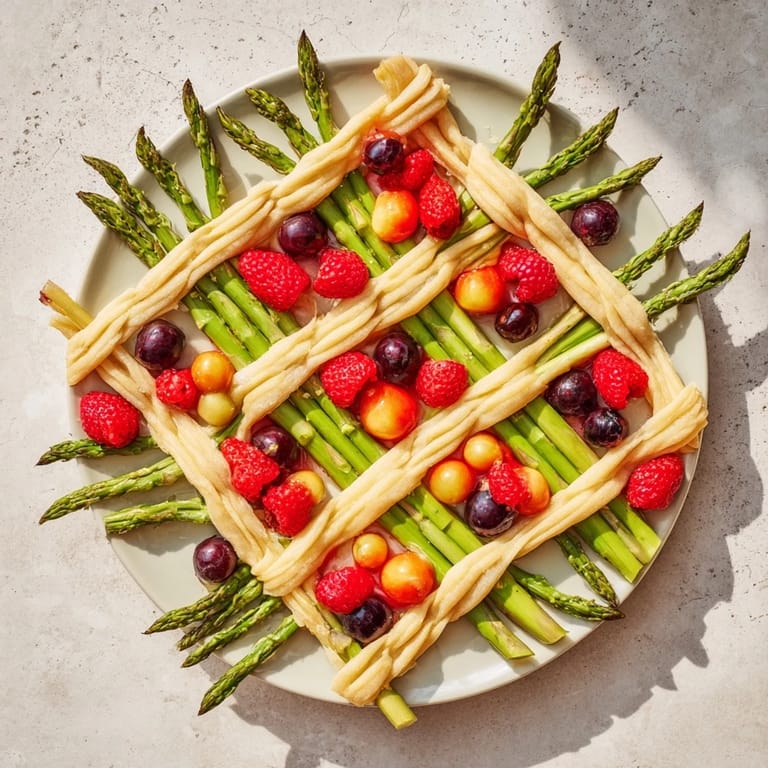
- On your large platter, lay 8 asparagus stalks parallel to each other with even spacing, then weave the remaining 8 stalks perpendicular over and under to form a checkerboard pattern. This takes patience but it's oddly meditative once you find your rhythm.
- Tie the intersections with chive bows:
- At each crossing point where asparagus meets asparagus, gently loop a softened chive around the junction and tie a small knot to hold the structure together. The chives will add color and fragrance while doing the practical work of holding your edible architecture in place.
- Nestle the fruits into the open squares:
- Distribute blueberries, raspberries, strawberry halves, and golden berries evenly across the lattice squares, mixing them so no two adjacent squares have the same fruit.
- Finish with oil, salt, and pepper:
- Just before serving, drizzle the entire platter with a light hand of olive oil, scatter the flaky sea salt over the asparagus and chives, and finish with a whisper of fresh cracked black pepper.
 Save
Save There's something that happens when you serve food that's beautiful enough to photograph but simple enough to feel genuine—people slow down, they taste more carefully, and suddenly a spring appetizer becomes a conversation. This dish does that every time.
Why Spring Vegetables Taste Different
Asparagus in spring has a sweetness and delicacy that disappears by summer, which is why this dish feels seasonal and special rather than something you could make any time. The chives are similarly tender and mild in spring, before the heat of summer intensifies their flavor. Paying attention to what's actually in season rather than what's available year-round changes how you cook and what you want to eat.
The Art of Weaving
The lattice might look complicated, but it's really just an over-under pattern that becomes automatic once your hands understand the rhythm—lay one, go under, go over, repeat. Some people worry about it falling apart, but the asparagus has enough rigidity to hold, and the chive ties are just insurance. Take your time and it'll work out.
Making It Your Own
This dish is a canvas, and you should feel free to paint with whatever fruits and herbs you love. Some friends add a light drizzle of aged balsamic or scatter microgreens across the top for extra color and peppery bite. I've even seen someone add edible flowers nestled between the berries, and it was stunning.
- Try blackberries or pomegranate seeds if your market has them instead of golden berries.
- A few torn mint leaves scattered across just before serving add brightness without overwhelming the delicate asparagus.
- Serve it chilled or at cool room temperature—never hot—to keep everything tasting fresh and spring-like.
 Save
Save This appetizer reminds me every time I make it that the most memorable meals aren't complicated—they're thoughtful. It's the difference between serving food and creating a moment.
Questions & Answers
- → How do I soften the chives for weaving?
Briefly dip chive stems in hot water for 5 seconds, then immediately cool them in ice water to make them flexible without losing color.
- → Can I substitute the berries with other fruits?
Yes, small firm fruits like blackberries, red currants, or pomegranate seeds work well for similar bursts of flavor.
- → What is the best way to blanch asparagus for this dish?
Boil asparagus in salted water for 1-2 minutes until tender and bright green, then quickly transfer to an ice bath to stop cooking and preserve texture.
- → How should I secure the lattice structure?
Use chive stems to gently tie the intersection points of the asparagus grid to hold it firmly in place.
- → Can this be prepared ahead of time?
Yes, prepare the lattice and chill it. Add the fresh fruit and seasoning just before serving to maintain freshness and texture.