 Save
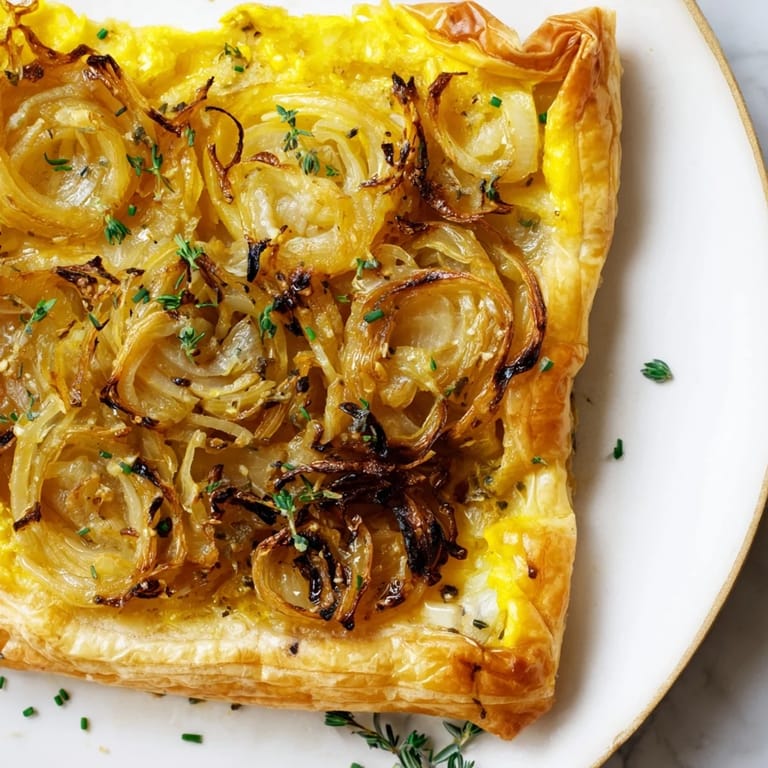
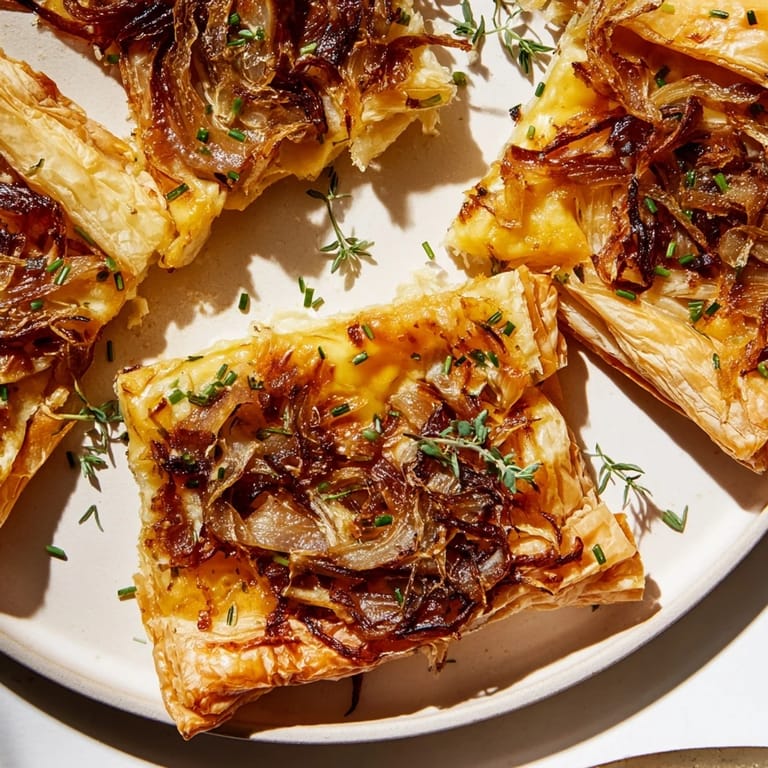
Save The first time I made this tart, I wasn't trying to impress anyone—I just had three onions sitting in my kitchen and an hour to kill on a quiet Sunday afternoon. I'd watched them slowly turn from pale rings into deep golden pools of sweetness, and something about that patient caramelization felt almost meditative. By the time I spread them onto that buttery pastry, I realized I'd created something that tasted far more sophisticated than the effort required. Now it's become my go-to when I want something that feels both effortless and elegant.
I remember bringing this to a dinner party once, slightly nervous because it seemed too simple. But watching my friends tear into it—the way their eyes lit up when they hit that creamy layer beneath the onions—I knew I'd found something special. The Gruyère adds just enough richness to make it feel indulgent without being heavy, and the thyme brings this earthy note that ties everything together in a way that feels almost orchestrated.
Ingredients
- Frozen puff pastry (about 250 g): Thaw it ahead of time so it's pliable but still cold when you work with it; this prevents shrinking and ensures those crispy, flaky layers everyone loves.
- Yellow onions (3 large): The sugar in yellow onions caramelizes beautifully, creating that glossy amber color and concentrated sweetness that's the heart of this tart.
- Butter and olive oil: The combination gives you both the richness of butter and the stability of oil for cooking the onions without burning.
- Sugar and salt: Just a teaspoon of sugar speeds up the caramelization process by feeding the natural browning reaction.
- Crème fraîche: Its subtle tang balances the onions' sweetness and creates a creamy base that keeps everything moist.
- Dijon mustard (1 tsp): A small amount adds background complexity without making the tart taste mustardy.
- Gruyère cheese (1/2 cup): This nutty, slightly sweet cheese melts beautifully and pairs perfectly with caramelized onions better than most other options.
- Fresh thyme: The herb's earthy, almost minty notes brighten the rich onions and cream, keeping the flavors from feeling too heavy.
Tired of Takeout? 🥡
Get 10 meals you can make faster than delivery arrives. Seriously.
One email. No spam. Unsubscribe anytime.
Instructions
- Heat your oven and prep your station:
- Set the oven to 400°F (200°C) and line your baking sheet with parchment paper. This is your foundation—a hot oven means crispy pastry, and parchment means zero sticking drama.
- Begin the onion transformation:
- Melt butter with olive oil in a large skillet over medium heat, then add your sliced onions along with the sugar, salt, and pepper. Stir them often—this is the meditative part, watching them slowly turn from translucent to pale gold to deep amber over the next 25–30 minutes. You'll know they're done when they're silky, fragrant, and deeply caramelized without any raw onion taste lingering.
- Roll and transfer your pastry:
- While the onions work their magic, roll out the thawed puff pastry into a 12-inch square or circle on a lightly floured surface, then carefully slide it onto your prepared baking sheet. It doesn't need to be perfect—rustic is the whole point here.
- Build the creamy layer:
- In a small bowl, mix the crème fraîche with the Dijon mustard until smooth, then spread this mixture evenly over the pastry, leaving about a 1-inch border all around. This border will eventually fold up to create those beautiful rustic edges.
- Layer cheese, onions, and herbs:
- Scatter half the grated Gruyère over the crème layer, then top with all those caramelized onions, spreading them out gently. Sprinkle the fresh thyme over everything, then finish with the remaining cheese.
- Create the rustic border:
- Gently fold the pastry edges up and over the filling—don't worry about being neat; slightly crooked edges look more authentic and let some onions peek through, which is exactly what you want.
- Bake until golden:
- Slide the tart into your hot oven for 20–25 minutes, watching until the pastry is puffed and golden brown and the edges are crispy. Your kitchen will smell incredible—that's your signal it's almost ready.
- Cool slightly and serve:
- Let it rest for just a few minutes so everything sets slightly, then slice and serve warm or at room temperature. Either way, it's delicious.
 Save
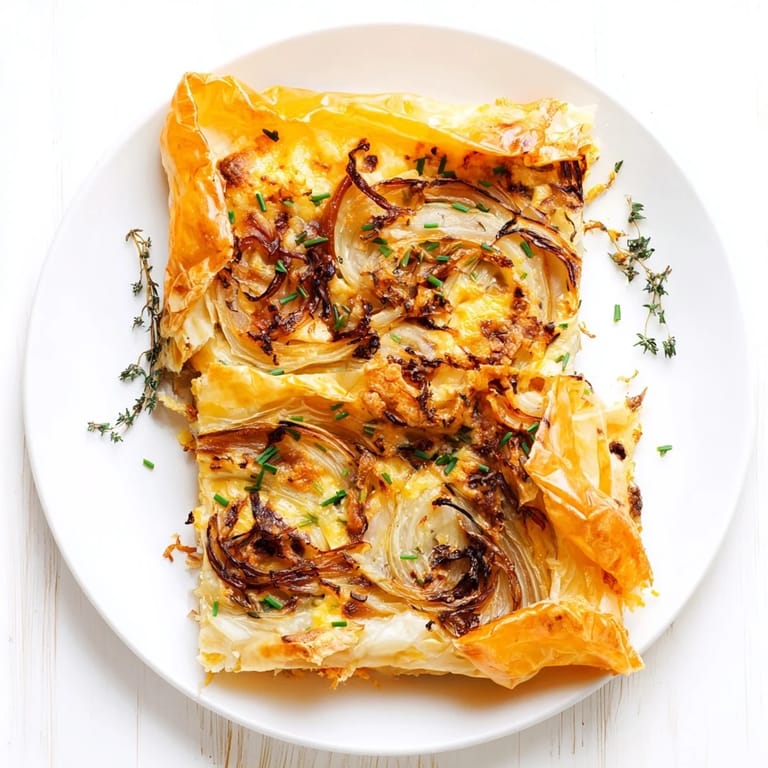
Save There was an evening when my partner came home to find this tart cooling on the counter, and they just stood there breathing in the smell of caramelized onions and buttery pastry for what felt like forever. That moment—when food becomes a reason to pause and appreciate—that's when I knew this recipe was worth keeping. It's not about fancy techniques or hard-to-find ingredients; it's about taking time with simple things and watching them transform into something memorable.
The Secret of Caramelization
Caramelizing onions is less about technique and more about patience and heat management. The key is medium heat—fast enough that they don't steam, gentle enough that they won't burn. I learned this the hard way after trying to speed things up on a weeknight and ending up with bitter, blackened onions that tasted like charcoal. Now I treat those 25–30 minutes like a gift: I put on a podcast, pour a glass of wine, and let my hands stay busy with the occasional stir. The slower you go, the sweeter and more complex your onions become, and that's literally what makes this whole tart sing.
Flavor Riffs and Substitutions
Once you understand how the layers work, you can start playing around. I've added a splash of balsamic vinegar in the last five minutes of caramelizing, which adds this subtle sweetness and depth that's almost mysterious. I've swapped the Gruyère for sharp cheddar or creamy Emmental, both of which work beautifully. Some nights I add crispy pancetta between the crème and onions for a savory edge, or fresh rosemary instead of thyme for something more peppery. The pastry and onions are the backbone—everything else is just a conversation.
Pairing and Serving Ideas
This tart is wonderfully versatile depending on what kind of meal you're imagining. For lunch, serve it with a simple green salad dressed in lemon vinaigrette—the acidity cuts through the richness perfectly. For dinner, pair it with roasted vegetables and a grain like farro or wild rice to make it heartier. If you're serving it as an appetizer, cut it into smaller squares and watch it disappear. A crisp white wine like Sauvignon Blanc is the dream pairing, but honestly, it's equally good with sparkling water on a quiet afternoon.
- Make it ahead: The tart can be assembled hours before baking and even tastes better at room temperature the next day.
- Freeze for later: You can freeze the unbaked tart and bake it directly from frozen, just adding a few extra minutes to the baking time.
- Scale it down: This recipe works just as well made as four individual tarts in muffin tins for portion control or elegant plating.
 Save
Save Every time I make this tart, I'm reminded that some of the best dishes come from the simplest starting points. This is the kind of recipe that teaches you to trust time, trust heat, and trust that three onions and some good butter can become something worth remembering.
Questions & Answers
- → How do I properly caramelize the onions?
Cook sliced onions slowly over medium heat with butter, olive oil, sugar, salt, and pepper, stirring often until they turn deep golden brown, which takes about 25–30 minutes.
- → Can I substitute Gruyère cheese?
Yes, Emmental or a sharp cheddar can be used as alternatives to Gruyère for a similar flavor profile.
- → What kind of pastry works best?
Frozen puff pastry that has been thawed is ideal for achieving a flaky and golden tart crust.
- → How do I add extra depth to the onion flavor?
Adding a splash of balsamic vinegar during the last 5 minutes of caramelizing the onions enhances their sweetness and complexity.
- → Is this suitable for vegetarians?
Yes, the tart contains no meat and features vegetarian-friendly ingredients including butter, crème fraîche, and cheese.