 Save
Save I discovered the magic of hexagons at a farmers market in late September, watching a cheese vendor arrange his display with such precision that it looked almost architectural. The geometric pattern mesmerized me, and I thought: what if I brought that same intentionality to a board I made myself? The Gilded Hive was born from that moment—a cheese board so visually striking that guests spend the first minute just admiring it before reaching for a cracker. It's become my go-to for occasions when presentation matters as much as flavor.
My sister brought her fiancé to meet the family for the first time, and I was nervous about making a good impression. I made this board, and watching her light up when she saw it on the table—that was the moment I knew it was going to be a favorite. Now it comes out whenever we need to celebrate something, or just when we want the kitchen to feel a little more special than usual.
Ingredients
- Manchego cheese: Firm and slightly salty, it holds its hexagon shape beautifully and adds a nutty undertone.
- Aged cheddar: Sharp enough to cut through the richness of softer cheeses, and its warm color creates visual contrast.
- Gruyère: Brings umami depth and melts slightly on a warm cracker, which is exactly what you want.
- Brie: The luxurious one—creamy and delicate, so chill it first for clean cuts.
- Blue cheese: A small amount goes a long way; it's the bold anchor of the whole board.
- Goat cheese log: Mild and creamy, it slices cleanly when cold and appeals to people who find other blues intimidating.
- Whole wheat crackers: Choose sturdy, square-cut ones that won't crumble when you cut them into hexagons.
- Seeded crackers: These add texture and a slightly nutty flavor that pairs beautifully with soft cheeses.
- Edible honeycomb: The star—worth the specialty store hunt because it's literally the golden heart of everything.
- Runny honey: Drizzled warm, it catches the light and tastes incredible with aged cheese.
- Marcona almonds: Buttery and roasted, they fill gaps and add salty crunch.
- Dried apricots: Their sweetness softens the intensity of blue cheese in the best way.
- Fresh grapes: They add color and a clean palate cleanser between bites.
- Edible flowers or microgreens: Optional, but they transform the board from impressive to gallery-worthy.
Tired of Takeout? 🥡
Get 10 meals you can make faster than delivery arrives. Seriously.
One email. No spam. Unsubscribe anytime.
Instructions
- Cut your cheeses into clean hexagons:
- Use a sharp metal cookie cutter and press straight down without twisting. For softer cheeses like Brie and goat cheese, pop them in the freezer for fifteen minutes first—cold cheese holds shape and creates sharper edges. Wipe your cutter clean between cuts so soft cheese doesn't gum up the edges.
- Shape your crackers to match:
- Use that same hexagon cutter on your crackers, knowing that a few will break—that's normal and fine. Select the cleanest cuts for the outer display and use any broken pieces hidden behind other components.
- Start with the honeycomb center:
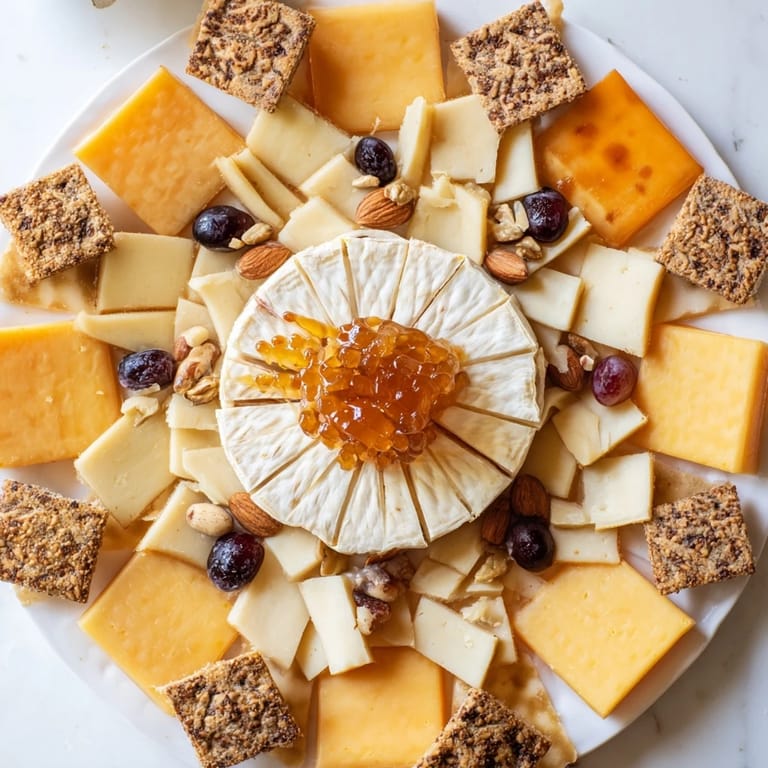
- Place it right in the middle of your board. This is your anchor, the golden moment everything radiates outward from.
- Arrange cheese in rings:
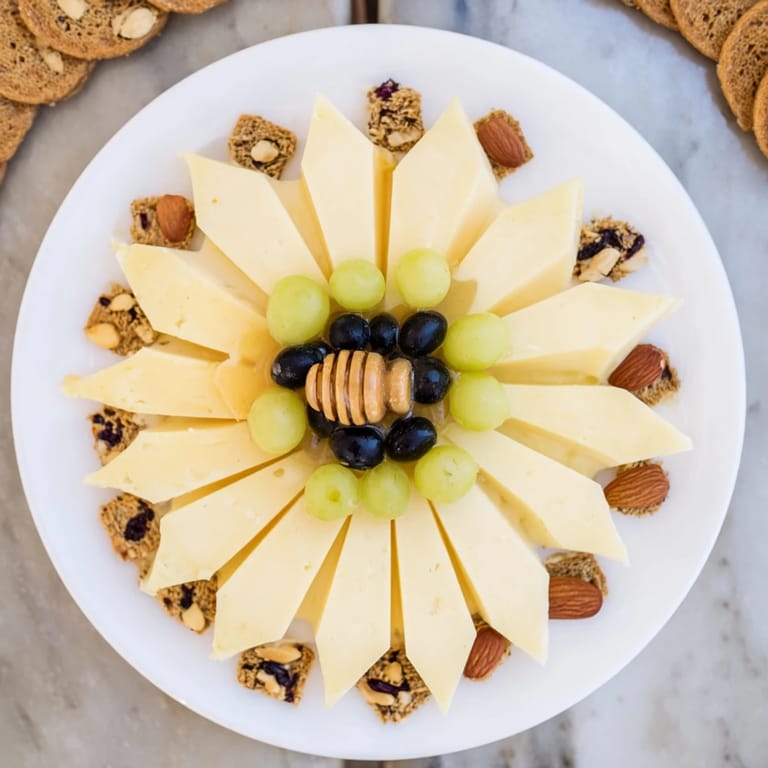
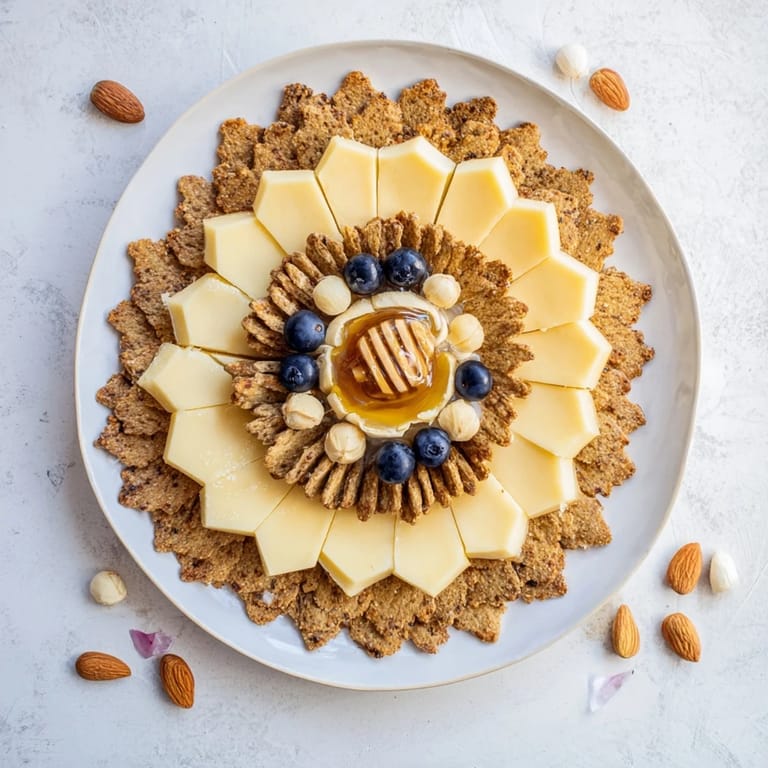
- Create concentric circles around the honeycomb with your cheese hexagons, alternating varieties so you get color contrast—maybe Manchego, then blue, then Gruyère, then white cheeses. Lean them slightly against each other for visual height.
- Build cracker rays around the cheese:
- Your whole wheat and seeded crackers become the next ring outward, creating a starburst effect that echoes the honeycomb pattern. Think of it like light radiating from a golden center.
- Fill the gaps with almonds, apricots, and grapes:
- Tuck these into the spaces between hexagons, using their different colors and shapes to balance the geometric precision. The grapes especially add visual softness and break up the hexagon repetition.
- Drizzle honey strategically:
- A few diagonal lines over the honeycomb and a gentle curve through the cheese section. The honey should look intentional, like brushstrokes on a canvas, not random squiggles.
- Add garnish if you're using it:
- Scatter edible flowers or microgreens across the top. These add delicate height and make the whole board feel finished and special.
- Serve fresh and at the right moment:
- Assemble this no more than thirty minutes before serving so the cheeses stay at their best temperature and the crackers stay crisp. Have cheese knives and spreaders nearby so people know they're welcome to dig in.
 Save
Save I remember setting this board out for a casual dinner party and watching my friend Sarah, who usually dives straight into food, pause and pull out her phone to take a picture. She said it was too beautiful to eat, which made me laugh, but she meant it—and that's when I realized this wasn't just about flavor anymore.
Why Geometry Matters on a Board
There's something about a pattern that makes people slow down and look. Random scattered boards have their charm, but this hexagonal structure does something different—it creates intentionality that makes the whole gathering feel a little more thoughtful. The repetition is calming, and your eye moves around the board in a natural rhythm instead of feeling overwhelmed by chaos. Plus, hexagon shapes fit together with almost no wasted space, so you fit more variety into every inch.
Choosing Your Cheese Cast of Characters
The key to this board is building a team of cheeses that play different roles without competing. You want something bold (blue), something creamy (Brie and goat), something nutty and aged (Gruyère and aged cheddar), and something mild and approachable (Manchego). Think of each one as a character in a story—they're all interesting on their own, but together they create something bigger. If blue cheese isn't your crowd, swap it for something else sharp or pungent. If you can't find Manchego, use a clean, mild hard cheese. The pattern matters more than hitting exact labels.
Setting the Stage for Entertaining
This board is best revealed at the last possible moment before eating, which gives you a built-in moment to step back and feel proud of what you've made. Assemble it on a surface that's cool—wood or marble, nothing that's been in the sun or near the stove. If your kitchen is warm, work quickly or even place your board in a cool spot while you finish other preparations. The visual payoff is worth the small effort of timing it right.
- Have wine poured and ready so guests can settle in with their glasses before they taste.
- Set out small plates and napkins nearby—people will appreciate having somewhere to set their plate as they browse.
- Don't be shy about telling people what they're tasting, especially the honeycomb and any artisanal cheeses.
 Save
Save The Gilded Hive has become one of those recipes I pull out when I want to say something without words—when entertaining feels like a small art form. It transforms a simple cheese board into something that feels like a gift.
Questions & Answers
- → How do I cleanly cut soft cheeses into hexagons?
Chill softer cheeses like Brie and goat cheese briefly before cutting to achieve clean, neat hexagon shapes.
- → Can I use different types of crackers?
Yes, choose whole wheat or seeded crackers that hold their shape well when trimmed into hexagons for visual consistency.
- → What alternatives can I use for the honeycomb centerpiece?
If honeycomb is unavailable, consider using a small bowl of runny honey or a cluster of edible flowers to maintain the board's focal point.
- → How should I arrange the board for best presentation?
Place the honeycomb at the center, radiate hexagon-cut cheeses around it, then form concentric circles of hexagon crackers, filling gaps with nuts and fruits for balance.
- → What drinks pair well with this cheese board?
Crisp white wines like Sauvignon Blanc or light sparkling wines complement the diverse cheese textures and honey notes beautifully.
- → Can this board be adapted for gluten-free diets?
Absolutely, simply substitute the crackers for gluten-free versions without compromising on shape or texture.