 Save
Save I discovered this presentation at a gallery opening where a friend had arranged cheeses on actual marble remnants, and I was immediately captivated by how the irregular chunks caught the light like a minimalist art installation. What struck me most wasn't just the visual drama, but how that raw, unpolished arrangement somehow made people slow down and actually taste the cheeses instead of mindlessly grabbing handfuls. The blue cheese's veins seemed to echo the marble's natural fractures, and watching guests arrange their own bites felt like they were participating in something intentional. That night taught me that food doesn't need to be fussy to feel special, it just needs to respect its own materials.
I made this for a small dinner party last spring when I realized mid-afternoon that I'd over-committed on a cheese course but had almost nothing prepared. I called a friend in a minor panic, and she reminded me that sometimes the best moments come from constraints, not abundance. We chilled the marble slab while chatting, and by the time guests arrived, the simplicity of it felt intentional rather than last-minute, like we'd chosen clarity over clutter.
Ingredients
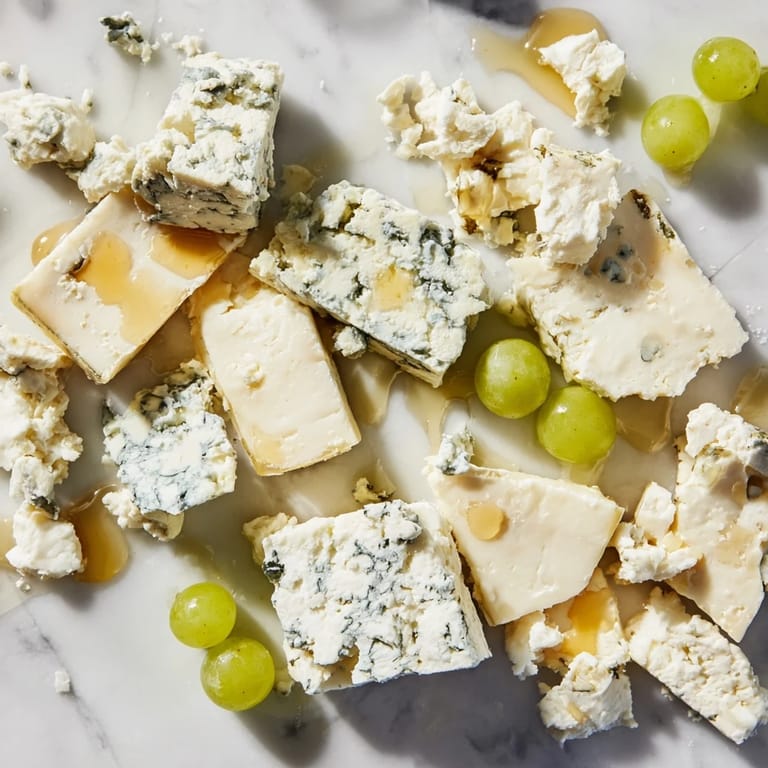
- Blue cheese (Roquefort, Gorgonzola, or Stilton), 200 g: Look for cheeses with bold veining and a firm enough texture to break into genuine chunks rather than crumbles; the funkier and more assertive, the better this contrast works against the mild white cheddar.
- Aged white cheddar, 200 g: Seek out the sharpest, most crystalline version you can find, ideally one that's been aged at least two years, because its nutty bite plays beautifully against the blue's salt and pungency.
- Fresh grapes or sliced pears: These are optional but honestly essential for breaking up the intensity and giving guests a palate-cleansing option between bites.
- Assorted crackers or crusty bread: Your choice here determines the whole vibe, so pick something that doesn't overshadow the cheeses themselves.
- Honey or fig jam: A small drizzle transforms the board from presentation into an actual flavor journey, especially when it pools into the blue cheese's crevices.
Tired of Takeout? 🥡
Get 10 meals you can make faster than delivery arrives. Seriously.
One email. No spam. Unsubscribe anytime.
Instructions
- Start with a cold canvas:
- Place your marble slab in the refrigerator for at least thirty minutes before you begin; a chilled marble keeps the cheeses fresher longer and prevents them from sweating or softening too quickly. This small step changes everything.
- Cut with intention:
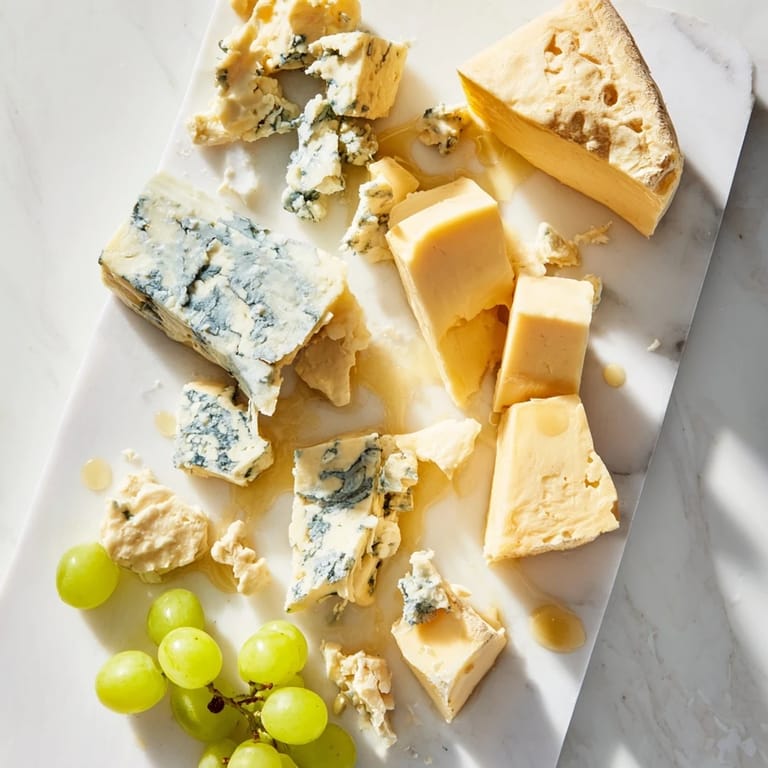
- Tear or cut both cheeses into large, irregular chunks that feel more like you're breaking stone than slicing, which honors the marble concept and makes each bite feel substantial. Uniform cubes ruin the whole mood.
- Scatter like a quarry:
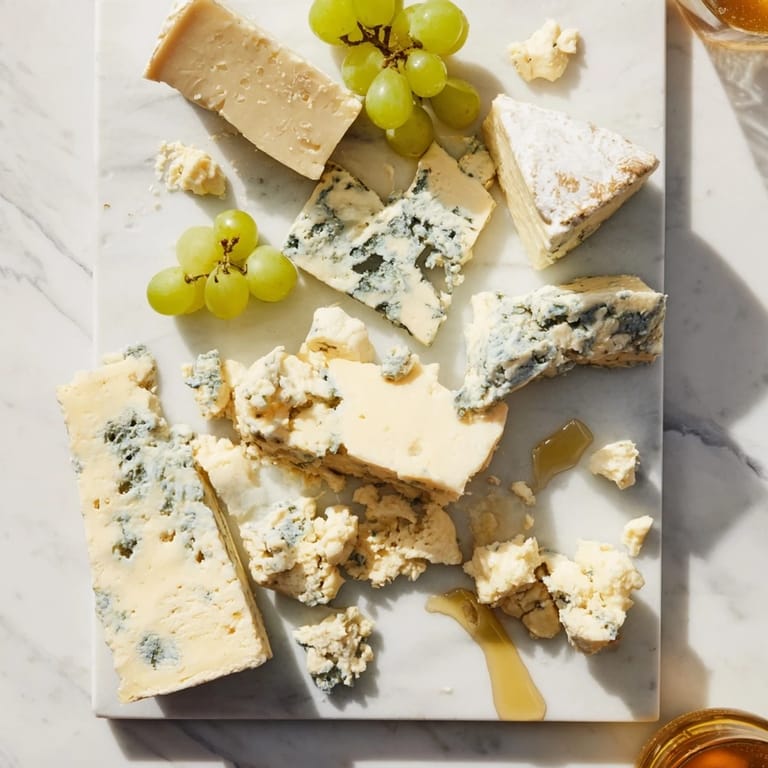
- Arrange the chunks across the marble with real space between them, clustering the blues and whites so they create visual contrast without competing. Step back and look at it like you're composing something.
- Nestle the soft things:
- Tuck grapes or pear slices into the gaps, and place small bowls of honey or jam where they'll feel discovered rather than obvious. This is where guests find little surprises as they explore.
- Finish and serve:
- Set crackers and bread on the side, never on the marble itself, which keeps the composition clean and lets people make their own choices about how to experience the cheeses.
 Save
Save There was a moment during that dinner party when someone stopped mid-conversation to ask why the blue cheese tasted different here than it did on their regular charcuterie board, and it hit me that the marble itself somehow signaled respect for what was being served. The presentation had quietly shifted how people approached eating, making them curious instead of casual.
The Power of Contrast
This board works because of what the two cheeses do to each other, not despite their differences. The blue's aggressive, almost mineral funk makes the white cheddar taste creamier and sweeter by comparison, while the cheddar's solid, approachable nature keeps the blue from feeling too intense. It's a conversation between textures and flavors that wouldn't exist if you just served one cheese alone, and that dynamic is what lingers after people leave.
When to Serve This
This works best at the beginning of an evening when people still have appetite and attention for nuance, or as a standalone moment when cheese is the entire point rather than an afterthought on a crowded board. I've learned that presentation like this deserves its own space and time, not squeezed between cured meats and spreads where it gets lost.
Building Your Own Quarry
Once you understand the concept, you can riff endlessly: swap the blue for a sharp aged gouda and the white cheddar for a creamy goat cheese, or add a golden washed-rind that brings warmth to the palette. The marble becomes a template for your own discoveries, and each version tells a different story. What matters is that you're being deliberate about how the cheeses speak to each other and to the surface they're sitting on.
- A chilled marble slab makes all the difference, so plan ahead and give it thirty minutes in the fridge before you arrange anything.
- Cut your cheeses into genuine chunks that feel broken rather than sliced, because the irregular edges catch light and create shadows that matter.
- Leave breathing room between pieces, trusting that empty space is as important to the composition as the cheeses themselves.
 Save
Save This is the kind of thing that reminds you food doesn't have to be complicated to feel thoughtful, and sometimes the most impressive moments come from respecting your ingredients enough to let them shine. Serve it with intention, and people will remember it long after the cheeses are gone.
Questions & Answers
- → What cheeses are used in the marble quarry board?
Blue cheese varieties such as Roquefort, Gorgonzola, or Stilton paired with aged white cheddar are recommended, cut into large irregular chunks.
- → How should the cheeses be arranged on the serving slab?
Scatter the cheese pieces with space between each to create a quarry-like effect, enhancing visual appeal and ease of serving.
- → Can accompaniments be added to the presentation?
Yes, fresh grapes, sliced pears, honey, or fig jam can be tucked among the cheeses for added flavor and aesthetics.
- → What is the benefit of chilling the marble slab before use?
Chilling the marble slab helps keep the cheeses cool and preserves their texture throughout serving.
- → What pairings work well with this cheese arrangement?
Assorted crackers or crusty bread complement the cheeses, and wines such as crisp white or light-bodied reds enhance the overall experience.
- → Are there allergen considerations for this dish?
This dish contains dairy from the cheeses and may include gluten or nuts depending on accompaniments; label checks are advised.