 Save
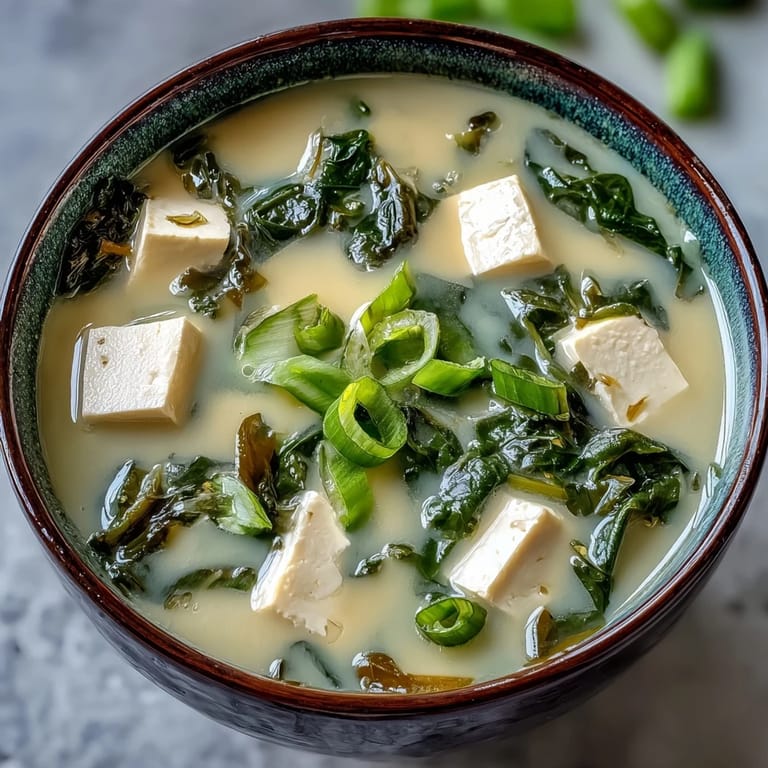
Save My neighbor taught me to make miso soup on a foggy morning when she showed up with a bundle of green onions from her garden and insisted I learn the proper way. She moved her hands slowly through each step, explaining that speed doesn't matter here, only intention. That first bowl changed how I thought about simple food, proving that sometimes the most delicate dishes are also the easiest to master. Now whenever I simmer dashi, her kitchen fills mine across the years.
I made this soup for my sister the day she came home exhausted from her new job, and she sat at my kitchen counter in silence for the first few spoonfuls, then asked for seconds. Something about the warm broth and soft tofu seemed to unknot whatever tension she'd been carrying. That's when I understood why this soup appears at so many Japanese tables, not as a side dish but as a small act of care.
Ingredients
- Dashi stock: The soul of this soup, use kombu-based to keep it vegetarian and let its subtle sweetness carry the entire bowl.
- White or yellow miso paste: Never boil it after adding or you'll lose the living cultures and the depth of flavor that makes this special.
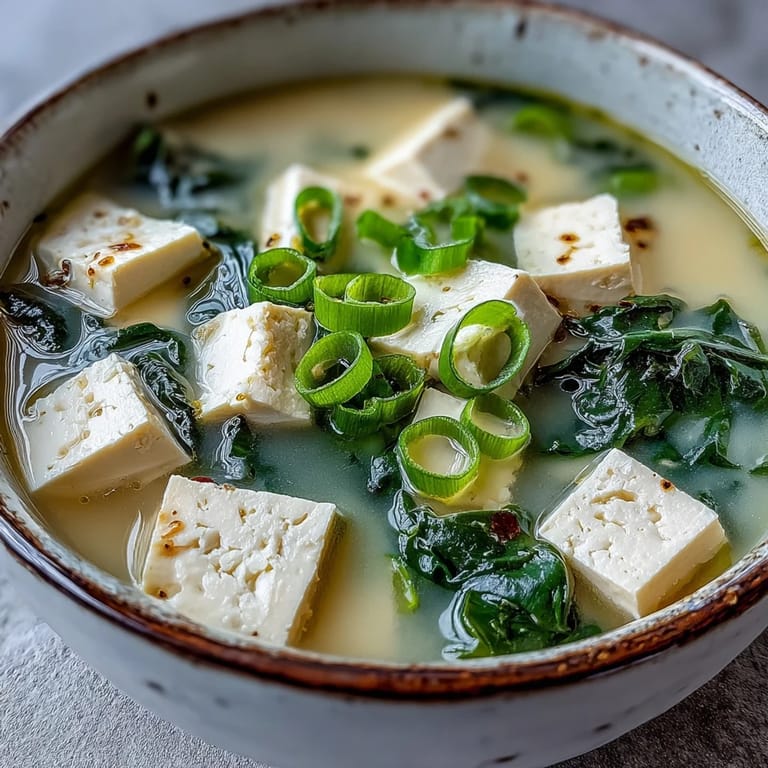
- Firm tofu: Cut into small cubes so each spoonful feels creamy and tender without falling apart in the broth.
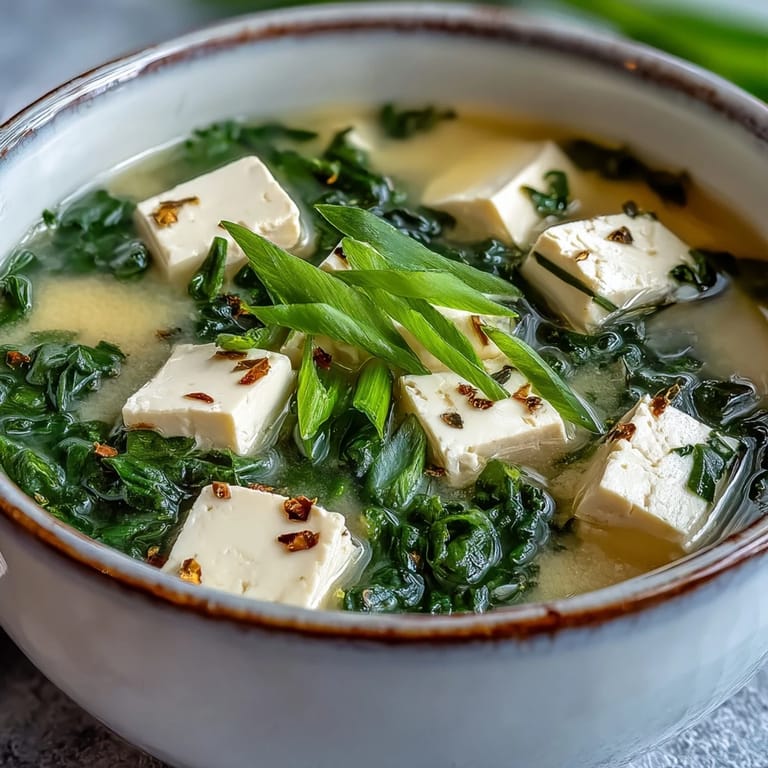
- Fresh spinach leaves: Rough chop them so they wilt evenly and catch the miso flavor in every bite.
- Green onions: Slice them thin and stir them in at the very end so they stay bright and crisp against the warm soup.
Tired of Takeout? 🥡
Get 10 meals you can make faster than delivery arrives. Seriously.
One email. No spam. Unsubscribe anytime.
Instructions
- Warm the dashi gently:
- Pour your stock into a medium saucepan and let it come to a gentle simmer over medium heat, watching for the smallest bubbles at the surface. You'll notice the steam rising and a faint aroma beginning to fill the air, which tells you it's ready.
- Dissolve the miso properly:
- Scoop the miso into a small bowl and ladle about half a cup of the hot dashi over it, then whisk until it's completely smooth with no lumps remaining. Pour this mixture back into the pot slowly, stirring gently, and promise yourself you won't let it boil or you'll kill everything that makes miso magnificent.
- Add the tofu:
- Drop in your tofu cubes and let them warm through for two to three minutes, watching them bob gently in the broth. They don't need long, just enough time to become part of the soup rather than a cold addition.
- Wilt the spinach:
- Stir in your chopped spinach and count slowly to ninety, just until the leaves turn tender and dark. This is quicker than you think, so stay close.
- Finish with green onions:
- Pull the pot off the heat and scatter your sliced green onions across the top, stirring them in so their sharp freshness catches against the mellow broth. Pour into bowls immediately while everything is still steaming.
 Save
Save I learned that miso soup becomes something different depending on who's sitting across from you with a spoon. With my friend Marco it's comfort, with my mother it's tradition, with myself on a quiet Tuesday it's a moment of stillness. The soup itself never changes, but its meaning does.
The Art of Not Boiling Miso
For the longest time I ruined miso soup by rushing the miso into the pot and letting it bubble, which turned the broth murky and bitter. Then I realized the miso paste contains living fermentation that gives it its complexity, and high heat destroys all that work. Now I treat it like a sacred final step, tempering it separately and stirring gently, and the difference is immediate and unmissable.
Why This Soup Feels Different
Unlike heavy broths that sit in your stomach, miso soup feels nourishing in a way that's almost spiritual. The fermented miso brings umami depth, the tofu provides protein without heaviness, and the bright spinach reminds you that something green and alive went into your bowl. It's the kind of dish that works at breakfast, lunch, dinner, or three in the morning when you need something true.
Small Variations That Work
Once you've made this version a few times, you'll start seeing possibilities everywhere. Mushrooms add earthiness, a few strips of wakame bring oceanic depth, and a whisper of sesame oil at the end can make it feel almost luxurious. The base is so forgiving that you can play without ever losing the soul of the soup.
- Mushrooms like shiitake or button varieties add umami that complements the miso beautifully.
- Wakame seaweed brings an oceanic sweetness and makes the soup feel more substantial.
- A tiny drizzle of sesame oil at the very end adds richness without overpowering the delicate broth.
 Save
Save This soup taught me that the simplest meals often carry the deepest satisfactions. Make it often, make it for people you care about, and watch how something so straightforward becomes its own kind of magic.
Questions & Answers
- → What type of miso paste works best?
White or yellow miso pastes are ideal here, offering a mild, sweet flavor that complements tofu and greens without overpowering.
- → Can the dashi stock be made vegetarian?
Yes, using kombu-based dashi keeps the broth vegetarian and imparts an umami-rich base without fish ingredients.
- → Why avoid boiling after adding miso?
Boiling miso can destroy its delicate flavors and beneficial enzymes, so it's gently warmed to retain depth and nutrients.
- → How do I store leftovers?
Keep leftovers refrigerated in an airtight container for up to 2 days; reheat gently without boiling to preserve flavor.
- → Can I add other vegetables to this dish?
Absolutely, additions like mushrooms, wakame seaweed, or a dash of sesame oil enhance flavor and texture variations.