 Save
Save I discovered this version of mac and cheese on a Tuesday afternoon when I was staring at a container of cottage cheese in my fridge, wondering why I'd bought it in the first place. The idea hit me suddenly: what if I blended it smooth and creamy instead of treating it like a chunky topping? Twenty minutes later, I had something that tasted like the mac and cheese I grew up with, but without the heavy feeling afterward. It became my go-to weeknight dinner almost immediately.
My partner came home one evening when I was testing this, and I'll never forget the look on their face when I told them what the main ingredient was. They were skeptical until the first bite, then they just looked at me and asked if I could make it twice a week. That's when I knew this recipe had staying power.
Ingredients
- High-protein pasta (300g): Use chickpea, lentil, or whole wheat varieties—they hold up beautifully to the sauce and add real substance to each bite.
- Low-fat cottage cheese (300g): This is your secret weapon for creaminess without heaviness; make sure it's smooth or plan to blend it extra long.
- Low-fat milk (120ml): Dairy or unsweetened plant-based both work; this loosens the sauce to the right consistency.
- Sharp cheddar cheese (100g): Sharp is non-negotiable here—mild cheddar gets lost in the cottage cheese base.
- Parmesan cheese (40g): Freshly grated makes all the difference; pre-grated has additives that can make the sauce grainy.
- Nutritional yeast (1 tbsp): Optional but honestly magical—it adds a subtle umami depth that makes people ask what your secret is.
- Cornstarch (1 tbsp): This is what prevents the sauce from breaking when you heat it; don't skip it.
- Dijon mustard (1 tsp): A tiny amount that you won't taste directly but that makes everything taste more like itself.
- Garlic powder, onion powder, salt, and pepper: Season generously—the cottage cheese base needs the flavor boost to shine.
Tired of Takeout? 🥡
Get 10 meals you can make faster than delivery arrives. Seriously.
One email. No spam. Unsubscribe anytime.
Instructions
- Boil the pasta:
- Get a large pot of salted water going and cook your pasta to just barely al dente, maybe even a minute under package time. You want it to have a little resistance when you bite it because it'll soften slightly more in the sauce.
- Blend the sauce base:
- While the pasta cooks, throw every sauce ingredient into your blender and let it run for a full minute or two until it looks like silk. If you skip this step and try to use a fork, you'll end up with cottage cheese lumps that no amount of heating fixes.
- Heat gently and whisk:
- Pour that beautiful blended sauce into a saucepan and turn the heat to medium-low—this is important because high heat can break the sauce. Whisk constantly for three to five minutes until it thickens and just starts to bubble around the edges, then taste and adjust seasoning.
- Combine pasta and sauce:
- Drain your pasta, saving about half a cup of that starchy cooking water, then add the pasta to the sauce. Toss until every piece is coated, and if it looks too thick, splash in a little of that reserved water to loosen it up.
- Optional: add the crunchy top:
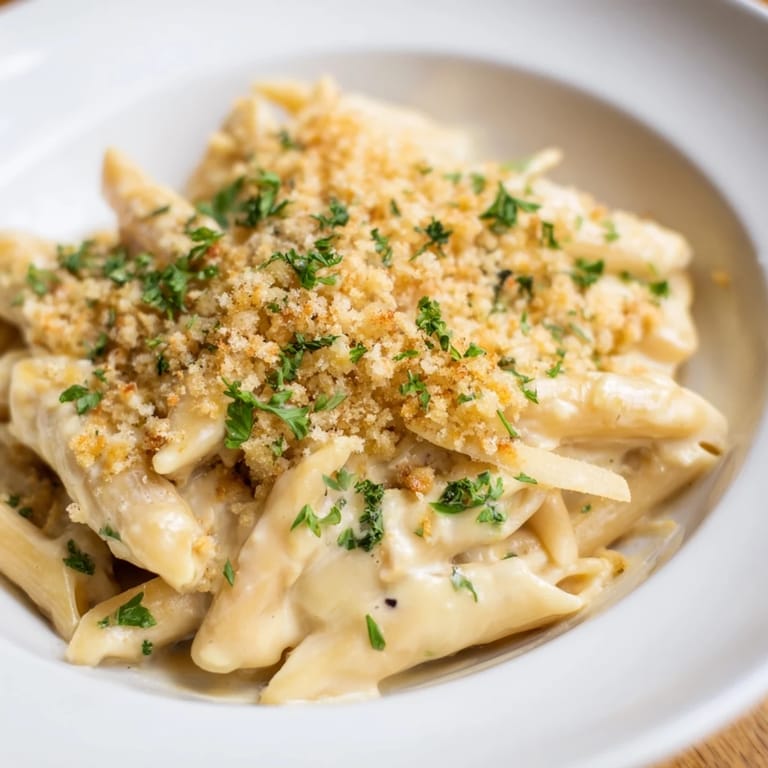
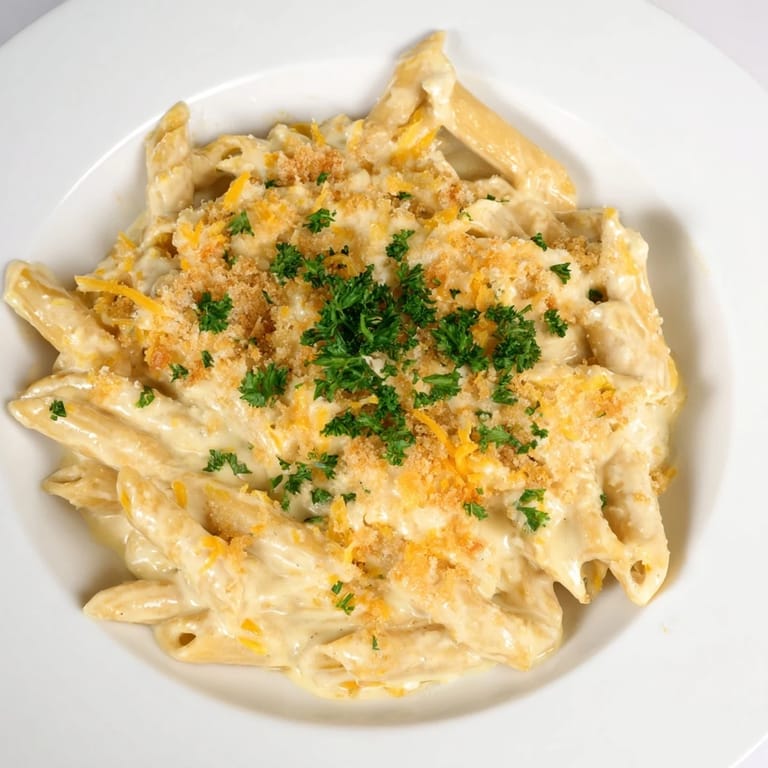
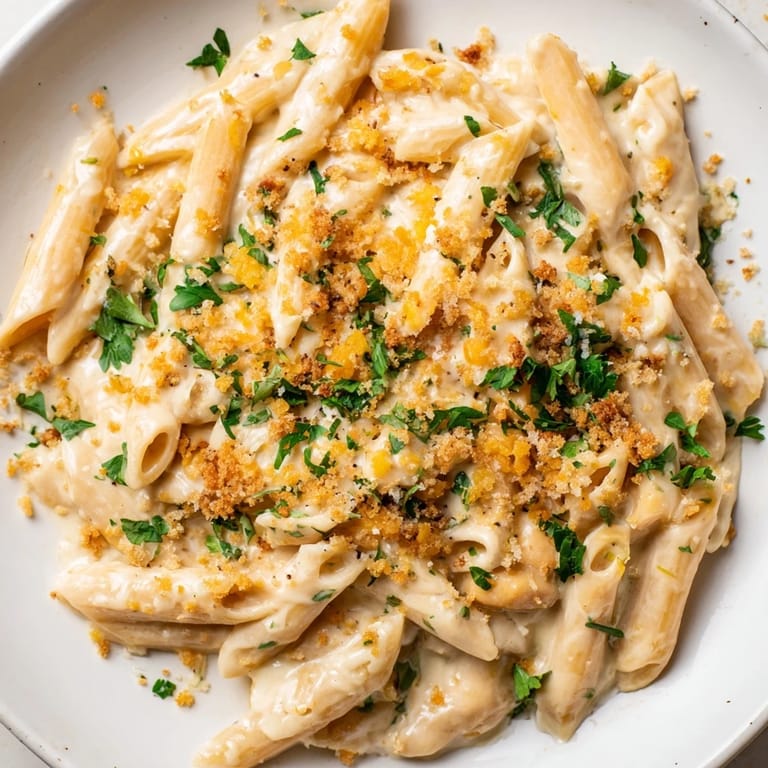
- If you want texture, transfer everything to a baking dish, sprinkle with breadcrumbs, and slide it under the broiler for two to three minutes until golden. Watch it closely because breadcrumbs turn from golden to burnt in about thirty seconds flat.
- Serve immediately:
- Plate it up right away, scatter fresh parsley on top, and serve while it's hot and at its creamiest.
 Save
Save There's something almost therapeutic about stirring this sauce as it thickens, watching it transform from thin and pale to something that coats the back of a spoon like velvet. That moment when you know it's going to work, that it's actually going to taste like something special—that's when cooking stops feeling like a chore.
Building Flavor in a Blended Sauce
When you blend cottage cheese into a sauce, you lose some of the naturally sharp, tangy notes that aged cheddar and Parmesan usually bring. That's why the Dijon mustard is there—not to make it taste mustard-y, but to wake up the cheese flavors and add depth. The nutritional yeast does something similar if you use it, adding a savory richness that makes people pause and say "what is that?" in the best way.
Protein Without the Guilt
This dish has more protein per serving than most creamy pasta dishes because of the cottage cheese foundation and whatever pasta you choose. I started making this because I wanted the comfort of mac and cheese without the post-meal slump, and it actually delivered. You feel full, genuinely satisfied, for hours after eating it.
Make It Your Own
The base recipe is forgiving, and your kitchen is the best place to experiment. Stir in roasted broccoli or spinach while the pasta is still warm, or toss in shredded rotisserie chicken if you want to push the protein even higher. Some people add a tiny pinch of cayenne or smoked paprika for subtle heat, and I've even seen someone add sun-dried tomatoes mixed into the sauce before plating.
- Swap the sharp cheddar for Gruyère or Monterey Jack to completely change the flavor profile while keeping the technique the same.
- If you make this for someone with dietary restrictions, it works beautifully with gluten-free pasta and any plant-based milk you prefer.
- Make extra sauce and freeze it in ice cube trays—you'll have creamy pasta-ready sauce for weeks.
 Save
Save This recipe proved to me that comfort food doesn't have to choose between tasting incredible and being actually nourishing. Make it once, and it'll probably become your version of what mac and cheese should taste like.
Questions & Answers
- → What types of pasta work best for this dish?
High-protein pasta options like chickpea, lentil, or whole wheat work well, offering added nutrition and firmness that holds the creamy sauce.
- → Can I use dairy-free milk for the sauce?
Yes, unsweetened plant-based milk substitutes like almond or oat milk can be used without sacrificing creaminess.
- → How can I thicken the cheese sauce if too runny?
Stir in a little reserved pasta cooking water while heating or blend a bit more cornstarch for a thicker consistency.
- → Is it possible to add protein beyond the cheese?
Absolutely! Stir in cooked, chopped chicken breast or steamed broccoli to boost protein and add texture.
- → What flavor variations can enhance this dish?
Try swapping cheddar for Gruyère or Monterey Jack, or add a pinch of cayenne pepper for subtle heat and depth.