 Save
Save My grandmother pulled these sandwiches from her refrigerator every Derby Day, the bread so thin and delicate you could practically see through it. The pale green spread caught the afternoon light in her crystal serving dish, and somehow that color—achieved with just a whisper of food coloring—made the whole event feel official, important. I watched her squeeze cucumbers in a towel with the focus of someone performing surgery, and years later I understood she was protecting something precious: the texture, the elegance, the way these sandwiches were meant to taste.
I made these for my first proper brunch party as an adult, nervous that everything would fall apart literally and figuratively. A friend arrived early and found me standing there with a towel full of cucumber water, laughing at myself. By the time guests arrived, those sandwiches looked so composed and perfect on the tiered stand that everyone asked for the recipe, and suddenly I wasn't the person who was still figuring things out—I was someone who knew how to make something beautiful.
Ingredients
- 1 large English cucumber, peeled and seeded: Use English cucumbers because they have thinner skins and fewer seeds than regular ones, which means less water to squeeze out and a silkier spread.
- 8 oz cream cheese, softened: This is your base, so let it sit on the counter for at least an hour before you start; cold cream cheese will never blend smoothly and your spread will have tiny lumps.
- 2 tablespoons mayonnaise: Don't skip this—it adds richness and helps everything bind together, making the spread spreadable without being runny.
- 2 tablespoons finely chopped fresh dill: Fresh is non-negotiable here; dried dill tastes like you're eating a sachet, and this dish deserves better than that.
- 1 tablespoon finely chopped chives: They give you a whisper of onion flavor without any harsh bite or visible pieces that feel wrong in such a delicate sandwich.
- 1 tablespoon grated onion: This adds depth without texture; the moisture it releases actually helps the cream cheese spread, so use a microplane and don't skip the pressing step.
- 1/4 teaspoon salt and 1/8 teaspoon ground white pepper: White pepper dissolves invisibly and seasons without speckles, which matters when everything is pale green and elegant.
- 2–3 drops green food coloring (optional): This isn't authentic to taste but traditional to appearance; if you're making these for Derby Day or a formal event, it's worth the small gesture.
- 12 slices very fresh white sandwich bread, crusts removed: Day-old bread tears and crumbles; fresh bread cuts cleanly and holds the spread without collapsing, so buy it the morning you're making these.
- 2 tablespoons unsalted butter, softened (optional): A thin butter layer between bread and filling is what separates these from getting soggy if you're making them more than an hour ahead.
Tired of Takeout? 🥡
Get 10 meals you can make faster than delivery arrives. Seriously.
One email. No spam. Unsubscribe anytime.
Instructions
- Squeeze the cucumber until your hands hurt a little:
- Grate the cucumber on the finest holes of your grater, then gather it in a clean kitchen towel and squeeze like you mean it, working in batches if needed. You're trying to get out every drop of water, which is the difference between a thick spread and a weeping mess.
- Build your flavor base:
- In a medium bowl, combine the softened cream cheese, mayonnaise, dill, chives, grated onion, salt, and white pepper, stirring until it's completely smooth with no streaks. This is your moment to taste and adjust—if it needs more dill or a pinch more salt, fix it now before the cucumber goes in.
- Fold in the cucumber gently:
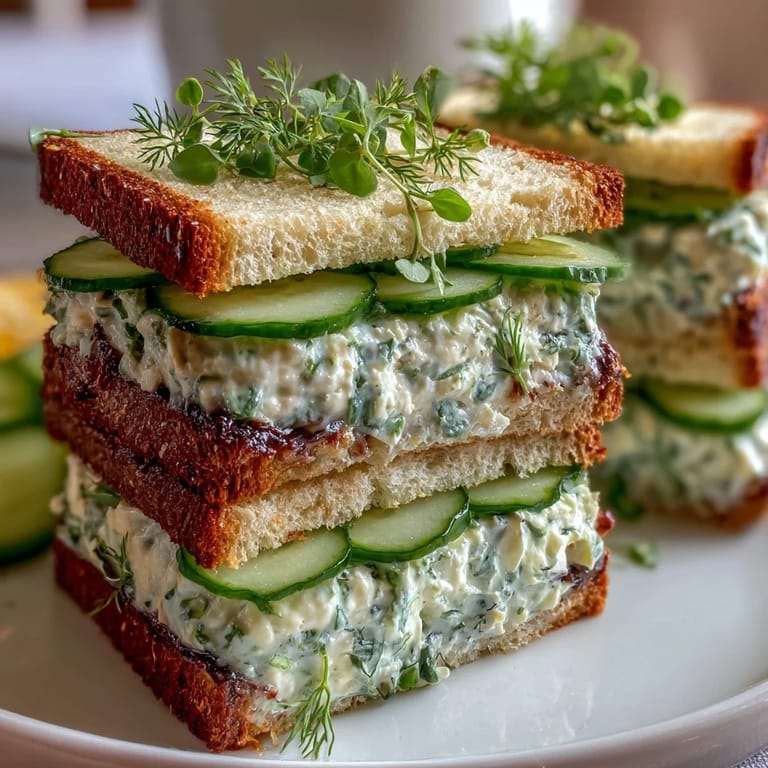
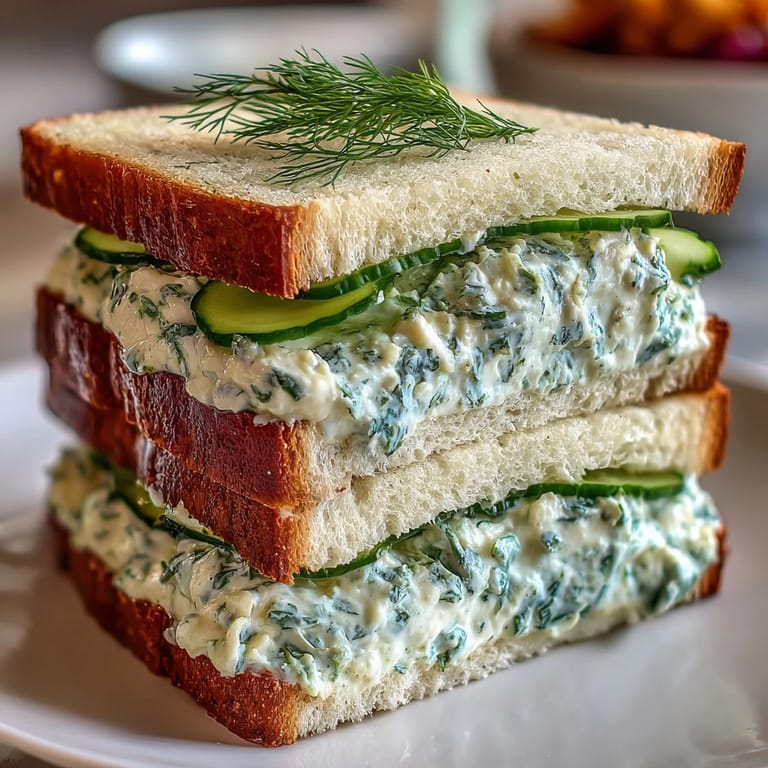
- Stir the drained cucumber into your spread until everything is evenly mixed, then add the food coloring drop by drop if you're using it, stirring until the color is uniform. The spread should look pale green, almost creamy, with tiny specks of dill and herb throughout.
- Protect the bread if you have time:
- If you're assembling these more than 30 minutes before serving, lightly butter one side of each bread slice; this creates a barrier that keeps the bread from absorbing moisture and getting soggy. A very thin layer is all you need—you're not making a butter sandwich, just preventing water damage.
- Spread and stack with intention:
- Lay out half your bread slices, spread each generously with the Benedictine mixture, then top with the remaining bread to form sandwiches. Press down gently so the filling bonds with both layers, but not so hard that you squeeze spread out the sides.
- Trim and cut into elegant pieces:
- Using a sharp knife, trim away any crust that's visible, then cut each sandwich into quarters—either triangles or rectangles depending on the look you want. Wipe your knife clean between cuts so you're not dragging spread and crumbs across fresh bread.
- Serve at the right moment:
- Arrange on a platter and serve right away while the bread still has structure, or cover with a barely damp paper towel and plastic wrap and refrigerate; they'll keep for up to 3 hours before the bread starts to soften.
 Save
Save There's something about serving these at a gathering that makes the occasion feel intentional, like you've taken time to think about what people would enjoy. I've watched guests pick them up expecting something complicated and tasting nothing but freshness and care, and that moment of pleasant surprise is worth every bit of towel squeezing.
The Kentucky Derby Connection
Benedictine sandwiches are a Louisville tradition so strong that eating them is almost a civic act on the first Saturday in May. My grandmother explained that they pair perfectly with bourbon and mint juleps because they're light enough not to overwhelm your palate but substantial enough to stand alongside the celebration. The sandwich itself is humble, but when you're serving them in the context of tradition, they become something more than just food—they're your way of saying you know where you come from.
Making These Ahead
The spread can be made a full day in advance, which is actually perfect because the flavors develop and deepen in the refrigerator, and the dill stops tasting so raw and fresh and starts tasting intentional. I usually make mine the night before, then assemble the sandwiches just a few hours before guests arrive, so the bread is still pristine when people eat them. The moment between spreading and serving is the moment these sandwiches are most themselves, so try to catch that window.
Variations and Personal Touches
The classic version is pale green and delicate, but I've made versions with rye bread for a more assertive flavor, and I've seen people add thin slices of smoked salmon or roasted red pepper for something less traditional but still respectful to the original. Some bakers use whole wheat bread and call it an update; I think of it as a different sandwich entirely, one that's honest about what it is instead of pretending to be something dainty.
- Garnish the finished sandwiches with a thin curl of fresh cucumber or a single dill frond for visual interest and proof that they're made with real herbs.
- If you can't find fresh dill, don't substitute dried; use extra chives or add a tiny bit of tarragon instead.
- Keep your knife sharp and wipe it between cuts—a dull knife tears bread and makes you work harder than you should.
 Save
Save These sandwiches are what happens when you respect an ingredient enough to let it speak for itself, and when you understand that elegance isn't complicated, it's just careful. Make them for someone you want to impress, or make them for yourself and understand that you deserve that kind of attention.
Questions & Answers
- → What is Benedictine spread made from?
The spread combines cream cheese, mayonnaise, finely grated cucumber, fresh dill, chives, grated onion, salt, and white pepper for a smooth, flavorful blend.
- → How do you prevent the bread from becoming soggy?
Lightly buttering one side of the sandwich bread before applying the spread helps to create a moisture barrier and keep the bread from soaking through.
- → Can I prepare the spread ahead of time?
Yes, the Benedictine spread can be made a day in advance and refrigerated to allow flavors to meld and simplify assembly on serving day.
- → Are there alternative bread options suitable for these sandwiches?
Whole wheat or rye bread can be used for variation, adding a different texture and flavor while maintaining the classic feel.
- → How should the cucumber be prepared for the spread?
The cucumber should be finely grated, then squeezed through a clean kitchen towel to remove excess moisture, ensuring a non-watery spread.