 Save
Save My friend brought home a box of Alphonso mangoes from her family trip, and I had exactly one afternoon to do something special with them before they peaked. I'd made cheesecakes before, but never one that tasted like summer itself. That's when I realized—why not let the mango be the star, swirled through creamy filling and crowned with a silky coulis? What started as a race against ripeness became my favorite way to celebrate when fresh fruit is at its absolute best.
I served this at a dinner party where someone had just returned from Goa, and watching their face light up when they tasted it—that quiet recognition of a flavor that mattered to them—reminded me why I love making desserts. They didn't just eat it; they paused between bites, and that's the whole point, isn't it?
Ingredients
- Digestive biscuits (200 g): The foundation needs to be sturdy enough to hold up without cracking, so don't skip the pressing step and never use stale biscuits.
- Unsalted butter (80 g), melted: This binds everything together into that satisfying crunch; warm butter combines more evenly than cooled.
- Full-fat cream cheese (500 g), softened: This is non-negotiable—room temperature cream cheese blends smooth without lumps or that grainy texture.
- Granulated sugar (150 g): Dissolves completely into the filling, creating that silky mouthfeel.
- Fresh mango puree (300 g total): Use only ripe mangoes (Alphonso, Ataulfo, or Kesar work beautifully); underripe mangoes bring sharp, unpleasant notes.
- Sour cream (150 ml): Adds a subtle tang that balances the sweetness and prevents the filling from tasting one-dimensional.
- Large eggs (3): Room temperature eggs incorporate smoothly; cold eggs can seize the filling.
- Vanilla extract (1 tsp): Choose pure vanilla—imitation can taste harsh against delicate mango.
- Lemon juice (1 tbsp): The secret weapon that makes mango taste more like itself, brighter and more alive.
- All-purpose flour (2 tbsp): Stabilizes the filling without making it dense; too much and it becomes cake, too little and it cracks.
- Powdered sugar (3 tbsp total): For the swirl and coulis; finer than granulated, it dissolves without grittiness.
Tired of Takeout? 🥡
Get 10 meals you can make faster than delivery arrives. Seriously.
One email. No spam. Unsubscribe anytime.
Instructions
- Ready your pan and preheat:
- Set the oven to 160°C and line your springform with parchment paper on the bottom. This gentle temperature prevents the filling from cracking or browning; think of it as a slow, patient bake rather than aggressive heat.
- Build the biscuit base:
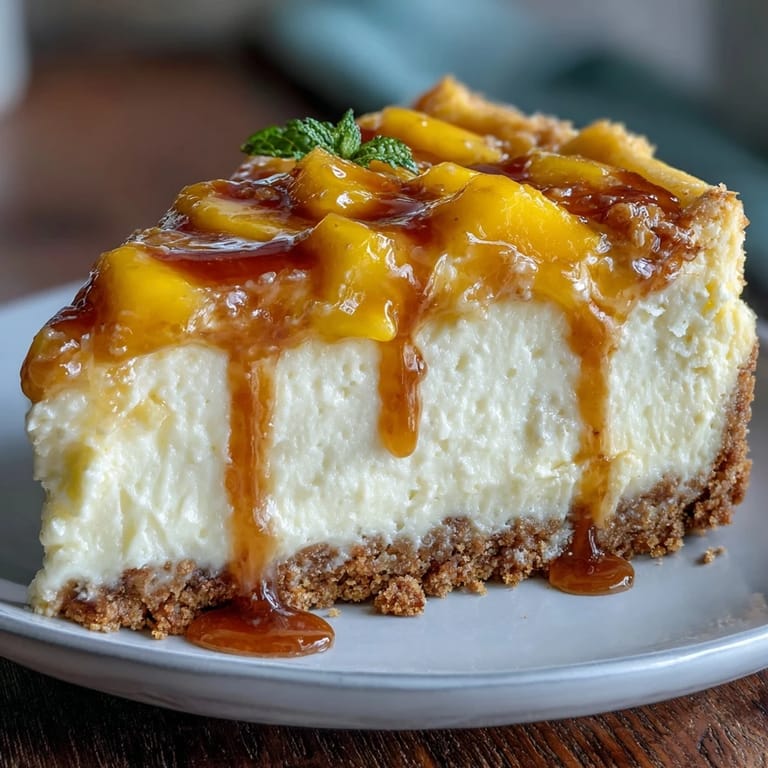
- Crush the digestive biscuits into sand-like crumbs (a food processor is fastest, but a rolling pin works), then toss with warm melted butter until the mixture looks like wet sand. Press it firmly and evenly into the pan—I use the bottom of a measuring cup to get an even layer. Chill while you prepare the filling so it sets slightly and won't shift.
- Create the creamy foundation:
- Beat cream cheese and sugar together until pale and fluffy, about 3 minutes. Add sour cream, then eggs one at a time, beating just until combined after each addition; overmixing incorporates air that can cause cracking. Gently fold in the lemon juice, vanilla, and flour by hand, keeping the batter smooth and dense.
- Swirl in the mango magic:
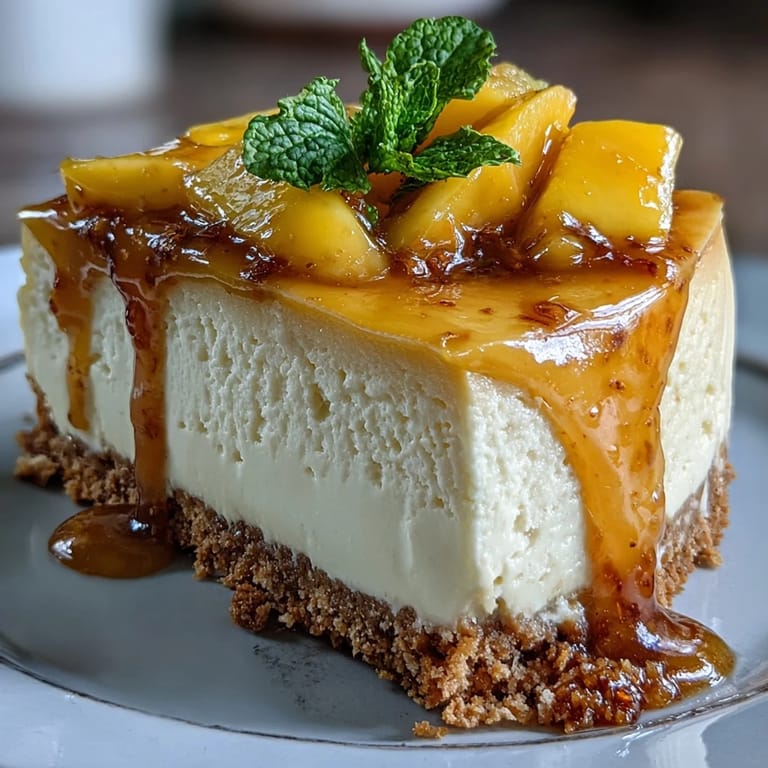
- Fold the 200 g of mango puree into the filling with just a few gentle strokes—you want visible streaks of puree, not a uniform blended color. Pour this into the crust and smooth the top with a spatula.
- Add the glossy swirl on top:
- Mix the remaining 100 g of mango puree with a tablespoon of powdered sugar, then drop spoonfuls across the top of the unbaked cheesecake. Use a skewer or thin knife to drag through the puree in decorative lines; don't overdo it or you'll muddy the effect.
- Bake in a water bath:
- Place your springform pan inside a larger roasting pan, then pour hot water into the larger pan until it reaches halfway up the cheesecake pan's sides. This gentle, moist heat bakes everything evenly and prevents cracks. Bake for 55–60 minutes; the edges should be set but the very center should have a slight wobble when you gently shake the pan—this wobble sets as it cools and keeps the texture creamy rather than dense.
- Cool slowly and chill:
- Turn off the oven and leave the door slightly ajar for 1 hour; this gradual cooling prevents sudden temperature shock that causes cracks. Once it's room temperature, refrigerate for at least 4 hours, preferably overnight—this time is when the flavor deepens and the texture becomes truly silky.
- Finish with the coulis:
- Blend the 150 g mango puree with powdered sugar and lemon juice until completely smooth; strain through a fine mesh if you want an absolutely pristine sauce. Chill the coulis separately until serving.
- Serve with style:
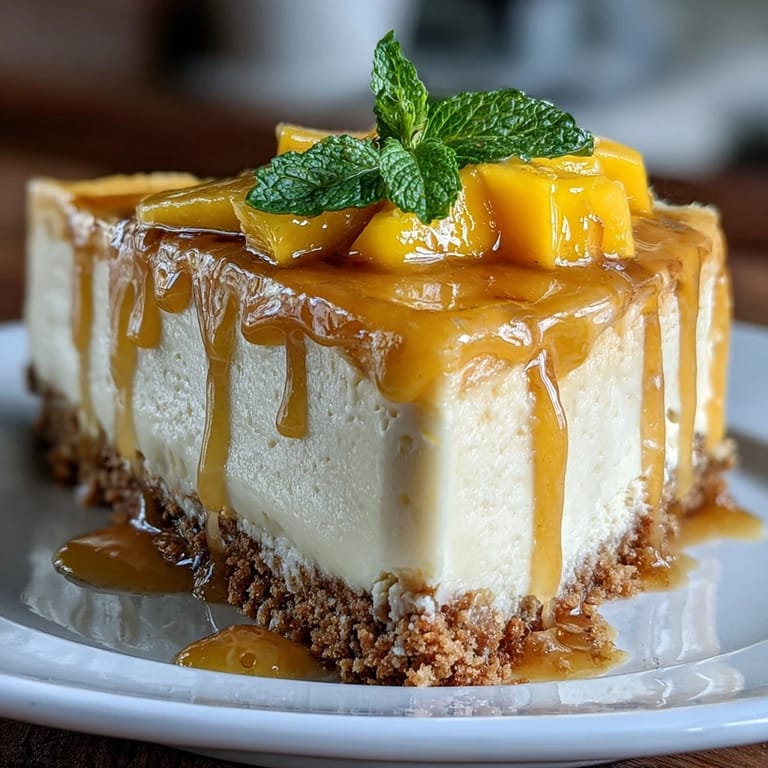
- Run a thin, hot knife around the edges of the cheesecake before unclasping the springform, then slice with that same hot, damp knife (wiping between cuts). Drizzle or spread the coulis over each slice just before serving so it looks fresh and glossy.
 Save
Save What struck me most was serving this to someone who'd never had a proper cheesecake before, and they asked if it was hard to make. When I said no, just patient, something shifted in how they thought about cooking. Good food doesn't always mean difficult; it means showing up and giving something time to become itself.
Choosing Your Mangoes
Not all mangoes are created equal, and this dessert will taste exactly like whatever mango you use. Alphonso mangoes from India are luxuriously sweet and buttery, while Ataulfo mangoes are smaller, honey-like, and intensely flavored. Kesar mangoes from Gujarat have this almost floral quality that's stunning in cheesecake. If you press gently near the stem and it gives slightly, releasing a fragrant aroma, you've got peak ripeness. One underripe mango can sabotage the whole dessert, turning it sharp instead of glorious.
The Water Bath Method
The water bath feels fussy the first time you do it, but it's actually your insurance policy. The water keeps the oven temperature steady and moist, preventing the top from browning or the edges from cooking too fast while the center is still setting. I learned this the hard way by skipping it once—the result was a cheesecake with a dark, slightly leathery top and a filling that seemed almost curdled. Now I never skip it, and neither should you.
Make It Your Own
Once you nail this technique, you understand the framework for endless variations. Passion fruit coulis is stunning instead of mango. A layer of dark chocolate mixed into the biscuit base adds complexity. Some people swirl in a mango jam instead of fresh puree for deeper, more concentrated flavor. The beautiful truth about cheesecake is that the technique stays the same; you're just changing what you're celebrating.
- For a gluten-free version, swap the digestive biscuits for gluten-free cookies and use cornstarch instead of flour in the filling.
- Make the coulis up to two days ahead and refrigerate it separately so flavors deepen and it's one less thing to rush on serving day.
- This cheesecake actually tastes better the next day, so don't hesitate to make it the day before your dinner party.
 Save
Save There's something deeply satisfying about making a cheesecake, knowing that hours of patience in the refrigerator will transform simple ingredients into something that tastes like a celebration. Serve it cold, watch someone take that first bite, and know that you've just made their day a little bit brighter.
Questions & Answers
- → What type of mangoes work best?
Use ripe, sweet varieties like Alphonso or Ataulfo for the best vibrant flavor and smooth puree.
- → How should the biscuit base be prepared?
Crush digestive biscuits finely and mix with melted butter before pressing firmly into the pan for a sturdy, buttery base.
- → What is the technique to create the mango swirl?
Gently drop mango puree mixed with powdered sugar onto the filling and swirl delicately using a skewer or knife for a marbled effect.
- → Why use a water bath during baking?
Baking in a water bath ensures gentle, even cooking that prevents cracking and maintains the creamy texture.
- → How long should the dessert be chilled?
Chill for at least 4 hours or overnight to allow the filling to set and flavors to meld beautifully.
- → Can the biscuit base be made gluten-free?
Yes, substitute digestive biscuits with gluten-free alternatives to suit dietary needs without compromising texture.