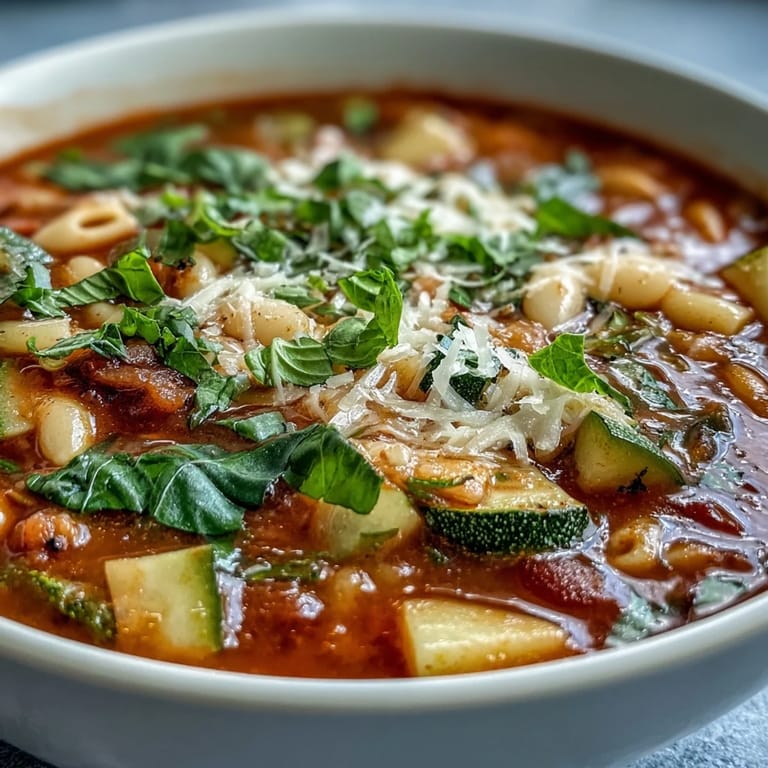
 Save
Save My neighbor Maria taught me that minestrone isn't about following rules—it's about opening your pantry and being honest with what you find. One autumn afternoon, she stirred a pot while autumn light streamed through her kitchen window, and I watched her taste, adjust, taste again, never once consulting a recipe. That lesson stuck with me: this soup is a conversation between you and whatever vegetables are in season, bound together by beans, pasta, and the kind of warmth that makes people linger at the table.
I made this soup on a random Tuesday when my daughter came home from school talking about a friend who only ate "beige foods," and I wanted to prove that vegetables could be delicious without tasting like punishment. She had three bowls and asked for seconds with crusty bread. Sometimes the best cooking happens when you're not trying to impress anyone—just feeding the people in front of you.
Ingredients
- Olive oil: Two tablespoons is enough to coat the bottom of your pot and let the aromatics soften without browning—use good oil you actually enjoy tasting.
- Onion, garlic, carrots, and celery: This is your flavor foundation, the holy trinity that every Italian grandmother knows by heart.
- Zucchini, potato, and green beans: These vegetables add body and different textures, though honestly you can swap them for whatever season offers—spinach and kale work beautifully in winter.
- Diced tomatoes: A 14-ounce can with juice creates the tangy backbone of the broth.
- Vegetable broth and water: Six cups total, though you might need a splash more if your vegetables absorb more liquid than expected.
- Cannellini beans: Drain and rinse them even though the can says they're ready—this removes the starchy liquid that can cloud your soup.
- Small pasta: Ditalini or elbow macaroni work perfectly; add it toward the end so it doesn't absorb all the broth and turn your soup into porridge.
- Dried oregano and basil: These go in early when the broth is building flavor, but fresh herbs at the end add a brightness dried ones can't reach.
- Bay leaf, salt, and pepper: The bay leaf infuses everything with subtle depth and should be fished out before serving.
- Fresh parsley and basil: Stir these in at the very end when the pot is off heat so they stay vibrant and green.
- Parmesan cheese: Optional but transformative—a handful grated over the top adds richness and a salty note that makes people ask for the recipe.
Tired of Takeout? 🥡
Get 10 meals you can make faster than delivery arrives. Seriously.
One email. No spam. Unsubscribe anytime.
Instructions
- Build your flavor base:
- Heat olive oil in a large pot over medium heat, then add the chopped onion and minced garlic. Let them soften for two to three minutes until they smell incredible and turn translucent at the edges—this is when you know you're on the right track. Don't rush this step; it's where the whole soup starts.
- Layer in the vegetables:
- Add the carrots, celery, zucchini, potato, and green beans, then sauté everything together for five to six minutes until the vegetables start to soften and the kitchen smells like a market garden. You'll notice the onion begins to caramelize at the edges, which is exactly what you want.
- Pour in the liquid and seasonings:
- Stir in the diced tomatoes with their juices, vegetable broth, and water, then add the dried oregano, dried basil, bay leaf, and a pinch of salt and pepper. Give everything a stir, then bring it to a boil—you'll see the surface shimmer and steam rise, and that's when you know the soup is starting to come alive.
- Let it simmer gently:
- Reduce the heat to a simmer, cover the pot, and let it bubble quietly for fifteen minutes. The vegetables will soften, the broth will deepen in color, and your kitchen will smell like Sunday dinner.
- Add beans and pasta:
- Stir in the drained cannellini beans and the dry pasta, then continue simmering uncovered for ten to twelve minutes until the pasta is tender and the vegetables are completely soft. Taste a piece of pasta to check—it should have no hard center.
- Finish with fresh herbs and adjust seasoning:
- Remove the bay leaf with a spoon or small strainer, then stir in the fresh parsley and basil. Taste a spoonful of broth and add more salt and pepper if it needs it—remember that Parmesan at the end will add saltiness, so don't oversalt now.
- Serve with care:
- Ladle into bowls and top with grated Parmesan if you like, then serve while it's hot with crusty bread on the side. There's something about minestrone that makes people slow down and actually taste what they're eating.
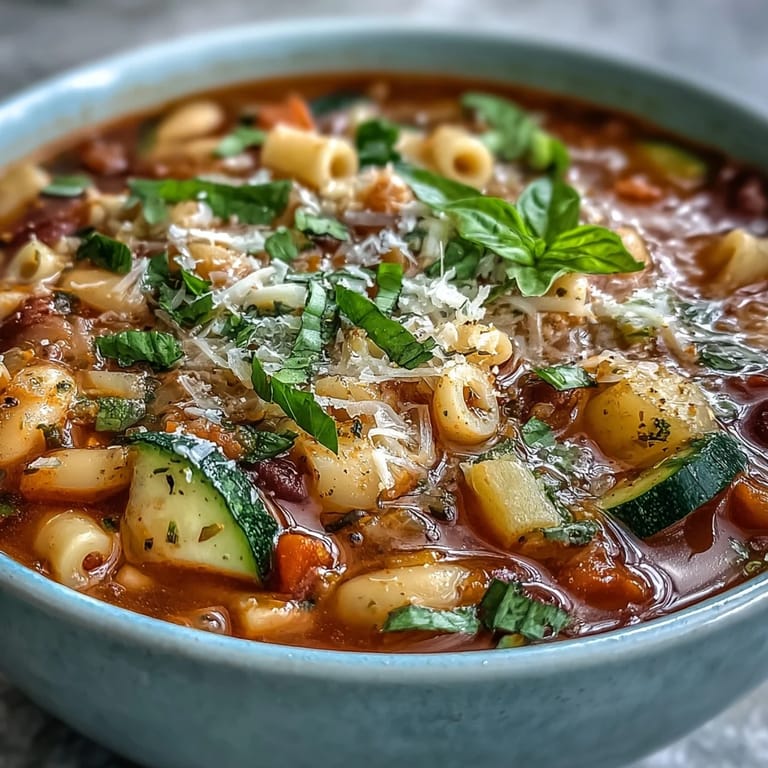 Save
Save There's a moment that happens with minestrone when everyone at the table stops talking and just eats, and you realize that a soup—something so simple and unpretentious—has somehow become the most important thing in the room. That's when you know you've made something real.
The Beauty of Seasonal Swaps
The reason minestrone has survived centuries is because it doesn't demand a rigid ingredient list—it asks you to look at what's growing right now and trust your instincts. In spring, I add fresh peas and swap the green beans for asparagus cut into short pieces; in summer, I include bell peppers and fresh corn kernels; in fall, I'll add diced butternut squash alongside the potato; in winter, chopped kale or cabbage adds heartiness when fresh vegetables are scarce. Each version tastes different but equally true, which is the whole point.
Why This Soup Gets Better Overnight
If you make minestrone on a Tuesday evening, it will be delicious Wednesday at lunch—possibly better. The flavors marry overnight as the broth absorbs the vegetable essence, the pasta softens from residual heat, and everything integrates into a more cohesive whole. I always make extra, and I always look forward to the next day's bowl more than the first.
Making It Truly Your Own
Once you understand the basic structure—sautéed aromatics, seasonal vegetables, beans, pasta, broth, and fresh herbs—you can adapt this recipe to match whatever constraints or preferences you have. A friend who eats vegan serves hers with nutritional yeast instead of Parmesan and swears it's better. Another adds white beans instead of cannellini and a splash of red wine. The framework stays the same; everything else is yours to decide.
- If you want a heartier soup, add pancetta or sausage with the onion, or simply use two cans of beans instead of one.
- For a gluten-free version, swap regular pasta for a gluten-free shape and the soup loses nothing of its soul.
- Keep a container of this in the freezer (without the pasta, which can get mushy) and you'll have comfort in a bowl whenever you need it most.
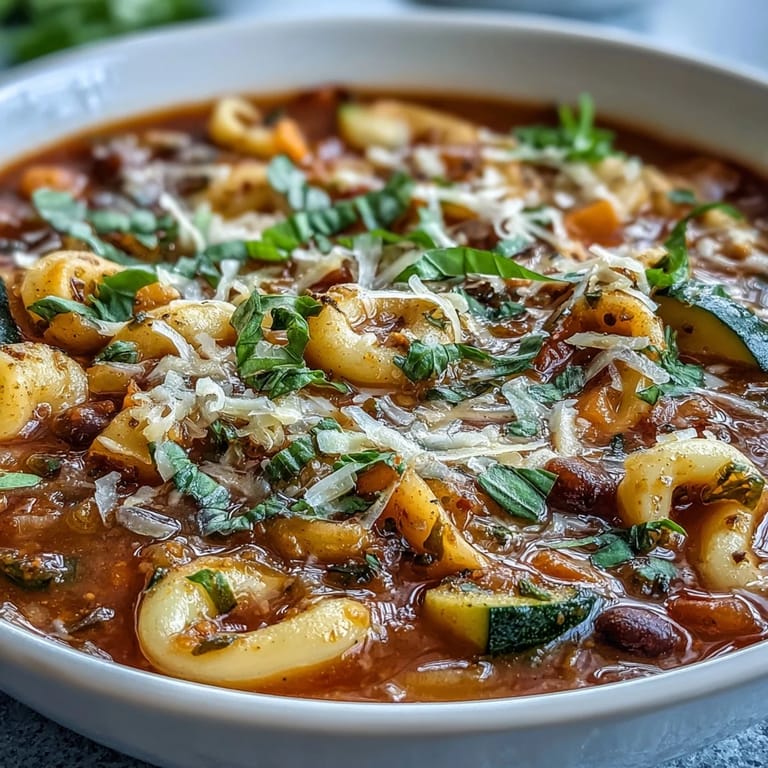 Save
Save Minestrone is the soup that reminds us cooking doesn't have to be complicated to be meaningful. Make it tonight and taste what happens when simple ingredients and a little time become something worth remembering.
Questions & Answers
- → What vegetables work best in minestrone?
Traditional minestrone includes carrots, celery, zucchini, potatoes, and green beans. However, you can adapt based on seasonality—spinach, kale, cabbage, or Swiss chard all work beautifully. The key is cutting vegetables into similar-sized pieces for even cooking.
- → Can I make minestrone gluten-free?
Absolutely. Simply substitute the regular pasta with gluten-free pasta shapes like ditalini, elbow macaroni, or small shells. Rice-based pastas hold up well in soup. All other ingredients naturally contain no gluten.
- → How long does minestrone soup keep?
Stored in an airtight container in the refrigerator, minestrone keeps for 4-5 days. The pasta will absorb more liquid over time, so you may need to add extra broth when reheating. It also freezes well for up to 3 months—consider slightly undercooking the pasta if freezing.
- → Can I use dried beans instead of canned?
Yes, soak 1 cup dried cannellini beans overnight, then simmer until tender before adding to the soup. This takes longer but yields excellent texture. You'll need about 3 cups cooked beans to replace the canned version.
- → What pasta shape is traditional for minestrone?
Small pasta shapes like ditalini, elbow macaroni, shells, or tubetti work best. Their size complements the chopped vegetables without overpowering the spoonful. Larger shapes break apart during simmering and can make the soup overly starchy.
- → How can I add more protein to minestrone?
Beyond cannellini beans, you can add extra beans like kidney or borlotti. For non-vegetarian versions, pancetta or bacon sautéed with the onions adds depth and protein. A dollop of pesto stirred in at serving also contributes richness.