 Save
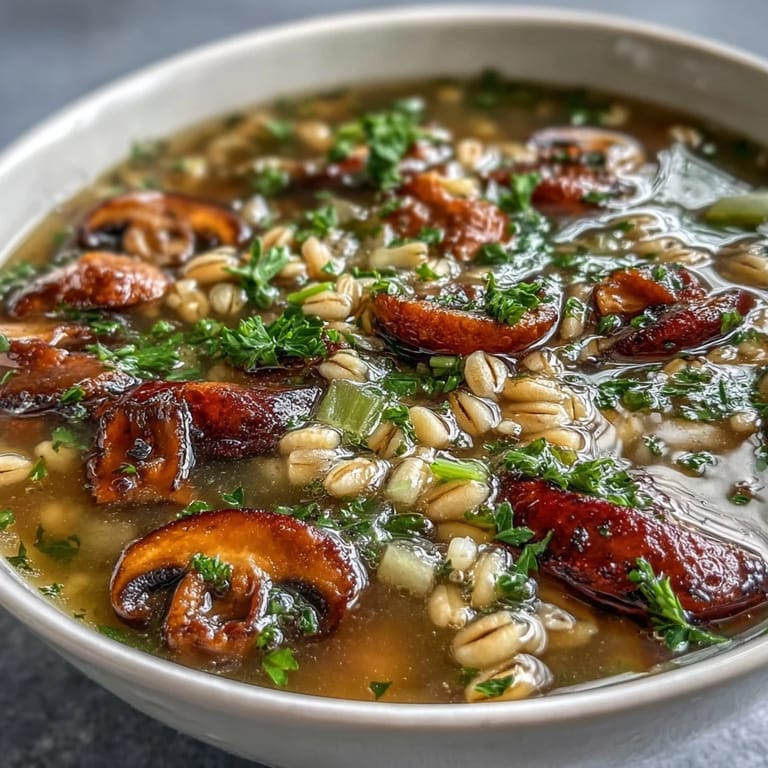
Save My neighbor knocked on the door one October afternoon with a bag of mushrooms from her garden, and I suddenly had to figure out what to do with them before they darkened. I remembered my grandmother's soup pot always had something earthy simmering on the back burner, so I raided my pantry for barley and broth. The kitchen filled with this warm, umami-rich smell that made me want to slow down and just breathe it in for a moment.
Last winter I made this for my partner when they were recovering from being under the weather, and watching them have a second bowl without being asked told me everything. There's something about barley soup that feels both practical and deeply nourishing, like the kitchen knew exactly what was needed before I even did.
Ingredients
- Olive oil: Two tablespoons is your foundation for building flavor, and it keeps the vegetables from sticking while they release their goodness into the pot.
- Onion, garlic, carrots, and celery: This aromatic base is where all the flavor lives, and the longer you let them soften together, the richer your soup becomes.
- Mushrooms: Cremini or button mushrooms work beautifully here, and slicing them uniform means they cook evenly and contribute that earthy umami that makes people ask for the recipe.
- Dried thyme and oregano: These herbs bridge the vegetables and barley so nothing tastes one-dimensional, and you can taste them sing when the broth comes together.
- Pearl barley: Rinsing it first keeps your soup from getting starchy and cloudy, and this grain has a satisfying chew that makes every spoonful feel substantial.
- Vegetable broth: Use something you actually like drinking, because it becomes the voice of your entire soup.
- Bay leaf: One leaf quietly deepens everything without announcing itself, and you always remember to fish it out before serving.
- Salt, pepper, parsley, and lemon juice: These finishing touches let you taste the soup and make it sing with your own hand, adjusting until it feels right.
Tired of Takeout? 🥡
Get 10 meals you can make faster than delivery arrives. Seriously.
One email. No spam. Unsubscribe anytime.
Instructions
- Build your flavor base:
- Pour the olive oil into a large pot over medium heat and let it warm for just a moment. Toss in the chopped onion and let it cook for three minutes until it turns translucent and soft, filling your kitchen with that welcoming aroma that says something good is happening.
- Soften the supporting vegetables:
- Stir in the minced garlic, diced carrots, and celery, cooking for about five minutes while you stir occasionally. You'll watch the vegetables lose their rawness and start to release their sweetness into the oil, creating a base that tastes like comfort.
- Welcome the mushrooms:
- Add your sliced mushrooms and let them cook for six to eight minutes, stirring from time to time, until they release their moisture and the pan starts to smell deeply earthy and rich. This is the moment the soup starts to feel intentional rather than just thrown together.
- Add the aromatics:
- Sprinkle in the thyme and oregano, stirring everything together so the dried herbs wake up and coat all the vegetables. You'll notice the smell shift slightly as these herbs integrate, deepening what's already building in your pot.
- Introduce the barley and broth:
- Add the rinsed pearl barley, vegetable broth, and bay leaf, stirring gently to combine everything. This is when the soup transforms from a vegetable sauté into something meant to nourish you fully.
- Let it simmer low and slow:
- Bring everything to a boil, then immediately turn the heat down to low and let it simmer uncovered for thirty five to forty minutes. The barley will gradually soften and the soup will thicken slightly as the starches release, and you can just check on it occasionally, maybe reading nearby or prepping something else.
- Season and finish:
- Remove the bay leaf with a spoon or fork, then taste your soup and add salt and pepper until it tastes right to you. If you want brightness, squeeze in a little lemon juice and watch it open everything up.
- Serve with warmth:
- Ladle the soup into bowls and scatter fresh parsley over the top if you have it. This small green addition makes it feel finished and adds a fresh note that balances all the earthiness.
 Save
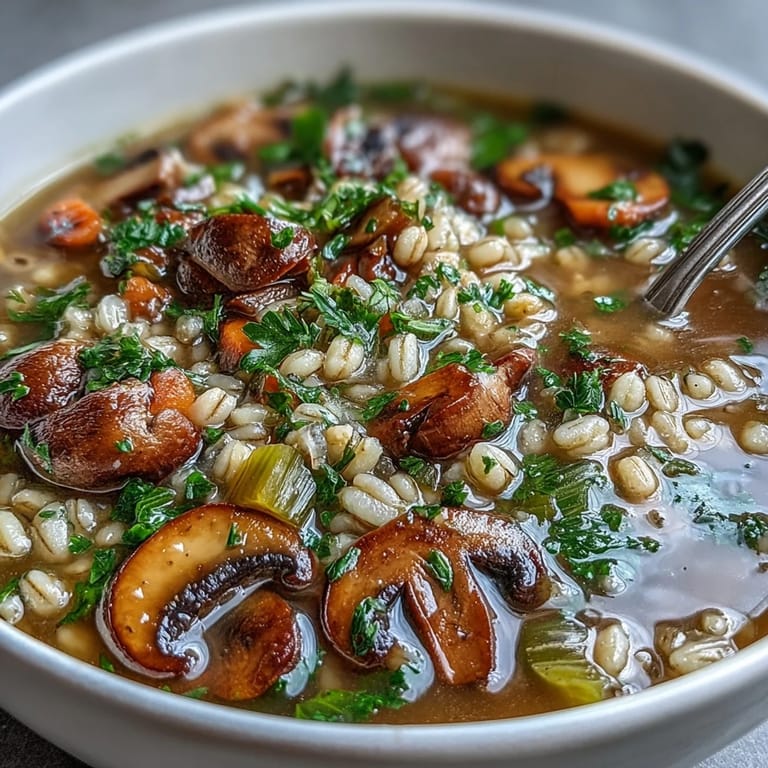
Save My friend came over for lunch and I served this soup cold from the fridge the next morning, and she actually preferred it that way, spooning it slowly like she was savoring something precious. It reminded me that sometimes food feeds us in ways that have nothing to do with temperature, and everything to do with intention and care.
How to Make This Soup Your Own
This recipe welcomes additions without losing itself, which is part of what makes it so useful. I've added diced potatoes in the last fifteen minutes for extra heartiness, stirred in chopped kale when I wanted more green, and once I even threw in a parsnip because it was sitting lonely in my vegetable drawer.
The Umami Secret
If you want to deepen the soup's savory richness, add a tablespoon of soy sauce along with the broth, and suddenly it tastes like you've been simmering it with more intention. The mushrooms already bring umami, but the soy sauce just magnifies it, making every spoonful feel more grounded and complete.
Storage and Make-Ahead Tips
This soup improves as it sits, so feel confident making it a day or two ahead. Store it in an airtight container in the refrigerator for up to four days, or freeze portions for up to three months, and it reheats beautifully on the stove with a splash of broth if needed.
- The soup actually tastes even better on the second day because the barley continues to absorb flavor and the herbs deepen.
- If you're freezing it, wait until it's completely cool before transferring to containers so condensation doesn't make it watery.
- When reheating, add a little extra broth because barley absorbs liquid over time and you want it to return to that comforting spoonable consistency.
 Save
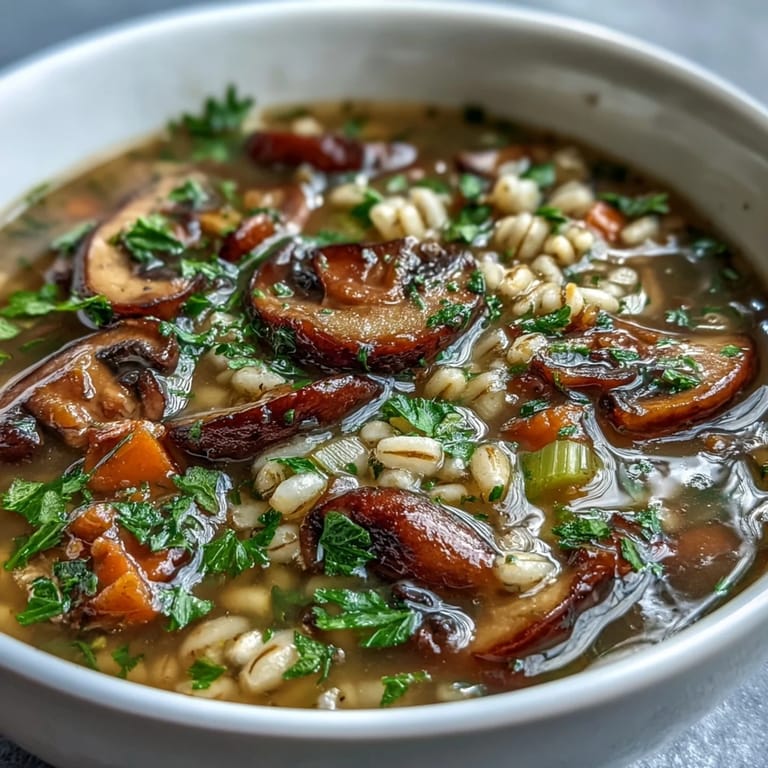
Save This soup has become my kitchen's quiet comfort, the thing I make when I want to feel grounded and connected to what I'm eating. It's proof that simple ingredients, given time and attention, become something far greater than themselves.
Questions & Answers
- → Is pearl barley gluten-free?
No, pearl barley contains gluten. If you need a gluten-free alternative, consider using quinoa, rice, or buckwheat instead. Always verify that your vegetable broth is certified gluten-free as well.
- → Can I make this soup in a slow cooker?
Yes! Sauté the vegetables and mushrooms first, then transfer everything to your slow cooker. Cook on low for 6-7 hours or on high for 3-4 hours until the barley is tender. You may need to add extra broth as slow cookers evaporate less liquid.
- → How long does this soup keep in the refrigerator?
This soup stores beautifully in an airtight container in the refrigerator for 4-5 days. The barley will continue to absorb liquid, so you may need to add more broth when reheating. It also freezes well for up to 3 months.
- → Can I use other types of mushrooms?
Absolutely. While cremini or button mushrooms work well, you can also use shiitake for extra umami, portobello for a meatier texture, or a wild mushroom blend for deeper flavor. Dried porcini mushrooms reconstituted in the broth add wonderful richness too.
- → What can I add to make this soup more filling?
For extra heartiness, add diced potatoes with the barley, or stir in chopped kale during the last 15 minutes of cooking. A can of cannellini beans or lentils also works well. A tablespoon of soy sauce or nutritional yeast boosts both flavor and protein.
- → Do I need to rinse pearl barley before cooking?
Yes, rinsing pearl barley under cold water removes any dust or debris and helps remove excess starch. This simple step prevents the soup from becoming overly thick or gummy as the barley cooks.