 Save
Save There's a particular moment when you crack open a passionfruit and that tart, aromatic perfume fills your kitchen—it happened to me at a farmer's market on a random Thursday, and I became instantly obsessed. I'd never made a tart before, but something about that wrinkled little fruit made me want to try, so I went home and started experimenting with pastry dough and custard. The first attempt was admittedly chaotic, with butter flying everywhere and my meringue weeping, but there was something magical about layering those three components together. Now whenever I make this, it feels less like following a recipe and more like a small kitchen ritual I genuinely look forward to.
I made this for my sister's birthday dinner once, and she took one bite, closed her eyes, and just sat there for a moment before saying anything. That pause told me everything—it wasn't just dessert, it was an experience. Serving this tart became less about the recipe itself and more about watching people discover something they didn't expect to love, especially when they tasted that brightness of passionfruit cutting through the richness.
Ingredients
- All-purpose flour: This is your neutral base, and cold is crucial because warmth melts the butter before you want it to, turning your pastry dense instead of flaky.
- Granulated sugar: Use the regular stuff for the pastry and curd, but save any fancy sugars for garnish since they'll just dissolve during cooking.
- Salt: That tiny pinch isn't optional—it amplifies the passionfruit flavor and keeps the whole tart from tasting one-dimensional.
- Unsalted butter, cold and cubed: This is non-negotiable for both the shell and curd; cold butter creates steam pockets in pastry, and in the curd it adds silkiness without breaking.
- Egg yolk (for pastry): This acts as a binder and enriches the dough, making it tender and slightly golden when baked.
- Ice water: Keep it genuinely cold from the fridge, adding just enough until the dough holds together without becoming sticky.
- Passionfruit pulp: Fresh is best if you can find it, but frozen works beautifully—just make sure you strain out the seeds for a smooth curd, though save some seeds for garnish if you like.
- Whole eggs and egg yolks (for curd): The yolks contribute richness while the whole eggs help set the curd to that glossy, spoonable consistency.
- Lemon juice: A tablespoon sounds small, but it balances the sweetness and adds a subtle brightness that makes the passionfruit pop.
- Egg whites and cream of tartar: Room temperature egg whites whip higher and faster, and cream of tartar stabilizes them so your meringue doesn't weep or collapse later.
- Vanilla extract: Just a small amount, but it whispers through the meringue and ties everything together.
Tired of Takeout? 🥡
Get 10 meals you can make faster than delivery arrives. Seriously.
One email. No spam. Unsubscribe anytime.
Instructions
- Set your oven and prep your pan:
- Preheat to 350°F and grease that 9-inch tart pan generously so your shell releases cleanly when you need it to.
- Build your pastry dough:
- Combine flour, sugar, and salt, then work in cold butter cubes using your fingertips or a pastry blender until the mixture looks like coarse breadcrumbs. This texture is your signal that the butter is distributed evenly and will create those flaky layers. Add the egg yolk and ice water just until the dough comes together without becoming wet or sticky.
- Form and chill the shell:
- Press your dough into the tart pan, trim the edges neat, and chill for 15 minutes—this resting time helps prevent shrinkage during baking.
- Blind bake for structure:
- Line your crust with parchment and fill with pie weights or dried beans, then bake for 15 minutes. Remove the weights and parchment, give it another 8 to 10 minutes until golden and set, then let it cool completely so the curd doesn't start cooking on contact.
- Create the passionfruit curd:
- In a saucepan, whisk passionfruit pulp, sugar, whole eggs, egg yolks, lemon juice, and salt together, then cook over medium-low heat while whisking constantly until the mixture thickens and coats the back of a spoon (usually around 8 minutes). Remove from heat and whisk in the butter until silky and smooth, then pour it into your cooled shell and smooth the top gently.
- Let it set properly:
- Refrigerate for at least an hour so the curd becomes firm enough to support the meringue without collapsing when you slice it later.
- Whip your meringue:
- In a clean, dry bowl, beat room temperature egg whites with cream of tartar to soft peaks, then gradually add sugar while beating until you have stiff, glossy peaks that hold their shape. Finish with vanilla extract for warmth.
- Top and toast:
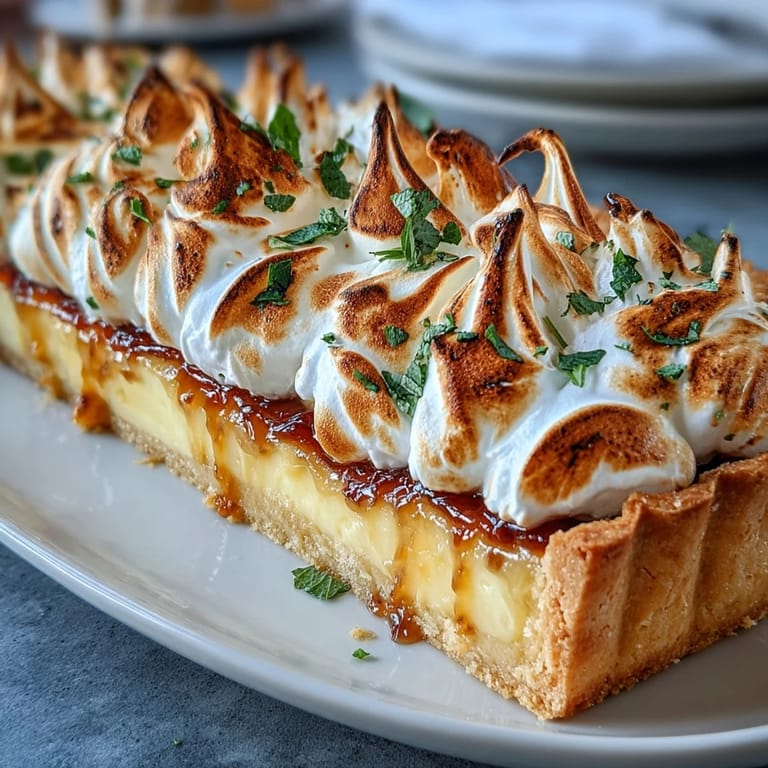
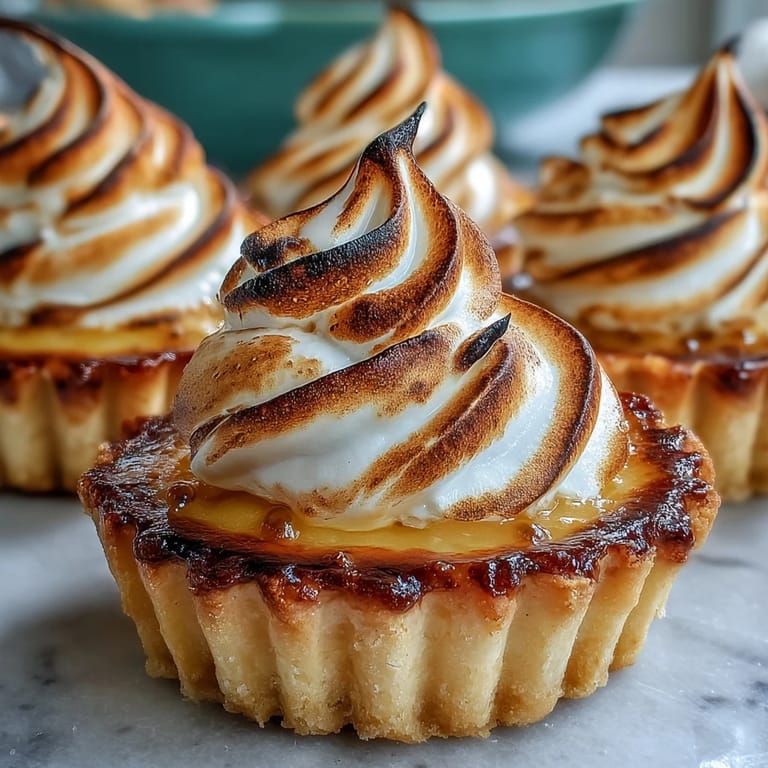
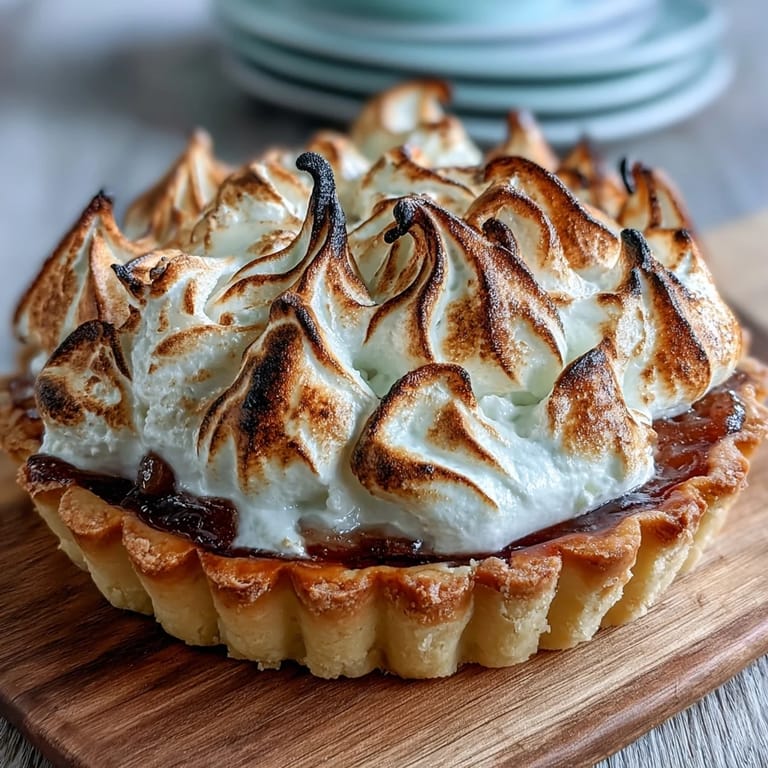
- Spoon or pipe meringue decoratively onto the chilled tart, then use a kitchen torch or broiler to brown it lightly for 1 to 2 minutes, watching closely so it caramelizes without charring.
- Final chill before serving:
- Give it one more 30-minute chill so the slices are clean and the layers don't slide around.
 Save
Save What surprised me most was how this dessert became a conversation starter—people actually slowed down to taste each component separately, which almost never happens with dessert. That moment of someone discovering that crispy, buttery pastry gives way to tangy curd and then dissolves into meringue was worth every whisking minute I spent.
The Pastry Shell Secret
The difference between a pastry that shatters delicately and one that tastes like a dense cracker comes down to respecting the butter and not overworking the dough. I learned this the painful way after kneading my first batch like pizza dough, but once I started using the fingertip method and keeping everything cold, everything changed. The moment your dough pulls together, stop—trust that it's enough, even if it looks shaggy.
Passionfruit Pulp Techniques
Finding good passionfruit pulp can be tricky depending on where you live, so I've found that frozen pulp from specialty markets works just as well as fresh. Straining out those seeds before cooking creates that smooth, luxurious curd that feels elegant on your tongue, though if you like texture, you could leave some seeds in the finished tart for visual pop and a slight crunch. The flavor is intensely tart on its own, which is exactly why that tablespoon of lemon juice and whisper of salt matter so much.
Meringue Magic and Beyond
Meringue intimidates most home cooks, but it's really just a matter of clean equipment and patience—I made mistakes until I started taking five minutes to wipe down my mixer bowl with vinegar to ensure zero grease. The moment the peaks go stiff and glossy is your signal to stop, because overbeating actually breaks them down and you'll lose all that air you worked to incorporate. The torch method gives you more control than a broiler, letting you get that golden-brown finish without cooking the curd underneath.
- If your meringue weeps or separates before serving, it's because the curd was too warm or the egg whites weren't stable enough, so temperature control matters more than you'd think.
- A kitchen torch is genuinely worth buying if you don't have one, because that caramelized top makes an ordinary tart feel like something from a French patisserie.
- Fresh passionfruit seeds or tiny edible flowers scattered on top take this from impressive to unforgettable, and they're usually available at specialty markets or online.
 Save
Save This tart has become my answer when someone asks what I'd make if I wanted to impress someone without spending all day in the kitchen. It's fancy enough to feel special but forgiving enough that small mistakes don't derail the whole thing.
Questions & Answers
- → How do I ensure the pastry shell is crisp?
Use cold, cubed butter rubbed into flour to create flaky crumbs, chill the dough before baking, blind bake with weights to prevent puffing, and bake until golden before adding the filling.
- → Can I use frozen passionfruit pulp?
Yes, thaw frozen passionfruit pulp and strain out the seeds to achieve a smooth curd texture without bitterness.
- → What is the best way to achieve fluffy meringue peaks?
Beat room temperature egg whites with cream of tartar to soften peaks, then gradually add sugar while continuing to beat until stiff, glossy peaks form.
- → How do I brown the meringue evenly?
Use a kitchen torch to carefully brown the meringue for 1–2 minutes, or place under a preheated broiler watching closely to prevent burning.
- → Can I prepare the tart ahead of time?
The tart can be assembled and chilled for at least one hour before adding and browning the meringue, making it suitable for advance preparation.