 Save
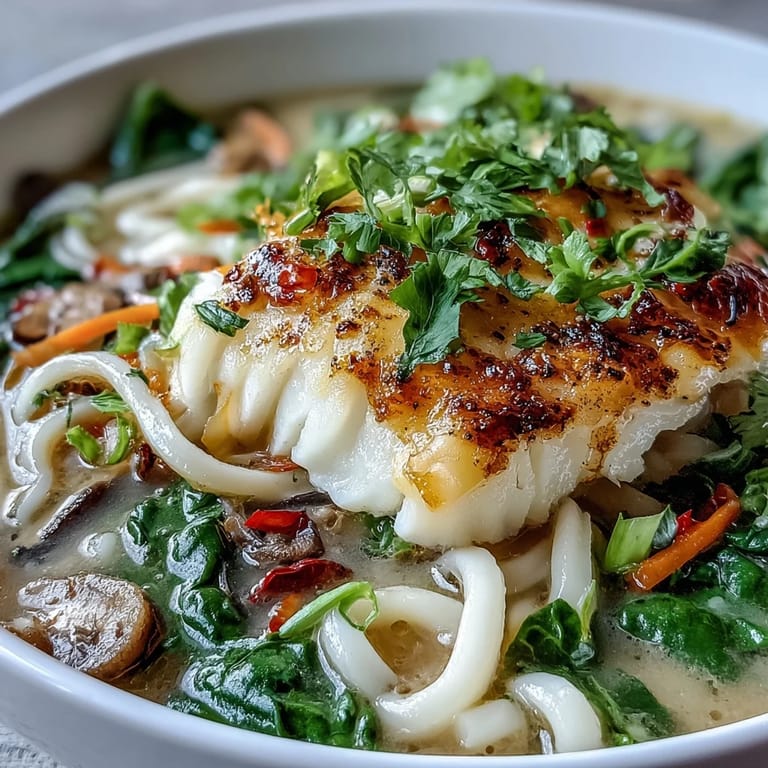
Save The kitchen was quiet except for the sound of rain tapping against the window when I first put this bowl together on a cold Tuesday night. I had cod thawing in the fridge and a tin of coconut milk in the pantry, and I wanted something warm without the heaviness of cream or butter. The broth came together faster than I expected, filling the house with ginger and lime, and by the time I slid the fish in, I knew this would become a regular in my rotation. It's the kind of meal that feels like care without demanding much from you.
I made this for a friend who was getting over a cold, and she sat at my kitchen table with the bowl cradled in her hands, breathing in the steam before she even picked up her chopsticks. She said it tasted like comfort and medicine at the same time, which I think is exactly what a good noodle bowl should do. Since then, I've learned that this dish works just as well for a quiet solo dinner as it does for a small gathering where everyone wants something nourishing and flavorful. It's become my answer to the question of what to cook when I want to feel taken care of.
Ingredients
- Cod fillets: Choose fillets that are firm and smell like the ocean, not fishy, and make sure they're skinless so they poach evenly without curling.
- Neutral oil: Canola or sunflower oil works perfectly here because you want the aromatics to shine without competing flavors.
- Onion: Slice it thinly so it softens quickly and melts into the broth, adding a subtle sweetness.
- Garlic and ginger: Fresh is essential, the sharpness of garlic and the warmth of ginger create the backbone of the broth.
- Red chili: Optional but recommended if you like a little heat, just slice it thin and remove the seeds if you want it milder.
- Red curry paste: This is where the spice and depth come from, I use Thai red curry paste and it transforms the coconut milk.
- Coconut milk: Use full-fat for richness, the broth will taste thin and disappointing with lite versions.
- Fish or vegetable stock: Fish stock adds more umami, but vegetable stock works beautifully if that's what you have.
- Fish sauce and soy sauce: These two together create a savory depth that balances the sweetness of the coconut milk.
- Lime juice: Freshly squeezed is a must, it brightens everything and cuts through the richness.
- Udon noodles: Fresh udon are thick and chewy and hold up perfectly in the hot broth, but dried work too if that's easier.
- Baby spinach: It wilts in seconds and adds color and a bit of earthiness without any bitterness.
- Carrot: Julienned thin so it stays slightly crisp and adds a sweet crunch.
- Shiitake mushrooms: Their meaty texture and umami flavor make the broth feel more substantial.
- Spring onions and coriander: Fresh garnishes that add brightness and a pop of green right before serving.
Tired of Takeout? 🥡
Get 10 meals you can make faster than delivery arrives. Seriously.
One email. No spam. Unsubscribe anytime.
Instructions
- Build the aromatic base:
- Heat the oil in a large saucepan over medium heat and add the sliced onion, letting it soften for about 3 minutes until it turns translucent and sweet. Stir in the garlic, ginger, and chili, cooking for just a minute until the kitchen smells incredible and the rawness disappears.
- Bloom the curry paste:
- Add the red curry paste and stir it into the aromatics for about a minute, letting the oil carry the spices and deepen their flavor. This step makes all the difference, raw curry paste tastes harsh but bloomed curry paste tastes warm and complex.
- Create the broth:
- Pour in the coconut milk and stock, stirring to combine, and bring it to a gentle simmer. Add the fish sauce, soy sauce, and lime juice, then taste and adjust the balance, you want savory, slightly sweet, and bright all at once.
- Poach the cod:
- Slide the cod fillets gently into the simmering broth, cover the pan, and let them poach for 6 to 8 minutes until they turn opaque and flake easily with a fork. Don't let the broth boil hard or the fish will toughen and fall apart.
- Prepare the noodles:
- While the fish poaches, cook the udon noodles according to the package instructions, usually just a few minutes in boiling water. Drain them well and divide them among four serving bowls.
- Add the vegetables:
- Toss the spinach, julienned carrots, and sliced shiitake mushrooms into the broth and simmer for 2 to 3 minutes until they're just tender but still have some texture. The spinach will wilt almost immediately.
- Assemble the bowls:
- Carefully lift the poached cod out of the broth and set it aside. Ladle the hot broth and vegetables over the noodles in each bowl, making sure everyone gets a good mix of everything.
- Finish and serve:
- Place a piece of cod on top of each bowl, then garnish with sliced spring onions and fresh coriander leaves. Serve immediately while everything is hot and the broth is still steaming.
 Save
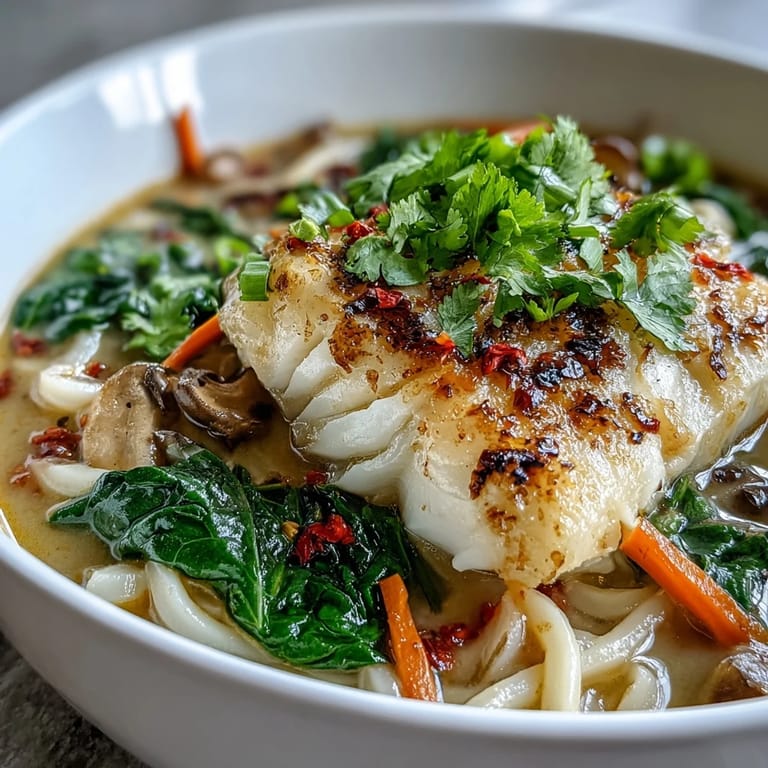
Save There was an evening when I made this for my partner after a long day, and halfway through eating he looked up and said it felt like being on vacation. I hadn't thought about it that way, but he was right, the coconut and lime and warmth of the spices do feel like an escape. That's when I realized this dish isn't just nourishing, it's transportive, and sometimes that's exactly what dinner should be.
Choosing Your Fish
Cod is my first choice because it's mild, flaky, and holds together well during poaching, but haddock and halibut work just as beautifully if you can find them fresh. I've also used sea bass when it was on sale, and the slightly richer flavor was a nice change. Just make sure whatever fish you choose is firm enough not to fall apart when you ladle the broth, and always pat the fillets dry before adding them to the pan so they don't water down the broth.
Making It Your Own
This recipe is forgiving and loves to be adjusted based on what you have or what you're craving. If you want more vegetables, try adding bok choy, snap peas, or thinly sliced bell peppers in the last few minutes of cooking. For extra richness, stir in a spoonful of miso paste along with the fish sauce. If you're not a fan of udon, rice noodles or even ramen noodles work well, just cook them separately and adjust the broth seasoning to taste.
Storing and Reheating
Leftovers keep well for up to two days in the fridge, but I store the noodles separately from the broth and fish so they don't get too soft. When reheating, warm the broth gently on the stove and add the noodles just before serving so they heat through without turning mushy. The cod can be reheated in the broth or eaten cold on top of a fresh bowl, which I've done more than once for a quick lunch.
- Store components separately to keep textures intact.
- Reheat broth gently and avoid boiling to preserve the coconut milk.
- Fresh garnishes make all the difference even on day two.
 Save
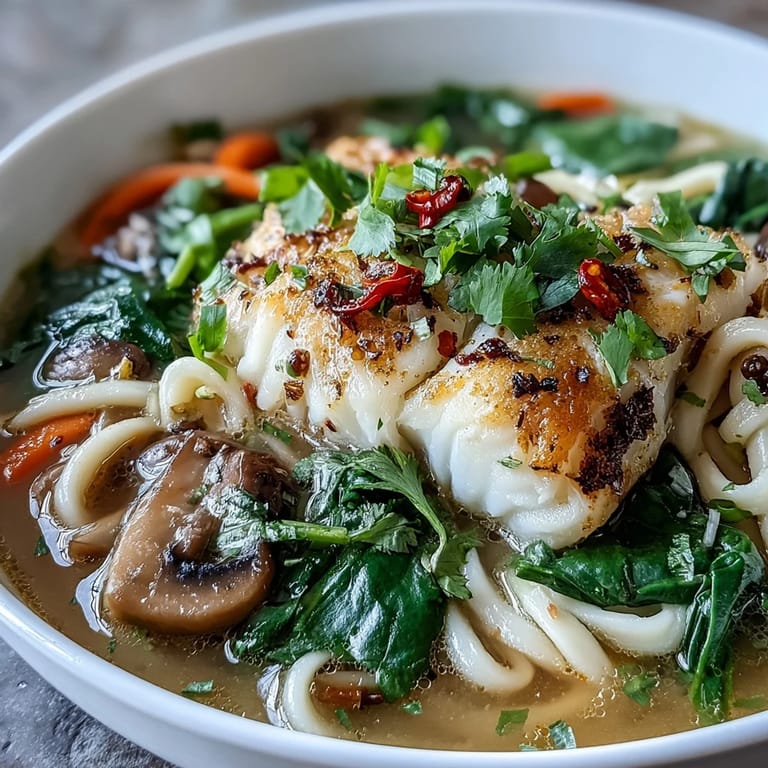
Save This bowl has become my go-to when I want something that feels special but doesn't ask too much of me. I hope it brings you the same kind of quiet comfort it's brought me, one warm spoonful at a time.
Questions & Answers
- → Can I use a different type of fish instead of cod?
Yes, you can substitute cod with other firm white fish such as haddock, halibut, sea bass, or snapper. Choose fish that holds its shape well during poaching.
- → How do I make this dish gluten-free?
Replace udon noodles with rice noodles or gluten-free udon, and use tamari instead of soy sauce. Always check that your fish sauce and curry paste are certified gluten-free.
- → Can I prepare the broth in advance?
Absolutely. The coconut broth can be made up to 2 days ahead and stored in the refrigerator. Reheat gently before poaching the fish and adding fresh vegetables.
- → What can I use if I don't have red curry paste?
You can substitute with green curry paste or a blend of ground spices like cumin, coriander, and turmeric mixed with a small amount of chili paste for heat.
- → How do I prevent the cod from breaking apart while poaching?
Keep the broth at a gentle simmer rather than a rolling boil, and slide the fillets in carefully. Avoid stirring the broth once the fish is added, and use a slotted spoon to remove it gently.
- → What vegetables can I add or substitute?
Bok choy, snow peas, bell peppers, or bean sprouts work beautifully. Add heartier vegetables earlier in the cooking process and delicate greens toward the end.