 Save
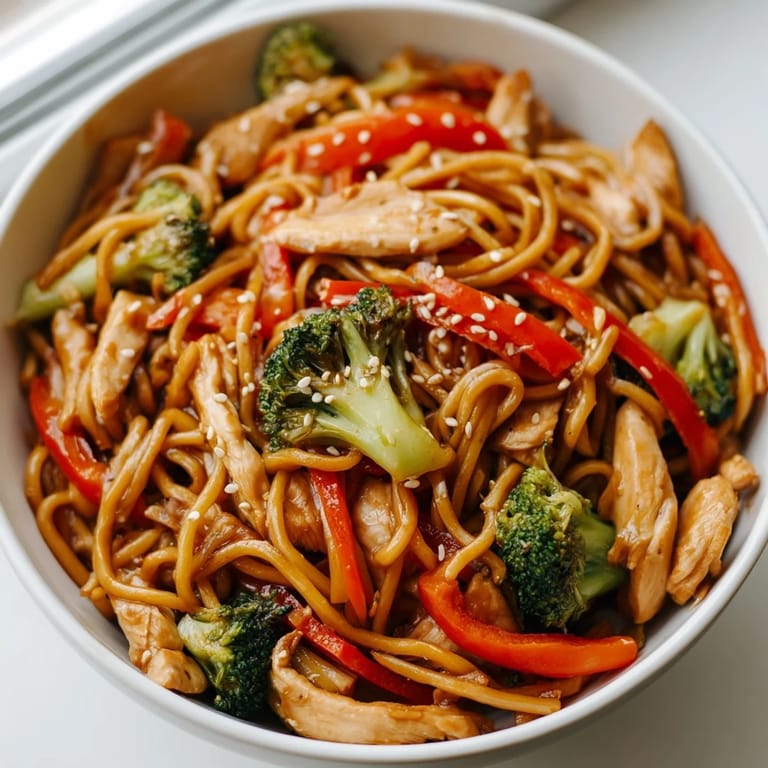
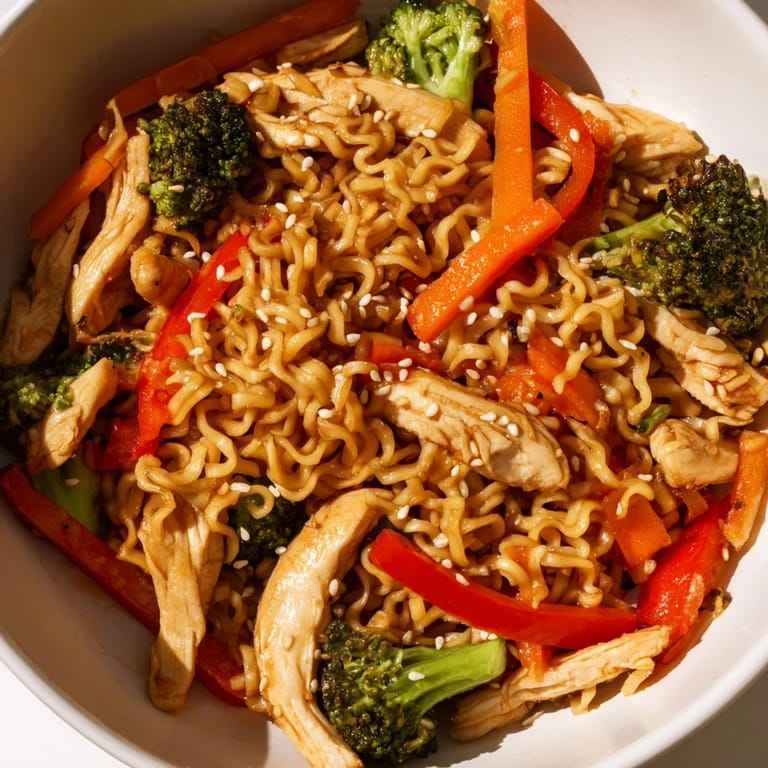
Save The smell of garlic hitting hot oil always makes me move a little faster in the kitchen. I threw this together on a Tuesday night when the fridge was half-empty and my patience was thinner. What started as a desperate use of leftover ramen packets turned into something I now crave at least twice a month. The sauce clung to those noodles like it had been planned all along, and the snap of the vegetables against my teeth made me forget I was eating what some might call "college food."
I made this for my sister once after she had a rough day at work, and she looked up halfway through her bowl and said it tasted like the kind of meal that fixes things. She went back for seconds before I even finished my first serving. Now every time she visits, she asks if I have ramen in the pantry, and I know exactly what she means.
Ingredients
- Boneless, skinless chicken breasts: Slicing them thin is the secret to quick, even cooking, and I always cut against the grain so each bite stays tender.
- Instant ramen noodles: Toss those seasoning packets or save them for another use, the noodles themselves are sturdy enough to hold up to high heat and a bold sauce.
- Red bell pepper: It adds sweetness and a pop of color that makes the whole dish look alive, plus it keeps a nice crunch if you don't overcook it.
- Broccoli florets: I learned to keep them bite-sized so they cook evenly and don't turn mushy, they soak up the sauce beautifully.
- Carrot: Julienning it makes it cook faster and look more elegant, even in a weeknight stir-fry.
- Green onions: I add most at the end to keep their bite, but save a few raw slices for garnish.
- Garlic and ginger: Fresh is non-negotiable here, the fragrance they release in hot oil is what makes the kitchen smell like a real restaurant.
- Soy sauce: It's the salty backbone of the sauce, and I always use low-sodium so I can control the salt level myself.
- Sriracha or chili garlic sauce: Start with less than you think you need, you can always add more but you can't take it back.
- Oyster sauce: This adds a deep, savory sweetness that rounds out the heat and makes the sauce cling to everything.
- Sesame oil: Just a tablespoon brings a nutty richness that ties the whole dish together.
- Brown sugar: It balances the spice and the salt, and helps the sauce caramelize slightly on the noodles.
- Toasted sesame seeds and fresh cilantro: These aren't just pretty, they add texture and freshness that make each bite feel complete.
Tired of Takeout? 🥡
Get 10 meals you can make faster than delivery arrives. Seriously.
One email. No spam. Unsubscribe anytime.
Instructions
- Prep the noodles:
- Cook the ramen according to the package directions, then drain and set them aside. They'll continue to soften slightly, so don't worry if they seem a little firm.
- Mix the sauce:
- Whisk together soy sauce, sriracha, oyster sauce, sesame oil, brown sugar, and water in a small bowl until the sugar dissolves. Having this ready before you start cooking makes everything flow smoothly.
- Cook the chicken:
- Heat a tablespoon of vegetable oil in a large wok or skillet over medium-high heat, then add the sliced chicken and stir-fry until just cooked through, about 4 to 5 minutes. Remove it from the pan and set it aside so it doesn't overcook.
- Bloom the aromatics:
- In the same pan, add the garlic and ginger, stirring for about 30 seconds until the smell makes you lean in closer. This step is quick, so don't walk away.
- Stir-fry the vegetables:
- Toss in the bell pepper, broccoli, and carrot, and stir-fry for 3 to 4 minutes until they're just tender but still have a little snap. High heat is your friend here.
- Bring it all together:
- Return the chicken to the pan, add the cooked noodles, and pour the sauce over everything. Toss well to coat every strand and piece, heating through for 2 to 3 minutes.
- Finish and taste:
- Stir in the green onions, then taste and adjust the seasoning or spice level. This is your moment to make it exactly how you want it.
- Serve:
- Plate it hot, and sprinkle with toasted sesame seeds and fresh herbs if you have them. The garnish makes it feel special, even on a weeknight.
 Save
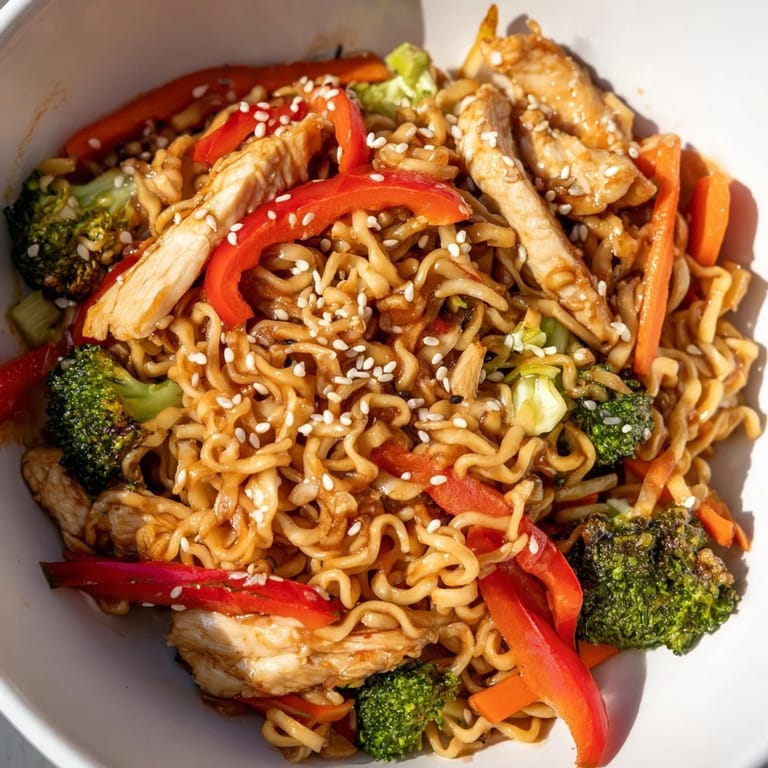
Save There's something about twirling noodles around a fork, feeling the heat build with each bite, that makes a regular dinner feel like a small celebration. This dish has become my answer to long days and empty fridges, and somehow it always delivers. It's proof that you don't need fancy ingredients to make something that sticks with you.
Make It Your Own
Swap the chicken for tofu or shrimp if that's what you have on hand, or leave out the protein entirely and load up on extra vegetables. I've added snap peas, mushrooms, and baby corn when I felt like it, and each version brought something new. The sauce is forgiving enough to handle whatever you throw at it, so don't be afraid to improvise.
Getting the Texture Right
The key to a great stir-fry is keeping everything moving and cooking over high heat so the vegetables stay crisp and the noodles get a little char. If your pan isn't hot enough, you'll end up steaming everything instead of searing it, and you'll lose that satisfying texture. I learned this the hard way after a few mushy attempts, now I wait until the oil shimmers before I add anything.
Serving and Storing
This is best served immediately while the noodles are still glossy and the vegetables have that perfect bite. That said, leftovers keep well in the fridge for up to three days, and I actually love them cold straight from the container for lunch. If you reheat them, do it in a hot pan with a splash of water to bring the sauce back to life.
- Garnish just before serving so the sesame seeds stay crunchy and the herbs stay bright.
- If you're feeding a crowd, double the recipe and use two pans to keep the heat high.
- Pair it with a cold beer or iced jasmine tea to balance the heat.
 Save
Save This dish has earned its place in my regular rotation, and I hope it does the same for you. It's quick, it's bold, and it never lets me down.
Questions & Answers
- → Can I prepare this dish ahead of time?
You can prep ingredients in advance—slice the chicken, chop vegetables, and mix the sauce up to 4 hours ahead. Store in separate containers. Cook the noodles and stir-fry the dish fresh for best texture and flavor.
- → How do I adjust the spice level?
Start with 1 tablespoon of sriracha and taste as you go. Add more sriracha, chili garlic sauce, or red pepper flakes to increase heat. You can also reduce sriracha for a milder version while maintaining the dish's bold flavors.
- → What's the best substitute for chicken?
Tofu is an excellent vegetarian option—press it first to remove excess moisture, then cube and stir-fry until golden before adding vegetables. Shrimp, pork, or beef also work well with the same cooking time or slightly adjusted based on thickness.
- → Can I use fresh ramen noodles instead of instant?
Yes, fresh ramen noodles work beautifully and require less cooking time. Cook according to package directions, typically 2-3 minutes, then proceed with the stir-fry. Fresh noodles create a slightly different texture than instant varieties.
- → What beverages pair well with this dish?
Crisp cold lager beer complements the spicy heat well. Jasmine tea, iced green tea, or a refreshing yuzu drink offer non-alcoholic options. The beverage's coolness balances the dish's bold, fiery flavors beautifully.
- → How do I store leftovers?
Store cooled stir-fry in an airtight container for up to 3 days. Reheat gently in a wok or skillet over medium heat, adding a splash of water or sauce if needed. Note that noodles may soften slightly upon storage.