 Save
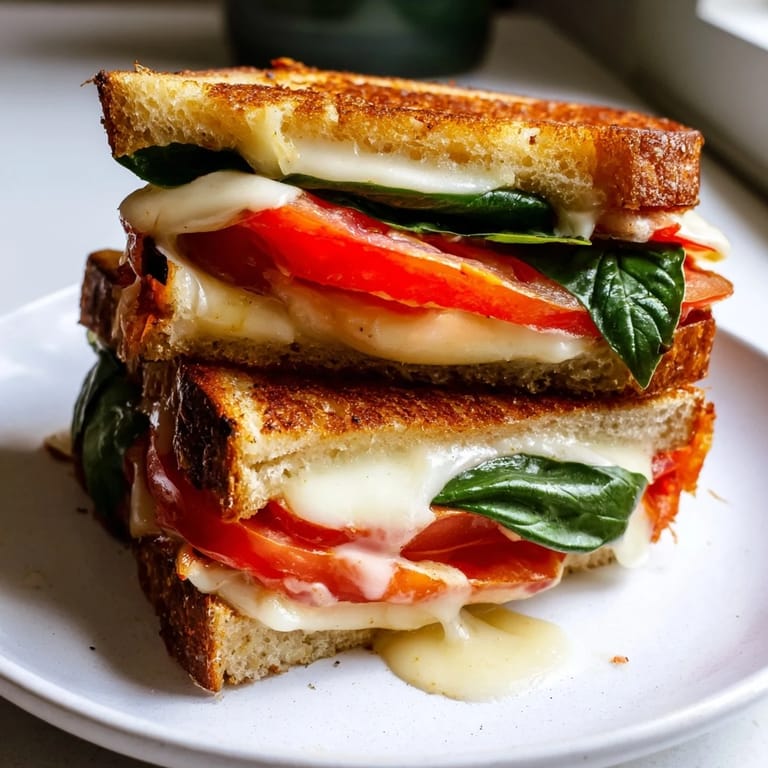
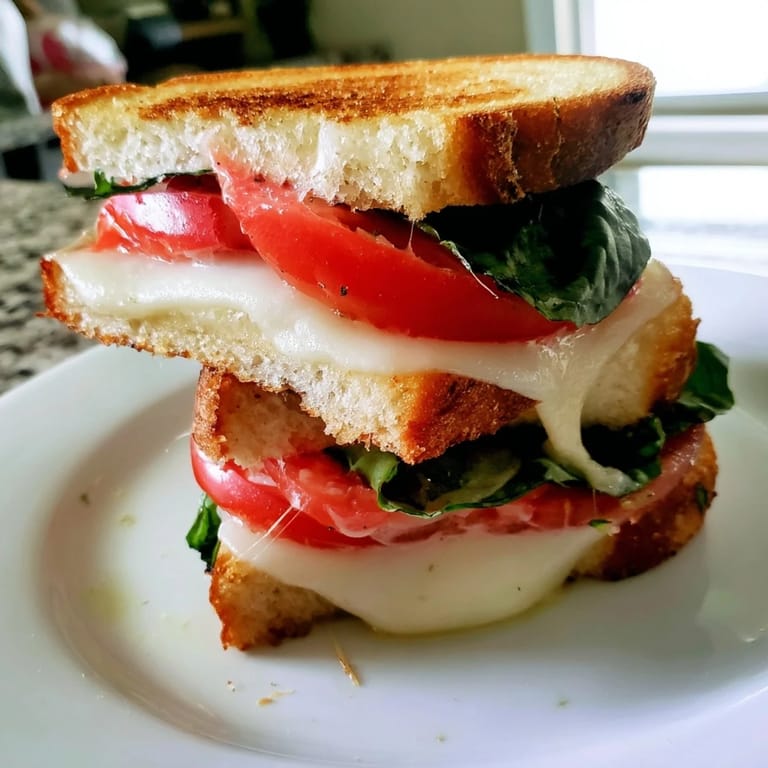
Save There's something about the smell of butter hitting a hot skillet that makes me want to drop everything and cook. One afternoon, my kitchen got flooded with that golden aroma, and I realized I'd been standing there holding a tomato, just waiting for the moment to build something simple but perfect. That's when this tomato basil grilled cheese became my answer to cravings I didn't even know I had.
I made this for my neighbor one rainy Tuesday, and she showed up with a cookbook question. Instead of talking, we just stood at the stove watching the sandwich toast, listening to it crackle, and when I cut it open, the cheese pulled in those gorgeous golden strands. She didn't ask about recipes anymore after that—she just asked if we were making grilled cheese again.
Ingredients
- Sourdough or country-style bread: The structure matters here; thicker slices won't fall apart under the cheese, and sourdough's tang plays beautifully against the sweetness of the tomato.
- Mozzarella cheese: Fresh mozzarella melts faster and tastes lighter, but aged mozzarella gives you more grip and flavor—choose based on your mood.
- Unsalted butter, softened: Soft butter spreads without tearing the bread, and unsalted lets the other flavors breathe.
- Ripe tomato: This is non-negotiable; a mealy tomato ruins the whole thing, so choose one that gives slightly when you press it gently.
- Fresh basil leaves: Tear them by hand just before assembling—bruising them with a knife darkens them and mutes the flavor.
- Salt and black pepper: These aren't afterthoughts; they're what make the tomato taste like itself.
Tired of Takeout? 🥡
Get 10 meals you can make faster than delivery arrives. Seriously.
One email. No spam. Unsubscribe anytime.
Instructions
- Butter your bread:
- Use softened butter and spread it thin and even on one side of all four slices. This isn't about being generous; it's about coverage. Patchy butter means patchy browning.
- Assemble your sandwich:
- Lay two bread slices butter-side down, then layer each one with half the mozzarella, then tomato slices (they should overlap slightly), then basil, then a tiny pinch of salt and pepper. The cheese on the bottom keeps everything from sliding, and the basil on top matters more than you think.
- Crown it:
- Place the remaining bread slices on top, butter-side up, and press gently so everything knows it's a sandwich.
- Heat your skillet:
- Medium heat is your friend here. Too hot and the bread burns before the cheese melts; too cool and you get pale, sad toast.
- Cook with intention:
- Place the sandwiches in the skillet and listen. After three to four minutes, you'll hear the sizzle deepen slightly—that's your cue to peek. The bottom should be deep golden brown with a faint crackle. Flip gently, using a spatula to slide under without breaking anything.
- Finish strong:
- The second side cooks faster because the cheese is already starting to melt from below. Three minutes usually does it, but press gently with the spatula to encourage the cheese to soften and the bread to get that final crunch.
- Rest and serve:
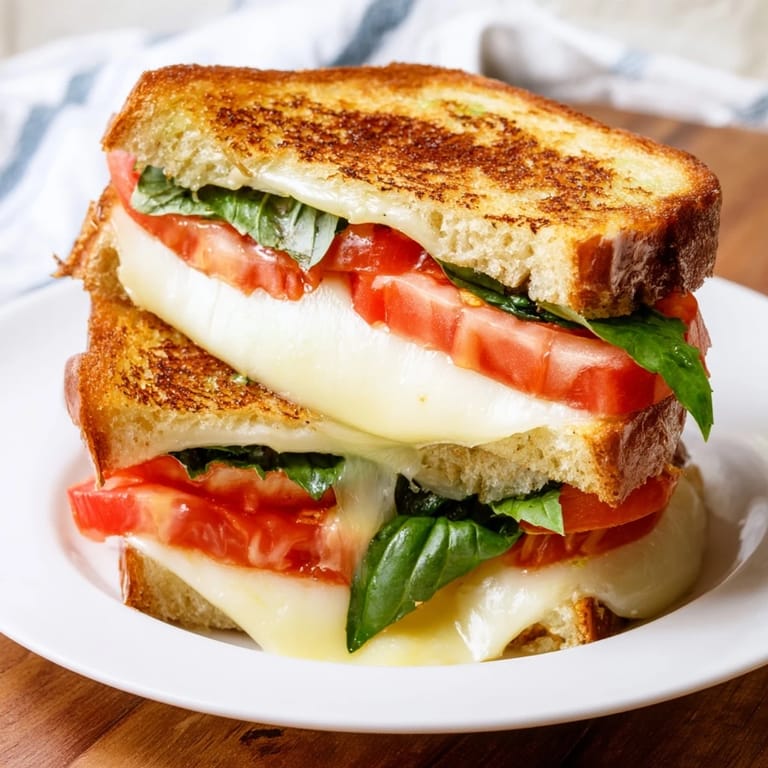
- Let it cool for exactly one minute—I'm serious about this. It gives the cheese time to set so it doesn't pour out when you cut, but it's still warm and stretched when you bite into it.
 Save
Save My daughter once said this sandwich tasted like the summer we finally sat at the kitchen table together without phones. It wasn't about the skill or the ingredients—it was just about showing up and making something warm.
When to Make This
This works as a lunch that feels thoughtful without being complicated, a quick dinner when nobody has energy to plan, or that moment when you're standing in front of the fridge at four in the afternoon and need something that tastes like care. I've made it on purpose and I've made it from memory, and both times it tasted right.
Flavor Variations Worth Trying
The base is flexible, which is part of its charm. A drizzle of balsamic glaze adds a sharp sweetness that makes the basil sing louder. Provolone brings an almost smoky note, while sharp cheddar turns it into something earthier and more assertive. I've slipped a handful of baby spinach in once and didn't regret it, and peppery arugula works too if you want something with an edge.
The Details That Actually Matter
Bread temperature and tomato ripeness are non-negotiable, but everything else bends to what you have and what you want. The goal isn't perfection; it's that moment when the butter hits the pan and you know you've got something good coming.
- Pat your tomato slices dry to avoid a soggy sandwich that falls apart.
- Tear basil by hand instead of cutting it to keep the leaves bright and the flavor sharp.
- If you're using really creamy, fresh mozzarella, go easy on the quantity so it doesn't overwhelm the tomato and bread.
 Save
Save This is the kind of recipe that teaches you to trust your senses instead of a timer, and to know that sometimes the best meals are the ones that come from having three good ingredients and the patience to let them do their thing.
Questions & Answers
- → What type of bread works best for this dish?
Sourdough or country-style bread are ideal for their sturdy texture and ability to crisp up nicely during cooking.
- → Can I use other cheeses instead of mozzarella?
Yes, provolone or cheddar can be used to alter the flavor profile while still providing a melty, creamy texture.
- → How should the sandwich be cooked for best results?
Cook over medium heat in a skillet or griddle, pressing gently and flipping after 3-4 minutes until the bread is golden and the cheese is melted.
- → Are there any suggested additions for extra flavor?
A drizzle of balsamic glaze or a layer of baby spinach or arugula can add tanginess and crunch to the sandwich.
- → Is there a recommended way to season the sandwich?
A pinch of salt and freshly ground black pepper enhances the natural flavors of tomato and basil.