 Save
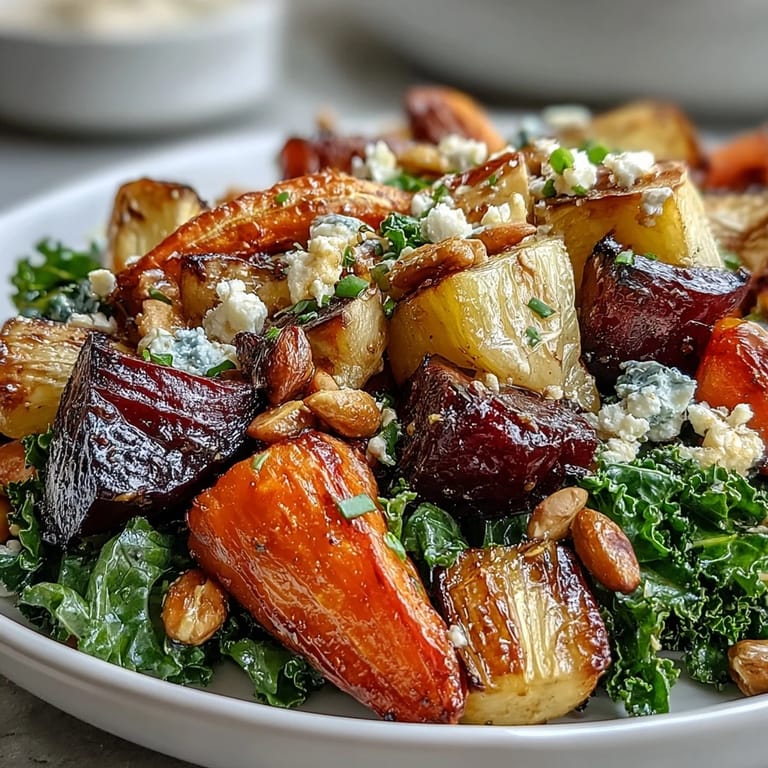
Save Last November, I stood in my kitchen watching the rain streak down the windows, and realized I had nothing but root vegetables and some sad kale in my crisper drawer. What emerged from that quiet afternoon was this bowl—a revelation that sometimes the most comforting meals come from working with what's actually in front of you. The roasted carrots turned honeyed and sweet, the beet wedges deepened to burgundy, and that warm dressing brought everything into focus. It's become my go-to when the weather turns and I need something that feels both nourishing and genuinely exciting.
I made this for my sister during a particularly harsh winter storm when she showed up unannounced with flour in her hair and the kind of tired that only comes from baking all day. We assembled the bowls together while the wind howled outside, and she looked down at hers with genuine surprise—like she hadn't expected something so visually stunning to come together so easily. She's requested it every winter since, and now it's become our thing, our small ritual when the days get short and cold.
Ingredients
- Carrots and parsnips: These are your foundation—the carrots offer sweetness while parsnips bring an earthiness that deepens as they roast, and cutting them into uniform pieces means they'll finish cooking at the same time.
- Sweet potato and beet: The sweet potato keeps things slightly creamy in texture, while the beet adds gorgeous color and an earthy mineral note that makes the whole bowl feel more complex.
- Olive oil, salt, pepper, and dried thyme: Don't skimp on the olive oil here—it's what creates that golden, caramelized exterior that makes roasted vegetables actually exciting to eat.
- Curly kale: The massage step is crucial; it breaks down the fibers and makes the leaves tender enough to eat without that tough, unpleasant chew.
- Apple cider vinegar and Dijon mustard: These are the backbone of your warm dressing, creating brightness and depth that cuts through the richness of the roasted vegetables.
- Shallot: Unlike garlic, which can overwhelm when raw in dressing, shallots add a gentle, sweet onion flavor that mellows beautifully when sautéed.
- Pumpkin seeds and feta: The seeds add crunch and nuttiness while feta provides a creamy, salty contrast—these toppings turn the bowl from simple to craveable.
Tired of Takeout? 🥡
Get 10 meals you can make faster than delivery arrives. Seriously.
One email. No spam. Unsubscribe anytime.
Instructions
- Heat your oven and prepare:
- Preheat to 425°F and line your baking sheet with parchment paper—this prevents sticking and makes cleanup effortless. Having everything ready means you won't be scrambling once the vegetables hit the heat.
- Toss and season your vegetables:
- In a large bowl, combine your carrots, parsnips, sweet potato, and beet with olive oil, salt, pepper, and thyme, making sure every piece gets coated. Spread them in a single layer on your sheet, and the spacing matters—crowding the pan steams them instead of roasting them.
- Roast until golden:
- Slide them into the oven for 30 to 35 minutes, stirring halfway through so everything caramelizes evenly. You'll know they're done when the edges are slightly crispy and a fork slides through the centers easily.
- Massage your kale while vegetables roast:
- Take your torn kale, drizzle with a tablespoon of olive oil and a pinch of salt, then use your hands to gently work it for about a minute until it softens noticeably. This step makes the difference between pleasant and genuinely delicious.
- Build your warm dressing:
- Heat olive oil in a small skillet, sauté your minced shallot for about two minutes until it softens and sweetens slightly, then whisk in the apple cider vinegar, Dijon mustard, and honey or maple syrup. Keep it warm on low heat so it's ready when you assemble.
- Assemble your bowls:
- Divide the massaged kale among your serving bowls, arrange the warm roasted vegetables on top, and drizzle generously with the warm dressing. The heat of the vegetables and dressing slightly wilts the greens, creating something cohesive rather than just a pile of components.
- Finish and serve:
- Scatter pumpkin seeds and crumbled feta over each bowl and serve immediately, while everything is still warm. Don't wait or let it sit—this dish is best eaten right away.
 Save
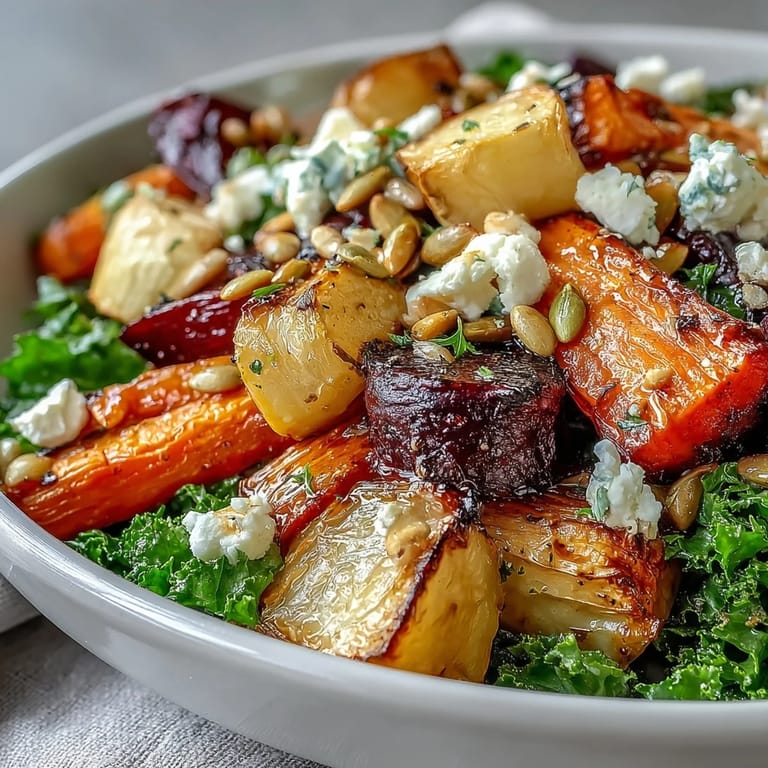
Save This bowl became more than just dinner for me the day a friend with dietary restrictions came over and, for the first time in ages, ate freely without asking questions or feeling like an afterthought. Watching someone relax into a meal because it was naturally suited to their needs rather than modified reluctantly felt like the whole point of cooking together. That's when I realized this recipe wasn't just convenient—it was kind.
Building Flavor Through Layers
What makes this bowl sing is the interplay between the sweet roasted vegetables, the slightly bitter kale, the acidic dressing, and the salty cheese and seeds. Each element has a job, and when they're all working together, it doesn't taste like health food—it tastes like something you genuinely wanted to eat. This layering approach is something I've carried into other bowls and roasted dinners, and it's changed how I think about vegetarian cooking entirely.
The Warm Dressing Advantage
I used to make this bowl with a cold vinaigrette, and it was fine—pleasant, even. But the moment I started heating the dressing, everything transformed. The warmth draws out the honey's subtle sweetness, mellows the mustard, and creates this silky quality that a cold dressing simply cannot achieve. It's become my secret weapon for making simple bowls feel restaurant-quality.
Customization Without Compromising
This bowl's structure is flexible enough to bend with what's in your pantry or what you're craving on any given day. You can swap vegetables seasonally—in spring, use baby potatoes and asparagus instead; in summer, add roasted bell peppers and zucchini. The formula of roasted vegetables plus massaged greens plus warm dressing stays constant, so the bowl always feels like itself even when the details change.
- If you don't have feta, crumbled goat cheese or even a drizzle of tahini creates a different but equally satisfying richness.
- Brown rice, farro, or roasted chickpeas can add heft if you're making this a more substantial main course meal.
- Swap the thyme for rosemary or sage if you want a different herbaceous note, or add a pinch of smoked paprika to the roasting vegetables for deeper warmth.
 Save
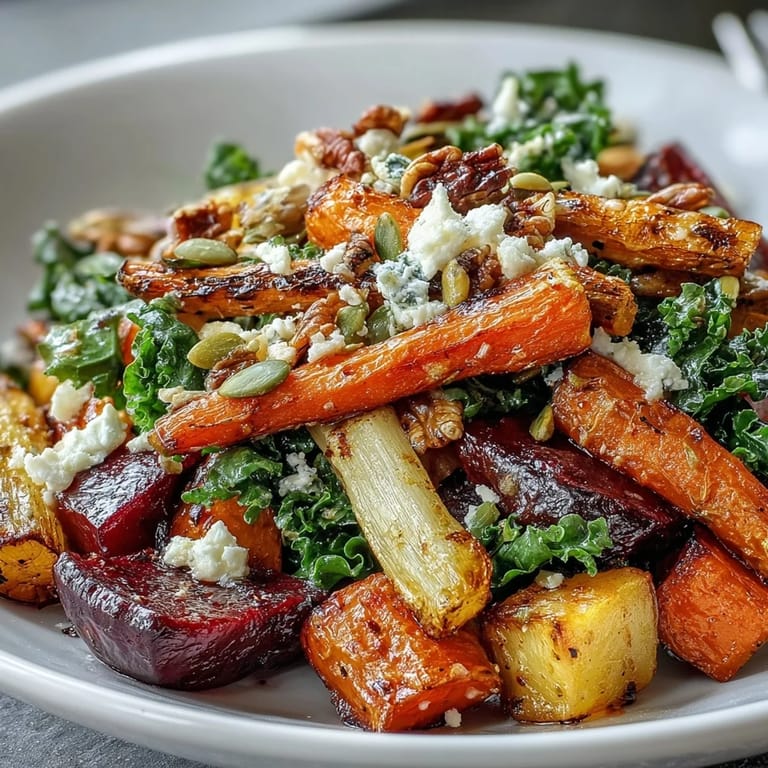
Save This winter root vegetable bowl has become the meal I turn to when I want to feel nourished without overthinking things, and that combination of ease and genuine satisfaction is rare. Make it once, and it'll likely become a winter tradition for you too.
Questions & Answers
- → Can I prepare the vegetables ahead?
Yes, you can peel and cut the root vegetables up to 2 days in advance. Store them in an airtight container with cold water to prevent browning. Drain and pat dry before roasting.
- → What other greens work well?
Baby spinach, Swiss chard, or sturdy mixed greens all make excellent substitutes for kale. Adjust cooking time accordingly—tender greens like spinach need only a quick toss rather than massaging.
- → How do I store leftovers?
Keep components separate in airtight containers for up to 4 days. Store roasted vegetables and dressing at room temperature for the first day, then refrigerate. Reheat vegetables before assembling bowls.
- → Can I add protein?
Absolutely. Chickpeas, lentils, or cubed tofu can be roasted alongside the vegetables. Grilled chicken, poached eggs, or baked salmon also complement the flavors beautifully.
- → What if I don't have beet?
Butternut squash, turnips, or additional sweet potato make fine replacements. The bowl remains balanced and colorful with any combination of winter roots.