 Save
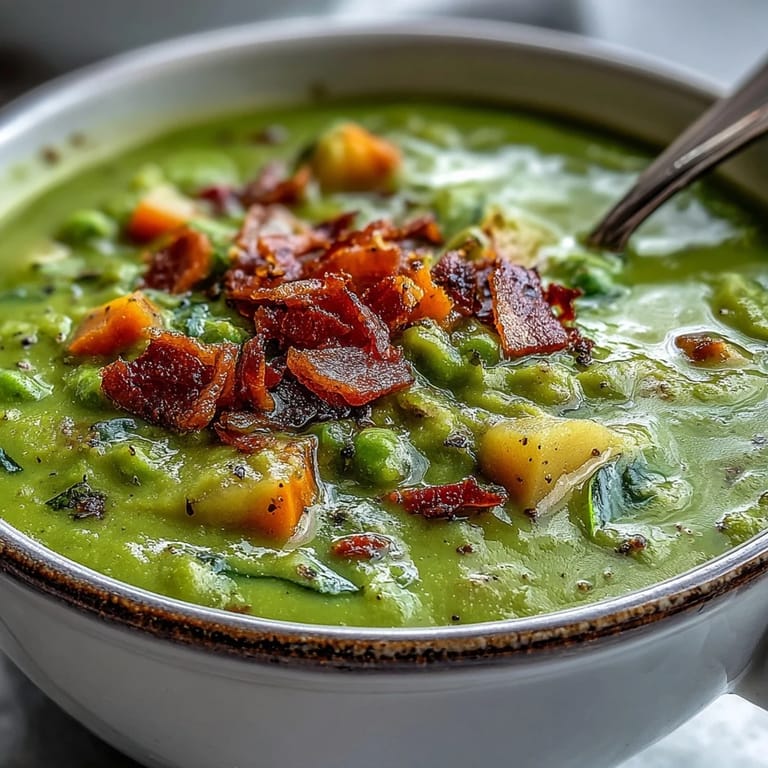
Save There's something about a pot of split pea soup simmering on the stove that turns even the coldest afternoon into something manageable. My neighbor Margaret taught me this recipe years ago when I showed up at her door half-frozen after a morning commute, and she simply pointed to her soup pot like it was the most obvious solution to everything. Within minutes, the smell of caramelizing onions and thyme filled her kitchen, and I understood why this soup had been her go-to comfort for decades. It's the kind of dish that doesn't demand much from you but gives back everything you need.
I made this soup for a book club once, worried it would seem too simple compared to everyone else's dishes, and it was gone before dessert. One friend came back for thirds and admitted she'd been living on takeout for weeks—she called me three days later asking if I could teach her because she'd made it twice already. That's when I realized this soup does something special: it proves that humble ingredients and patience create something nobody forgets.
Ingredients
- Dried split green peas: Rinse these under cold water first—it removes dust and helps them cook evenly, and they'll break down into that signature creamy texture without any cream needed.
- Onion, carrots, and celery: This trio is your flavor foundation, and dicing them roughly the same size ensures they soften at the same pace.
- Garlic: Minced fine and added after the softer vegetables so it doesn't scorch and turn bitter.
- Potato: Adds body and helps thicken the soup naturally as it breaks down during cooking.
- Vegetable or chicken broth: Use the good stuff you actually like drinking—it's the backbone of every spoonful.
- Bay leaf and thyme: These aren't optional flavor boosters; they're what makes this taste like memory.
- Olive oil: Just enough to coat the pan and let those vegetables sweat without browning too fast.
- Smoked ham or ham bone: Traditional and transforms the whole soup with that smoky depth, though you can absolutely skip it for vegetarian or vegan versions.
- Black pepper and salt: Add pepper early so it mellows into the broth, then adjust salt at the very end after blending.
Tired of Takeout? 🥡
Get 10 meals you can make faster than delivery arrives. Seriously.
One email. No spam. Unsubscribe anytime.
Instructions
- Build your flavor base:
- Heat olive oil in a large pot over medium heat, then add your diced onion, carrots, and celery together. Let them soften for about five minutes, stirring occasionally—you're looking for them to start turning golden at the edges, which means their natural sugars are waking up and the kitchen is about to smell incredible.
- Wake up the garlic:
- Stir in your minced garlic and cook for just one minute, enough for it to perfume the whole pot but not long enough to burn. If you let it go too long, it turns acrid and sour, so watch it closely and stay present.
- Bring it all together:
- Add your rinsed split peas, diced potato, bay leaf, thyme, and broth all at once. If you're using ham or a ham bone for that traditional smokiness, add it now too—it'll infuse everything as it all cooks down together.
- Let time do the work:
- Bring the whole pot to a boil so you see bubbles breaking the surface, then reduce the heat to low and cover with a lid. Simmer for about an hour, stirring every fifteen minutes or so—this prevents the peas from sticking to the bottom and lets you check on how things are softening. You'll know it's ready when the peas have mostly dissolved and the broth has thickened noticeably.
- Remove the bones and solids:
- Fish out the bay leaf and ham bone (if you used one), discarding them. If you used diced ham instead, stir it back in so every spoonful has those smoky bits.
- Decide how creamy you want it:
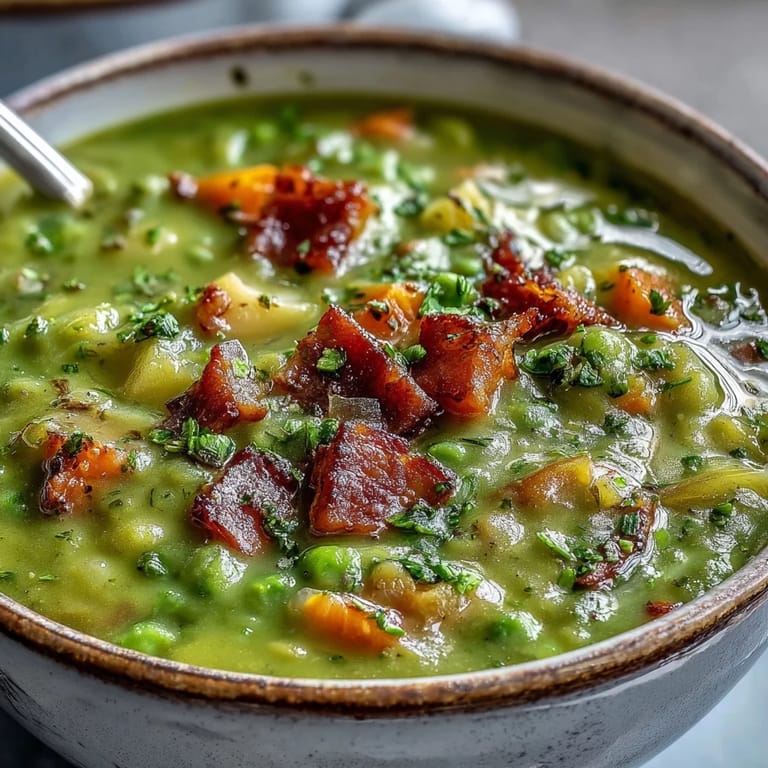
- Here's where you get to choose: use an immersion blender to pulse it gently if you like some texture, or blend about half of it in a regular blender and stir it back for a thicker, creamier consistency. Some people leave it chunky, some make it silky—there's no wrong answer, only preference.
- Taste and adjust:
- Add salt and black pepper gradually, tasting as you go. Broth varies in saltiness, so you need to be the final judge of whether it needs more seasoning.
 Save
Save I watched my eight-year-old niece eat three bowls of this soup without complaining about anything being weird or unfamiliar—she asked for the recipe to make it herself someday. There's something deeply satisfying about a soup that feeds both the body and the sense that you've made something real.
Vegetarian and Vegan Variations
Skip the ham entirely and use vegetable broth, and you have a soup that's just as satisfying without any meat. The peas themselves are protein-rich and hearty enough that you won't miss the ham, though if you want that smoky flavor without the meat, add a half teaspoon of smoked paprika when you stir in the garlic—it gives you that depth without changing the vegetable-forward character of the dish.
Serving and Storage
Serve this soup hot with crusty bread for wiping the bowl clean, which is honestly the best part. It keeps beautifully in the refrigerator for five days and freezes for months, so making a double batch on a Sunday means you've got lunch ready whenever the week gets busy.
The Magic of Leftovers
Day-old split pea soup is thicker, richer, and somehow tastes even better—reheating it gently with a splash of water or broth brings it back to the right consistency. Some people think leftovers are a consolation prize, but this soup proves they can be the whole reason you make extra in the first place.
- If the soup gets too thick in the fridge, add water or broth a splash at a time until it reaches the consistency you want.
- Stir it gently while reheating so the bottom doesn't scorch on the pan.
- Freeze it in individual containers so you can grab a single bowl whenever comfort is what you need.
 Save
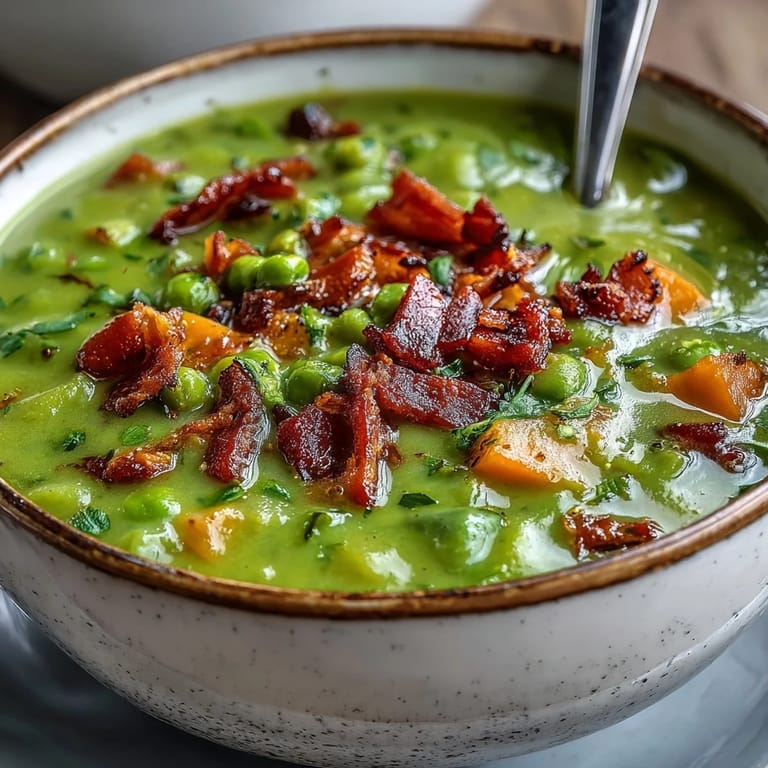
Save This soup has been there for me more times than I can count, and I hope it becomes that same kind of friend to you. Make it once, and I promise you'll make it again.
Questions & Answers
- → Do I need to soak split peas before cooking?
No soaking required. Unlike dried beans, split peas cook relatively quickly and break down naturally during simmering. Just rinse them thoroughly before adding to your pot.
- → How long does this keep in the refrigerator?
Stored in an airtight container, this soup stays fresh for 4-5 days. The flavors actually deepen over time, making it an excellent make-ahead option for quick lunches or dinners.
- → Can I freeze split pea soup?
Absolutely. Freeze in portion-sized containers for up to 3 months. Thaw overnight in the refrigerator then reheat gently, adding a splash of broth or water to reach desired consistency.
- → What gives the soup its smoky flavor without ham?
Smoked paprika works wonderfully as a plant-based alternative, imparting that distinctive smoky depth. Liquid smoke also adds intensity—start with just a few drops since it's quite potent.
- → Why is my soup too thick?
Split peas continue absorbing liquid as they sit. Simply thin with additional broth, water, or even a bit of milk when reheating until you reach your preferred consistency.
- → What vegetables work well in this soup?
Beyond the classic mirepoix of onion, carrot, and celery, try adding diced potatoes for body, parsnips for sweetness, or spinach for color and extra nutrition during the last 10 minutes of cooking.