 Save
Save The smell of smoked paprika hitting hot oil always takes me straight back to a cramped kitchen on a Tuesday night when I had nothing but frozen cod and half a fridge of wilting vegetables. I tossed it all into one pot, added spices I barely measured, and somehow ended up with something that tasted like I'd planned it for days. My partner walked in, sniffed the air, and asked if we were having guests. We weren't, but that dish made the ordinary evening feel special anyway.
I made this for my mom once when she visited unexpectedly, and she kept asking what restaurant I ordered it from. When I showed her the single pot in the sink, she laughed and said I was finally learning to cook smart, not hard. She took home the leftovers in a container and texted me the next day asking for the recipe. That felt better than any compliment.
Ingredients
- Cod fillets: Choose fillets that are thick and opaque white, they hold together better in the simmering sauce and won't fall apart when you serve.
- Onion: A large one gives you the sweet, savory base that holds all the spices together without overpowering the delicate fish.
- Garlic cloves: Mince them fine so they melt into the sauce and release their fragrance the moment they hit the oil.
- Red and yellow bell peppers: The mix of colors makes the dish look vibrant, and their sweetness balances the smoky, earthy spices beautifully.
- Diced tomatoes: Canned tomatoes are perfectly fine here, they break down into a rich, slightly tangy sauce that coats everything.
- Baby spinach: It wilts in seconds at the end, adding a pop of green and a bit of earthiness without any effort.
- Lemon slices: Lay them on top of the fish while it cooks, they infuse subtle brightness and look gorgeous when you serve.
- Ground cumin: This is the warm, earthy backbone of the spice blend, it makes the whole pot smell like a spice market.
- Smoked paprika: The smoky depth it adds is irreplaceable, it transforms ordinary tomatoes and peppers into something almost grilled.
- Ground coriander: It brings a gentle citrusy note that plays well with the lemon and keeps the spices from feeling too heavy.
- Cayenne pepper: Optional, but a small pinch adds a tiny kick that wakes up your palate without making it spicy.
- Salt and black pepper: Season generously, the vegetables and fish need it to bring out their natural flavors.
- Olive oil: Use enough to coat the bottom of the pot, it helps the onions soften and carries the spices into every bite.
- Fish or vegetable stock: This is what turns the tomatoes into a real sauce, it adds savory depth and keeps everything moist.
- Fresh cilantro or parsley: A handful of chopped herbs at the end makes it taste fresh and homemade, not like something reheated.
- Lemon wedges: Serve them on the side so everyone can squeeze a little extra brightness over their portion.
Tired of Takeout? 🥡
Get 10 meals you can make faster than delivery arrives. Seriously.
One email. No spam. Unsubscribe anytime.
Instructions
- Start with the aromatics:
- Heat the olive oil in your largest skillet or Dutch oven over medium heat until it shimmers. Add the chopped onion and let it soften for 3 to 4 minutes, stirring occasionally so it turns golden and sweet without browning.
- Build the flavor base:
- Stir in the minced garlic and diced bell peppers, cooking for another 3 minutes until the peppers start to soften and the garlic smells toasty. Add the cumin, smoked paprika, coriander, cayenne if using, salt, and black pepper, stirring constantly for about a minute until the spices bloom and smell incredible.
- Simmer the sauce:
- Pour in the diced tomatoes and stock, scraping up any browned bits from the bottom of the pot. Bring everything to a gentle simmer, then cover and cook for 8 to 10 minutes until the vegetables are tender and the sauce has thickened slightly.
- Nestle in the cod:
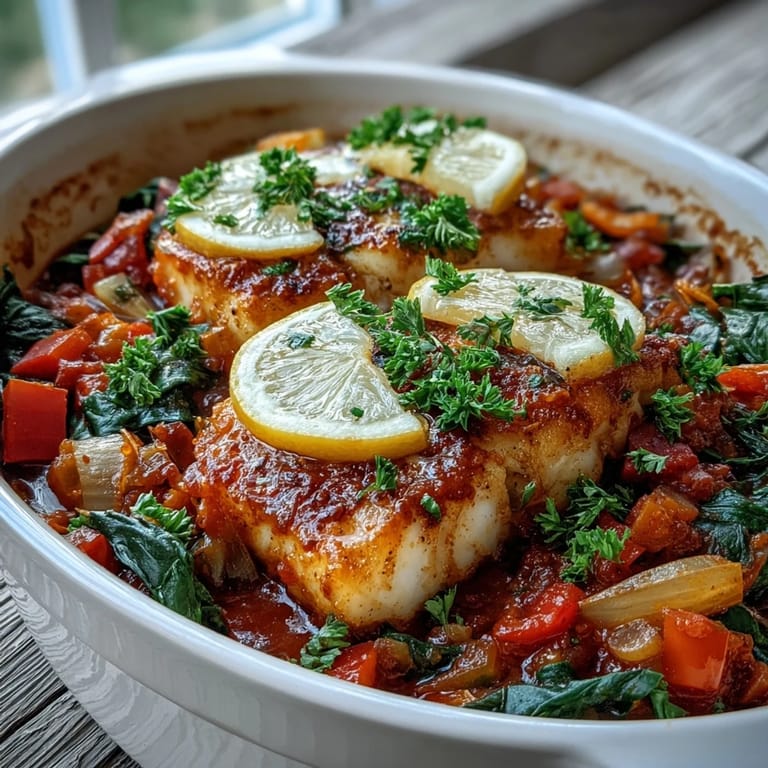
- Gently place the cod fillets into the simmering sauce, spooning a little over the tops. Lay the lemon slices on top of each fillet, cover the pot, and simmer for 8 to 10 minutes until the fish is opaque and flakes easily with a fork.
- Wilt the spinach:
- Add the baby spinach around the fish and cover again for about 2 minutes until it wilts into the sauce. Give it a gentle stir to distribute the greens.
- Serve and garnish:
- Spoon the fish and sauce into shallow bowls, making sure each serving gets plenty of vegetables. Scatter fresh cilantro or parsley on top and serve with lemon wedges on the side.
 Save
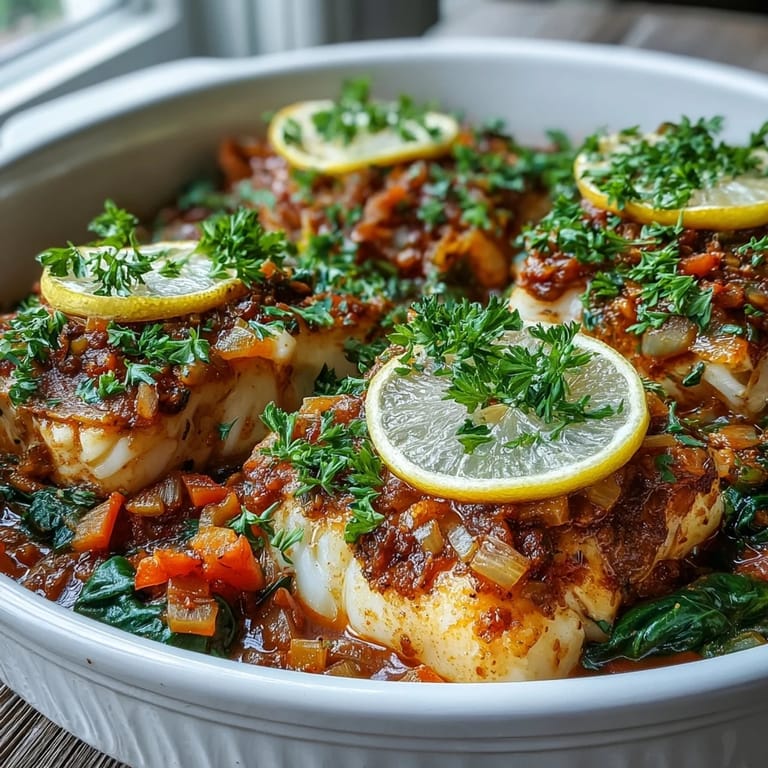
Save One night I served this over a mound of couscous, and my friend scooped up every last bit of sauce with torn pieces of bread, muttering that the vegetables were too good to waste. We sat there in the dim kitchen light, scraping our bowls clean, and I realized that the best meals are often the ones that come together without a plan. This dish has that kind of magic, it feels intentional even when it is spontaneous.
Serving Suggestions
This pairs beautifully with crusty sourdough or a warm baguette for soaking up the spiced tomato sauce. I have also served it over steamed jasmine rice, couscous, or even creamy polenta when I want something more filling. A simple green salad with lemon vinaigrette on the side keeps the meal light and balanced. Sometimes I add a dollop of plain yogurt on top for a creamy contrast, though it is completely optional and not necessary.
Substitutions and Variations
If you cannot find cod, haddock, halibut, or any firm white fish works just as well in this recipe. For a bit more heat, toss in a pinch of chili flakes or a diced fresh chili with the peppers. You can swap the spinach for kale or Swiss chard, just add it a few minutes earlier since it takes longer to wilt. If you prefer a richer sauce, stir in a splash of coconut milk at the end for a creamy, slightly sweet finish.
Storage and Reheating
Leftovers keep well in an airtight container in the fridge for up to two days, though the fish is best enjoyed fresh. Reheat gently on the stovetop over low heat, adding a splash of stock or water to loosen the sauce if it has thickened. Avoid the microwave if you can, it tends to make the fish rubbery and dry.
- Store the fish and sauce together to keep the fillets moist.
- Reheat only the portion you plan to eat to preserve the texture.
- Freeze the sauce without the fish if you want to prep ahead, then add fresh fillets when ready to serve.
 Save
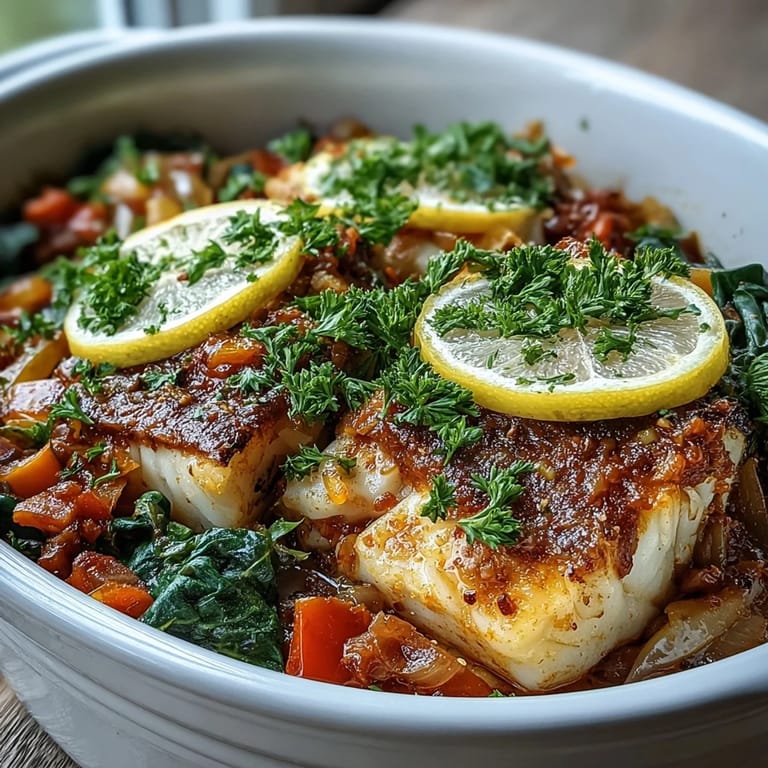
Save This is the kind of recipe that makes weeknight cooking feel less like a chore and more like a small celebration. I hope it brings a little warmth and ease to your table, just like it did to mine.
Questions & Answers
- → Can I use frozen cod fillets for this dish?
Yes, you can use frozen cod fillets. Make sure to thaw them completely and pat dry with paper towels before adding to the pot to avoid excess moisture in the sauce.
- → What other fish can I substitute for cod?
Any firm white fish works well in this preparation. Try haddock, halibut, sea bass, or even thick tilapia fillets. Adjust cooking time based on the thickness of your fish.
- → How do I know when the cod is perfectly cooked?
The cod is done when it turns opaque white throughout and flakes easily when gently pressed with a fork. The internal temperature should reach 145°F (63°C). Avoid overcooking to prevent dry, tough fish.
- → Can I make this ahead of time?
While best served fresh, you can prepare the vegetable and tomato base ahead and refrigerate. When ready to serve, reheat the sauce and add the fresh cod fillets to cook through. This prevents overcooking the fish.
- → What should I serve alongside this dish?
This pairs beautifully with crusty bread for soaking up the flavorful sauce, steamed basmati rice, couscous, or quinoa. A simple green salad with lemon vinaigrette makes a lovely accompaniment.
- → How can I adjust the spice level?
For milder flavor, omit the cayenne pepper entirely. For more heat, increase cayenne to 1/2 teaspoon or add red pepper flakes. You can also serve hot sauce on the side for individual preference.