 Save
Save There's a particular Tuesday afternoon I can't quite shake—the one where I stood in my kitchen watching peppers turn from bright red to blistered and charred, their skins splitting as they softened in the oven heat. The smell that came pouring out when I cracked open the door was so good I almost forgot why I was making soup in the first place. It wasn't nostalgia or a planned moment, just the kind of kitchen accident that turns into something you'll make again and again.
I made this for my neighbor one winter evening when she'd had a particularly rough day, and watching her face when she tasted it—that moment when her shoulders actually relaxed—made me realize this wasn't just soup anymore. She asked for the recipe, then came back asking for it again, and now I find myself making a double batch whenever the season turns cold, knowing exactly where it's going.
Ingredients
- Red bell peppers (4 large): These are the star, and roasting them transforms their natural sweetness into something deeper and more complex—don't skip this step or settle for raw peppers.
- Garlic (4 cloves, unpeeled): Roasted unpeeled garlic becomes nutty and mild, nothing like raw garlic's sharp bite, so keep the skins on until after roasting.
- Yellow onion (1 large, chopped): The aromatic foundation that builds flavor as it softens, creating sweetness that balances the spice.
- Carrot and celery (1 medium carrot, 1 stalk): These aren't filler—they add body and a subtle earthiness that rounds out the whole soup.
- Vegetable broth (3 cups): Use good broth; it's the liquid that carries everything, so avoid anything too salty or overpowering.
- Olive oil (2 tbsp total): Split between roasting and sautéing, it's the medium that carries flavor forward.
- Harissa paste (1–2 tsp): This North African chili paste brings gentle heat and complexity without overwhelming the peppers—start with less and taste as you go.
- Smoked paprika (1 tsp): Amplifies the roasted character and adds a whisper of smoke that ties everything together.
- Ground cumin (1/2 tsp): Warm and slightly nutty, it deepens the flavor without announcing itself.
- Crème fraîche or yogurt (1/4 cup, optional): A cooling contrast that makes each spoonful more interesting.
Tired of Takeout? 🥡
Get 10 meals you can make faster than delivery arrives. Seriously.
One email. No spam. Unsubscribe anytime.
Instructions
- Roast the peppers and garlic:
- Set your oven to 425°F, place whole peppers and unpeeled garlic cloves on a baking sheet, toss with a tablespoon of olive oil, and roast for 25–30 minutes, turning once halfway through. You're looking for the pepper skins to blacken and blister and the peppers themselves to collapse softly when you press them—this is where the magic happens.
- Steam and peel:
- Transfer the roasted peppers to a bowl, cover tightly with plastic wrap or a plate, and let them sit for 10 minutes while the steam loosens their charred skins. Once cooled slightly, the skins slip off easily, and the garlic cloves squeeze right out of their papery shells.
- Build the base:
- In a large pot over medium heat, warm the remaining olive oil and add your chopped onion, carrot, and celery, stirring occasionally until they soften and become translucent, about 5–7 minutes. You'll notice the kitchen smells suddenly greener, earthier—that's when you know they're ready.
- Add the roasted aromatics:
- Stir in the peeled peppers, squeezed garlic, smoked paprika, cumin, and harissa paste, cooking for just a minute until the spices become fragrant and the mixture darkens slightly. This brief toast awakens the spices and melds everything together.
- Simmer and blend:
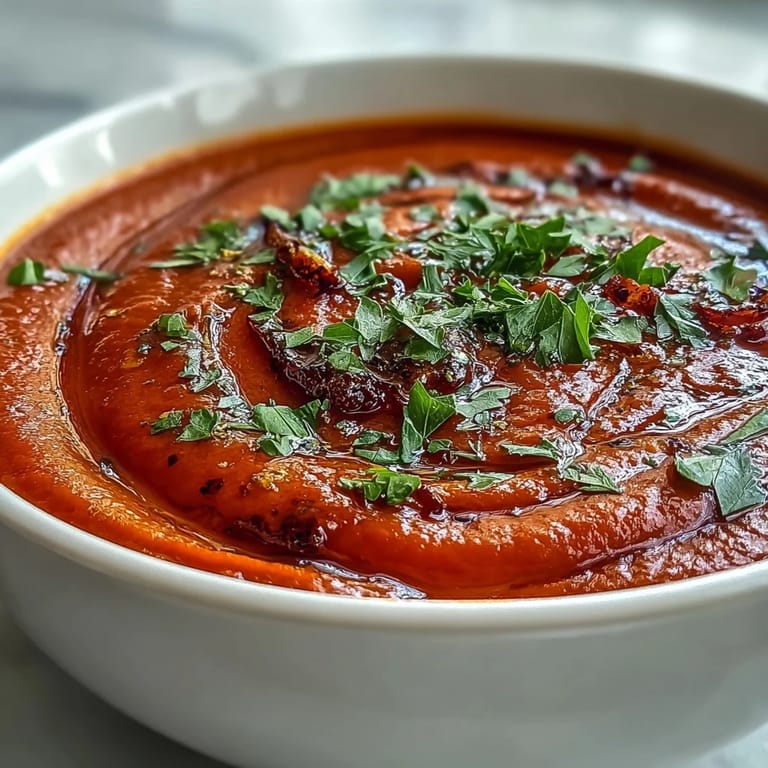
- Pour in your vegetable broth, bring everything to a gentle boil, then reduce the heat and let it simmer for 10 minutes so the flavors deepen. Using an immersion blender (or working in batches with a countertop blender), puree until the soup is silky smooth with no visible pieces.
- Season and serve:
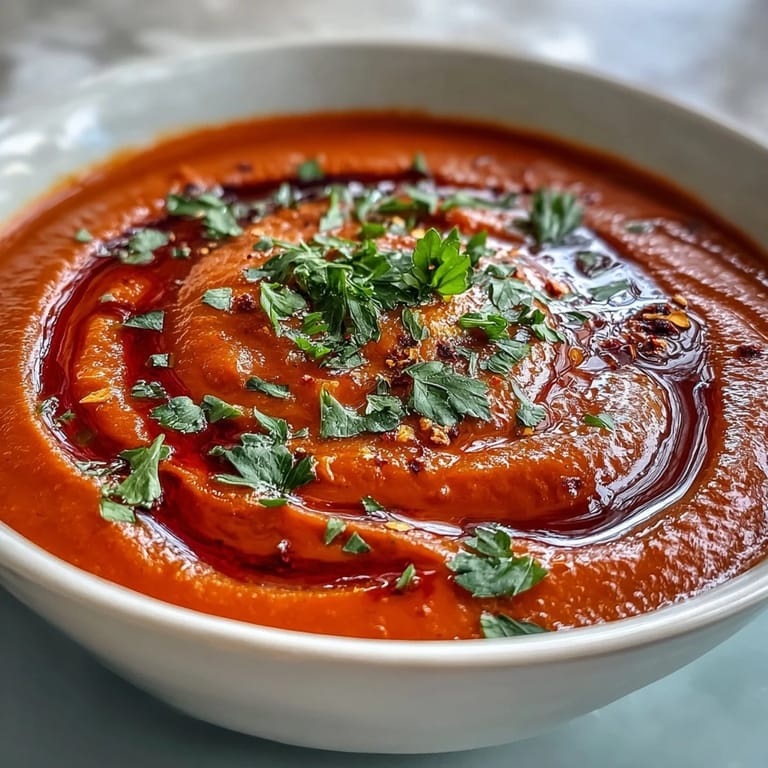
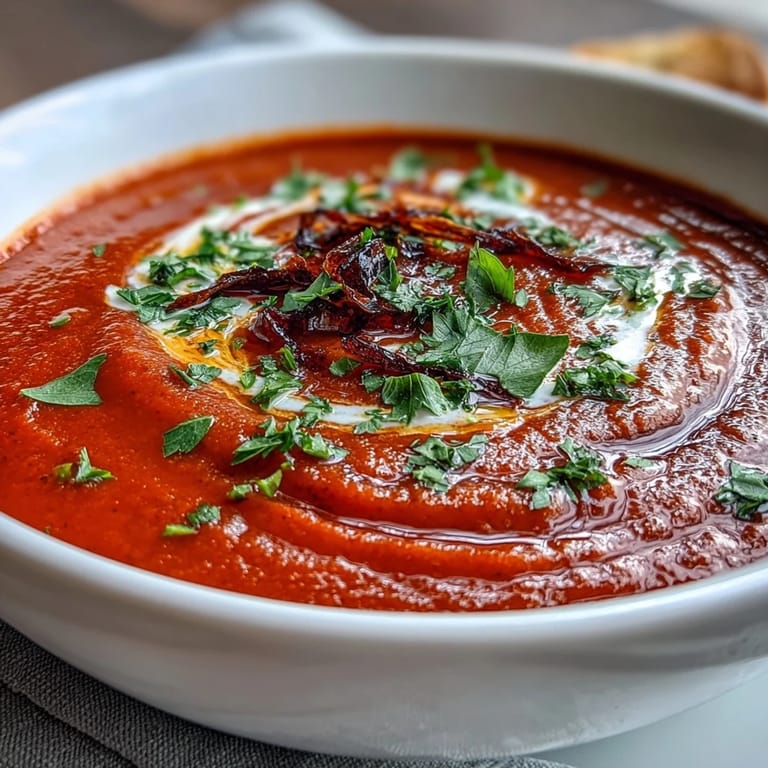
- Taste your soup, then adjust the salt, pepper, and harissa to your preference—this is your moment to make it exactly how you like it. Serve hot, topped with a dollop of crème fraîche or yogurt and a scatter of fresh herbs.
 Save
Save The first time someone actually said this soup changed their evening, I understood why cooking for people matters. It wasn't about technique or ingredients—it was about taking time to make something intentional when the world felt like it was moving too fast.
The Roasting Moment
Roasting is the real secret here, and I learned this the hard way by once trying to rush it with raw peppers and a blender. The difference is night and day—roasting brings out natural sweetness and adds a charred, smoky depth that raw peppers simply can't match. When those peppers hit the oven, their sugars caramelize and their cell walls soften, making them release their essence more fully when blended. It's a small step that changes everything.
Why the Simmering Step Matters
After blending, you might think you're done, but that 10-minute simmer before serving lets all the flavors settle and deepen—it's the difference between a good soup and one that tastes like you've been thinking about it. The broth absorbs the roasted pepper flavors more completely, the spices mellow slightly and integrate, and somehow the whole thing becomes more cohesive. I've found that rushing this step leaves the soup tasting a bit disjointed, like all the ingredients are still introducing themselves rather than having become friends.
Making It Your Own
This is the kind of recipe that invites you to play around once you've made it once and understand how it works. The base is forgiving, the ratios are balanced, and there's room for your own preferences and what you have on hand. I've added a pinch of cayenne when I wanted more heat, roasted yellow peppers alongside the red for a sweeter version, and even stirred in a splash of cream when I wanted something richer. The harissa and paprika are your flavor anchors, so keep those, but everything else can bend to your taste.
- Try a mix of red and yellow peppers for a brighter, slightly sweeter version.
- Add a squeeze of fresh lemon juice just before serving to lift and brighten all the flavors.
- For extra richness, finish with a splash of heavy cream instead of crème fraîche.
 Save
Save Make this soup when you need comfort, when you want to impress someone, or when you just want to fill your kitchen with a smell that makes everything feel okay. It's the kind of dish that proves simple ingredients and a little patience can create something truly special.
Questions & Answers
- → Can I use jarred roasted peppers instead of fresh?
Yes, jarred roasted peppers work well and save time. Look for peppers packed in water, not oil, and drain them before adding. Skip the roasting step and proceed with sautéing the aromatics.
- → How do I make this soup vegan?
Simply omit the crème fraîche or yogurt garnish, or use a plant-based alternative like coconut yogurt or cashew cream. Ensure your vegetable broth and harissa paste are certified vegan.
- → Can I freeze this soup?
Absolutely. Let the soup cool completely before transferring to airtight containers or freezer bags. Freeze for up to 3 months. Thaw overnight in the refrigerator and reheat gently, adding a splash of broth if needed.
- → What can I substitute for harissa?
Try sriracha for a different heat profile, or a paste made from crushed red pepper flakes and olive oil. For a milder option, use a small amount of tomato paste with a pinch of cayenne.
- → How do I get the smoothest texture?
Blend thoroughly with an immersion blender for 2-3 minutes, or work in batches using a high-speed blender. For extra silkiness, strain through a fine-mesh sieve after blending.